Gardening for Clean Water: Rain Gardens, Soil and Fewer Chemicals
How gardens can protect rivers: permeable surfaces, rain garden sizing and planting, careful fertiliser use and peat-free compost, using RHS and EPA advice.
Pave over a front garden with concrete or tarmac and the rain that once soaked into the soil runs off instead. The Royal Horticultural Society (RHS) says that non-porous hard surfaces can increase rainwater runoff by as much as 50 per cent, and that the extra water usually flows into street drains, which cannot always cope. In England, the rules were changed in October 2008 so that paving more than five square metres of a front garden with impermeable material, with no lawn or border for the water to drain into, needs planning permission.
Gardens, yards and allotments add up to a large part of the land in towns. How they are surfaced, planted and fed decides whether rain soaks in where it falls or rushes off, carrying soil, fertiliser and other pollutants with it. This guide explains why that matters for rivers, and covers the practical options: permeable surfaces, rain gardens, careful use of fertilisers and garden chemicals, peat-free compost, and wildlife-friendly planting.
Why gardens matter for rivers
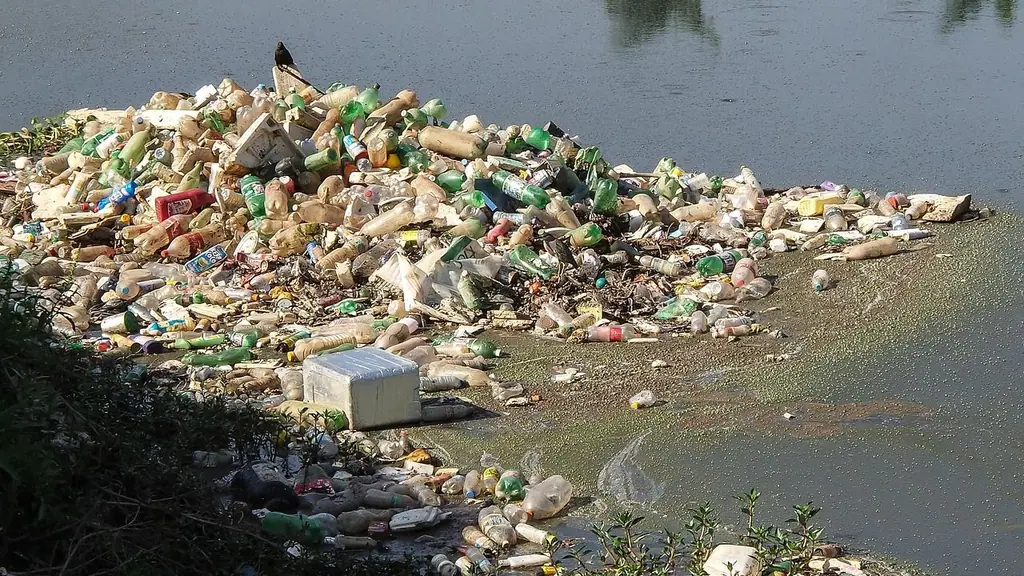
When rain falls on soil and plants, much of it soaks in, is taken up by roots or seeps slowly down towards groundwater. When it falls on roofs, paving and roads, it cannot soak in. The US Environmental Protection Agency (EPA) explains that runoff from these hard surfaces flows straight to water bodies or storm drains, carrying pollutants with no chance for soil or plants to filter them out. That stormwater can contain nitrogen and phosphorus from fertilisers, pet waste and garden waste, the nutrients that feed algal blooms in rivers and lakes.
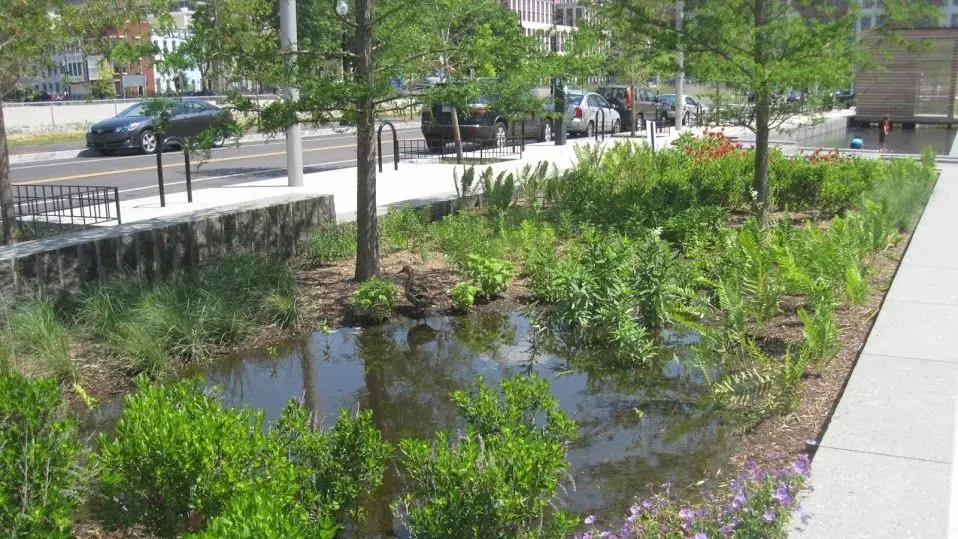
The EPA's answer is what it calls green infrastructure: features that slow runoff down, spread it out and let it soak into the ground or be reused on site, allowing plants to filter out pollutants as the water infiltrates. At garden scale that means rain gardens, permeable paving, water butts and green roofs. Our article on nutrient pollution and algal blooms explains what happens when too many nutrients reach water.
Key idea: Every square metre of garden that lets rain soak in, rather than shedding it to a drain, means less runoff, less pollution washed into rivers and more water returned to the ground.
Keep surfaces permeable
The simplest step is to keep as much ground as possible as soil, lawn, gravel or planting. Where you need a hard surface, for a path, patio or parking, choose one that lets water through or drains to a border.
In England, guidance published by the government in 2009 explains that, since 1 October 2008, hard surfacing in front gardens counts as permitted development only if it is permeable or drains to a permeable area; covering more than five square metres with traditional impermeable materials such as concrete, with no provision for drainage, requires a planning application. The RHS notes that rules differ in Scotland and Wales and in designated areas such as conservation areas, so check locally.
The RHS describes several permeable options:
- Gravel, which it calls by far the cheapest permeable hard-landscaping option.
- Permeable block paving, laid with gaps or porous joints so water drains between the blocks.
- Grass or gravel reinforcement grids, which support cars while letting plants grow or water drain through.
- A border or lawn beside an impermeable surface, so rain runs off the hard area onto ground where it can soak in.
The RHS adds that keeping greenery in front gardens helps reduce dust pollution and the urban "heat island" effect, and that paving which stops rain reaching the ground can contribute to subsidence on some soils.
Rain gardens: sizing and planting basics
A rain garden is a shallow dip in the ground that receives runoff from a roof or other hard surface, planted with plants that can tolerate waterlogging for up to 48 hours at a time. The RHS says rain gardens need no watering once plants are established, can absorb up to 30 per cent more water than a lawn, and reduce erosion by slowing heavy rainfall.
Safety: Check for underground gas, electricity and water services before digging. Adults handle spades and heavy lifting; children can help measure, test drainage and plant. Fence or cover open holes, especially if young children are around, and never leave a water-filled test hole unattended. If the rain garden would be closer than 5 metres to a house, the RHS advises getting advice from a geotechnical adviser or registered ground engineering professional to protect the foundations.
The RHS guidance can be followed step by step:
- Choose the site. Full sun or partial shade, a gentle slope of 10 per cent or less, away from tree roots, and lower than the surface that will drain into it.
- Test the drainage. Dig a hole about 25 cm deep and fill it with water. When it has emptied, refill it and time how long it takes to drain. The ideal is at least 1.25 cm an hour, and sites draining up to 5 cm an hour can work. Slower sites, such as heavy clay or where the water table is high, are unsuitable.
- Work out the size. As a rule of thumb, make the rain garden about 20 per cent of the roof area that drains into it.
- Dig to the right depth. On soil draining at 5 cm an hour, the RHS suggests 15 cm deep, with an extra 5–10 cm below the overflow point; less well-drained soil needs a deeper garden.
- Bring the water in and let it out. Lead water from the downpipe along a rill or channel, with cobbles or gravel where it enters to stop soil washing away. Build a low berm, about 30 cm wide and 10 cm high, on three sides, and leave a gravel-filled notch so that overflow in heavy storms drains to the main drainage system.
- Plant in zones. Put plants that tolerate wet soil, such as yellow flag iris (Iris pseudacorus), soft rush (Juncus effusus) and pendulous sedge (Carex pendula), in the base and near the inlet, and plants that cope with both wet and dry spells around the edges. The RHS suggests planting in drifts, at about seven plants per square metre.
Worked example (illustrative): A garage roof measures 5 m by 4 m, an area of 20 m². Using the RHS rule of thumb of 20 per cent, a rain garden of about 4 m², for example 2 m by 2 m, would take the runoff from its downpipe. A smaller rain garden still helps; it simply overflows more often in heavy rain.
Fewer chemicals, used more carefully
Fertilisers and pesticides applied to gardens do not always stay where they are put. The EPA's advice for reducing nutrient pollution from gardens includes:
- Apply fertilisers only when necessary and at the recommended amount, and time them for when plants are actively growing.
- Do not fertilise before rain or wind, which can wash or blow it away.
- Keep fertiliser away from waterways such as streams, ponds and ditches.
- Fill spreaders on hard surfaces so that spills can be swept up, and store unused fertiliser safely.
- Water less, and water slowly, for example with a soaker hose, so water soaks in instead of running off and carrying fertiliser with it.
- Use grass clippings and leaves as mulch or compost, rather than leaving them where they can wash into drains.
- Plant native species, which can reduce the need for fertiliser.
The same thinking applies to pesticides and weedkillers: use them only when they are truly needed, follow the label exactly, never spray before rain or near water, and take leftovers to a household waste recycling centre rather than pouring them down any drain. Encouraging natural predators, such as birds, frogs and beetles, and accepting a little damage, reduces the need for chemicals in the first place.
Choose peat-free compost
Peat bogs are wetlands, and digging them for compost damages them. The RHS points out that peatlands store over twice as much carbon as all the world's forests combined, despite covering a far smaller area, and that peat bogs soak up heavy rainfall and release it slowly, which helps to reduce flooding. They are also home to wildlife found in few other places.
The RHS stopped selling peat-based compost in 2019, and it now campaigns for legislation to ban the sale of horticultural peat in the UK. Until then, it is up to buyers: the RHS advises checking the bag, because if it does not specifically say "peat-free", it probably is not. Peat-free composts can behave differently from peat-based ones, so it is worth following the instructions on the bag for watering and feeding. Our article on peatlands and carbon explains why these wetlands matter.
In numbers: Non-porous hard surfaces can increase rainwater runoff by as much as 50 per cent compared with the ground they cover.
Source: Royal Horticultural Society, Front gardens: permeable paving.
A clean-water garden checklist
- Keep as much ground as possible as soil, lawn, gravel or planting.
- Choose permeable paving, or let hard surfaces drain onto a border.
- Disconnect a downpipe into a water butt or a rain garden; our guide to rainwater harvesting explains water butts and larger systems.
- Feed only when plants need it, never before rain, and keep fertiliser away from water.
- Use pesticides sparingly, if at all, and dispose of leftovers at a recycling centre.
- Compost garden waste and buy peat-free compost.
- Plant native species and leave some leaves and stems over winter for wildlife.
- Consider a small wildlife pond; our article on ponds and their value for wildlife explains how to make one safely.
These garden habits sit alongside the water, drain and waste habits in our pillar guide to sustainable household habits that protect fresh water. To see how many you already follow, try our household sustainability checklist, or browse our sustainable living section.
Sources
- Rain gardensRoyal Horticultural Society
- Front gardens: permeable pavingRoyal Horticultural Society
- Permeable surfacing of front gardens: guidanceMinistry of Housing, Communities and Local Government (GOV.UK)
- Sources and Solutions: StormwaterUS Environmental Protection Agency
- What You Can Do: In Your YardUS Environmental Protection Agency
- Peat-free gardeningRoyal Horticultural Society
Spotted an error? Write to contact@freshwateraction.net. Our editorial policy explains how we correct articles.