Family Nature Exploration at Ponds, Streams and Wetlands
How families can explore ponds, streams and wetlands safely: what to take, how to pond dip, what to look for each season, and how to leave wildlife undisturbed.
Sweep a net slowly through the weed at the edge of a pond, tip it into a white tray of pond water, and wait. Within a minute the tray starts to move: a water boatman rowing on its back, a snail gliding across the bottom, a damselfly nymph with three leaf-like tails, perhaps a tadpole. Few activities show children so much living science so quickly, and it needs nothing more than a net, a tray and a careful adult.
Ponds, streams and wetlands are some of the richest and most accessible wildlife habitats close to home, in parks, nature reserves, village greens and country parks. They are also places where water safety must come first. This guide explains how families can explore them safely, what to take, how to pond dip properly, what to look for through the year, and how to leave every place and animal as you found it.
Water safety first
Open water is very different from a swimming pool. RoSPA's Water Safety Code warns that cold water makes swimming much harder, that depth is hard to judge, and that there can be hidden currents, steep slippery banks and hidden rubbish such as shopping trolleys and broken glass, with no lifeguard nearby. It advises that children should always go near water with an adult, and that anyone who falls in unexpectedly should float until they can control their breathing, then call for help or swim to safety. In an emergency, call 999.
Safety: An adult stays within arm's reach of young children at the water's edge at all times; never let children explore water alone. Choose places with a firm, gently sloping edge or a dipping platform, and kneel or lie down to dip rather than standing or leaning out. Stay out of the water, away from steep or crumbling banks, weirs and fast-flowing streams, and never go onto ice. Check the weather and any flood warnings before you go and turn back if conditions look bad. Cover cuts with waterproof plasters, do not eat or drink near the water, and wash hands with soap and water afterwards. Pond and river water is never for drinking.
Why the handwashing matters: the NHS explains that leptospirosis, sometimes called Weil's disease, is spread through soil or fresh water contaminated with the urine of infected animals such as rats and cattle, and enters the body through the mouth, eyes or cuts. It is rare in the UK, and simple hygiene keeps the risk low.
What to take
- A pond net with a fine mesh and a long handle (an adult checks it is sturdy)
- A shallow white tray or washing-up bowl: animals show up clearly against white
- A few clear pots or a jam jar for a closer look (plastic is safer than glass)
- A magnifying glass or hand lens, and a simple identification chart or book
- Gloves for adults handling nets near litter, and waterproof plasters
- Water and soap or hand-washing gel, kitchen roll and a bag to take rubbish home
- A notebook or phone to record what you find, and a charged phone for emergencies
How to pond dip
Safety: An adult stays within arm's reach of each young child throughout. Dip only from a firm, level edge or platform, never from steep or crumbling banks, and wash hands with soap afterwards.
- Pick your spot. Look for a firm, level edge with plants in the water nearby. Kneel on a mat or lie on your front so your weight is on the bank, not over the water.
- Fill the tray first with a few centimetres of pond water and place it in the shade, on level ground well back from the edge.
- Sweep gently. Move the net slowly through the water in a figure of eight, among plants and near the edge, for about 15 to 20 seconds. Avoid scraping deep into the mud, which clouds the water and makes animals hard to see.
- Empty the net by turning it inside out into the tray. Wait a minute for the water to clear.
- Look closely. Use a spoon or a soft paintbrush to move small animals into pots for a closer look. Count legs and tails, watch how each animal moves, and try to name it with a chart.
- Return everything after a few minutes, by gently lowering the tray to the water's edge and letting the animals swim out. Keep animals in shade, in water from the same pond, for minutes, not hours.
To turn a dip into a small piece of science, try the Freshwater Habitats Trust's Big Pond Dip. You survey the pond, record the animals you find on the Trust's form, and get a score from 1 to 68 that shows how good the pond is for wildlife, with suggestions for improving it. The Trust encourages families and schools to take part, with ponds at home, in a village or at school.
Key idea: The best pond dips are slow and gentle: sweep, look, identify, and return every animal to the same water within minutes, so the pond is no different after your visit.
Streams and wetlands
Safety: Stay on the bank or a footbridge with an adult close by, and keep away from fast or deep water, weirs and soft, boggy ground. Do not visit after heavy rain or when flood warnings are in force.
Streams need extra care because moving water can be faster and stronger than it looks. Explore small, shallow, slow streams from the bank or a footbridge rather than wading in. Look for animals clinging to the undersides of stones you can reach easily from the edge, and put each stone back exactly where it was, the same way up. Watch from bridges for fish holding in the current, dippers and grey wagtails on the stones, and the ripples made by rising fish.
Wetlands such as reed beds, fens and marshes are often best seen from boardwalks and hides at nature reserves. Stay on the paths: wetland ground can be much softer and deeper than it looks. Listen as well as look; in spring and summer, reed beds are full of birdsong.
What to look for through the year
Seasons change what you will find. These are things families in Britain and much of Europe commonly notice; exact timing varies with the weather and the place.
| Season | Things to look and listen for |
|---|---|
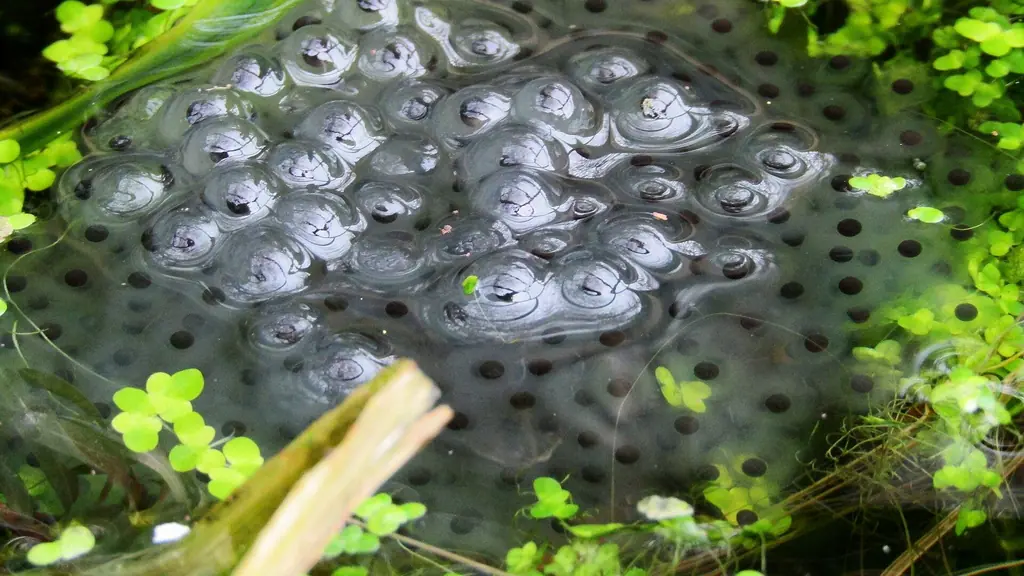
| Late winter and spring | Frogspawn in clumps and toadspawn in long strings; tadpoles; newts in ponds; water plants beginning to grow; ducks pairing up |
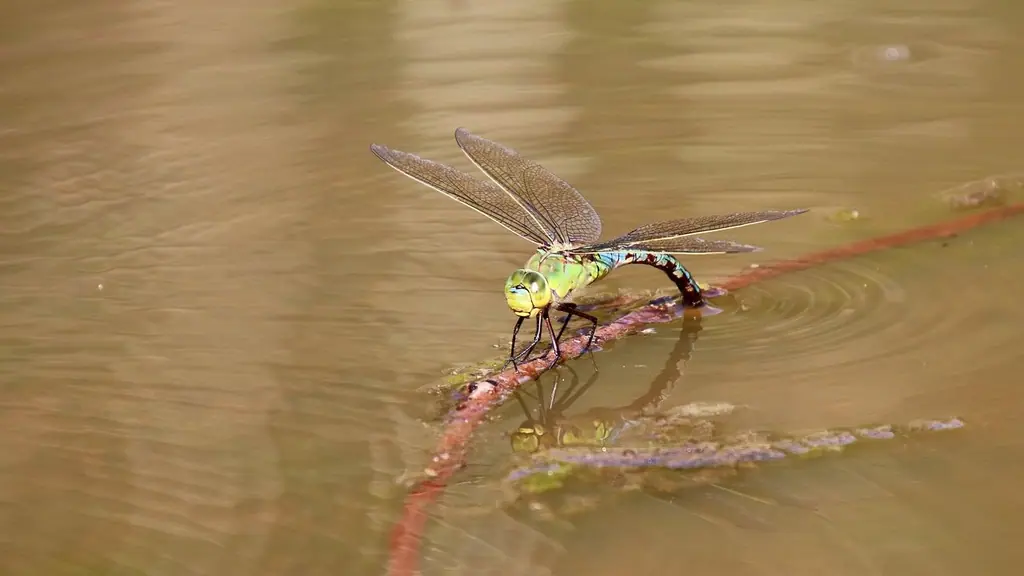
| Summer | Dragonflies and damselflies hunting over water; pond skaters on the surface; water boatmen and diving beetles; froglets leaving ponds; flowering water plants |
| Autumn | Young newts and froglets in damp grass near ponds; falling leaves feeding the pond's decomposers; migrating birds on lakes and wetlands |
| Winter | Ice (look, never walk on it); clear water showing pond-bottom animals; waterbirds gathering on larger lakes; animal tracks in mud |
Some animals need special care. In England, great crested newts are a European protected species, and it is an offence to deliberately capture or disturb them or to damage the places where they breed and shelter. If you think you have netted one, a large dark newt with a warty skin and an orange belly, gently return it to the water at once, and enjoy photographing others without netting them. Our beginner's guide to freshwater wildlife identification will help you tell common species apart.
Leave no trace: the Countryside Code
The Countryside Code for England and Wales sums up how to visit wild places responsibly. For water-side exploring, the most relevant points are:
- Protect the environment. Take all your litter home and leave no trace of your visit. Leave plants, rocks and wildlife undisturbed.
- Keep dogs under control and in sight, and pick up after them.
- Respect everyone. Leave gates as you find them, follow local signs and keep to paths unless wider access is allowed.
- Plan ahead. Check maps and the weather, tell someone where you are going and when you will be back, and be prepared to turn back.
There is one more rule for anyone who moves between ponds and streams. The GB Non-native Species Secretariat's Check, Clean, Dry campaign asks you to check boots, nets and trays for mud, animals and plant fragments and leave them at the site; clean everything thoroughly, with hot water if possible; and dry it for as long as you can before using it somewhere else, because some invasive plants and animals can survive for more than two weeks in damp conditions.
Try this: Keep a family nature diary for one pond or stream. Visit once a month, at about the same time of day, and record the date, weather, what the water looks like and every animal and plant you can name. After a year you will have your own record of how the place changes through the seasons.
Bringing it home
Exploring outside sparks questions that experiments at home can answer: why can a pond skater stand on water, and why does pond water sometimes turn green? Our safe water science experiments for children explore surface tension, evaporation and more with kitchen materials, and our article on ponds and their value for wildlife explains how to create a wildlife pond safely. For more ideas, browse our water science for kids and classrooms section.
Sources
- Water Safety CodeRoyal Society for the Prevention of Accidents (RoSPA)
- The Countryside Code: advice for countryside visitorsNatural England and Natural Resources Wales (GOV.UK)
- LeptospirosisNHS
- Check Clean DryGB Non-native Species Secretariat
- Big Pond DipFreshwater Habitats Trust
- Great crested newts: advice for making planning decisionsNatural England and Defra (GOV.UK)
Spotted an error? Write to contact@freshwateraction.net. Our editorial policy explains how we correct articles.