Why Freshwater Biodiversity Is Declining
What the evidence shows about falling freshwater wildlife populations and extinction risk, the main causes, and the recovery plan scientists propose.
In January 2025, scientists published the first global assessment of extinction risk for a large group of animals that live mainly in fresh water. Writing in Nature, Catherine Sayer and colleagues reported on 23,496 species of freshwater fishes, decapod crustaceans (crabs, crayfish and shrimps) and odonates (dragonflies and damselflies) assessed for the IUCN Red List of Threatened Species. One-quarter of them were threatened with extinction.
That finding sits alongside decades of evidence that rivers, lakes and wetlands are losing wildlife faster than land or sea. Fresh waters cover a tiny fraction of the planet but hold a disproportionate share of its species, so what happens to them matters far beyond their size.
This article sets out what the main indicators show, explains the causes of decline and the reasons fresh waters are so vulnerable, and summarises what scientists say would turn things around. For the basics of how freshwater ecosystems work, see our guide to freshwater ecosystems for students.
What the evidence shows
Three kinds of evidence point the same way.
Populations: the Living Planet Index
The Living Planet Report 2024, published by WWF with the Living Planet Index provided by the Zoological Society of London, tracks almost 35,000 populations of 5,495 vertebrate species. It found that the average size of monitored freshwater populations fell by 85 per cent between 1970 and 2020, with a statistical range of 77 to 90 per cent. That equals an average annual decline of 3.8 per cent, compared with 69 per cent for terrestrial populations and 56 per cent for marine ones over the same period. The freshwater index is based on 6,609 populations of 1,472 species. Migratory freshwater fish, tracked separately, showed an average decline of 81 per cent.
It is important to read the index correctly. It measures the average change in the size of monitored populations, not the share of individual animals or species that have been lost. A few steeply declining populations can pull the average down, and monitoring is uneven across the world. But the pattern is consistent: Andrea Reid and colleagues, using an earlier edition of the index, reported an 83 per cent freshwater decline between 1970 and 2014, which also outpaced declines in marine and terrestrial systems.
In numbers: Monitored freshwater vertebrate populations declined by an average of 85 per cent between 1970 and 2020, an average fall of 3.8 per cent a year.
Source: WWF, Living Planet Report 2024.
Extinction risk: the IUCN Red List
The 2025 Nature study by Sayer and colleagues measures something different: the risk that whole species will disappear. Of the 23,496 fishes, crabs, crayfish, shrimps, dragonflies and damselflies assessed, one-quarter were classed as threatened with extinction. The main threats the authors found were pollution, dams and water extraction, farming and invasive species, and overharvesting has also contributed to extinctions.
The study also tested whether protecting the places that matter most for land vertebrates would protect freshwater animals too. Threatened land vertebrates proved reasonable guides at a broad scale, but the authors conclude that, given differences in key threats and habitats, meeting the needs of land vertebrates cannot be assumed to be enough to conserve freshwater species locally.
Habitat: wetlands and rivers
Habitat loss has been severe. In their 2020 BioScience paper setting out an emergency recovery plan, David Tickner and colleagues noted that wetlands are vanishing three times faster than forests globally. Rivers have been fragmented on a vast scale: a 2019 study in Nature led by Günther Grill found that only 37 per cent of rivers longer than 1,000 kilometres remain free-flowing over their entire length.
Key idea: Population trends, extinction-risk assessments and habitat maps all show the same thing: freshwater wildlife is declining faster than wildlife on land or at sea.
Why fresh waters are so vulnerable
Several features make freshwater life particularly exposed:
- Everything flows downhill into them. Rivers, lakes and wetlands receive the runoff from their whole catchments, including fertilisers, pesticides, sediment, sewage and road pollution; see catchments and watersheds explained.
- People need the same water. Fresh water is used for drinking, farming, industry and energy, so ecosystems compete directly with human demands.
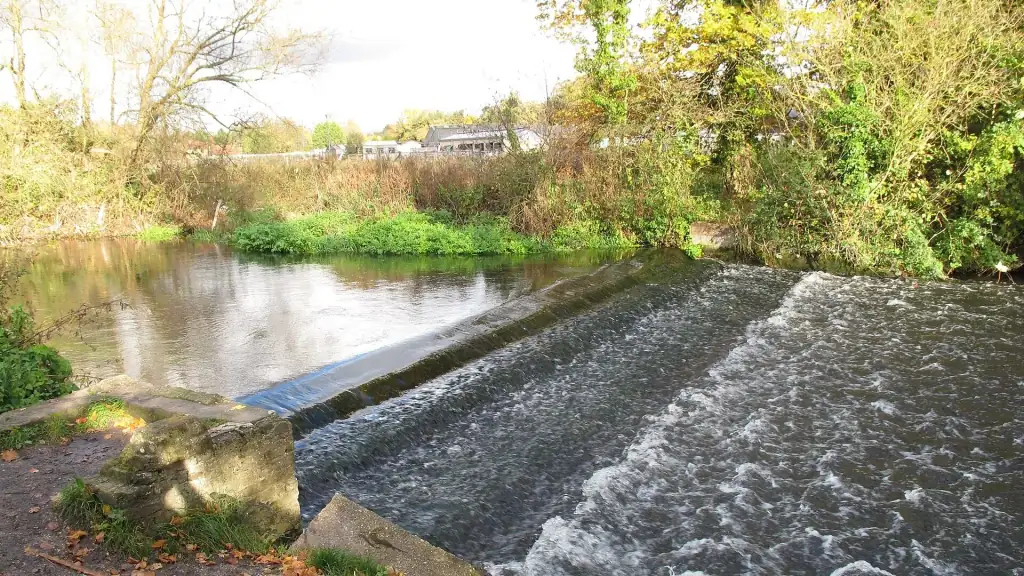
- Habitats are linear and fragmented. A river is a corridor; one dam or weir can cut a fish population off from its spawning grounds, and isolated ponds and lakes are islands that animals cannot easily leave.
- Many species have tiny ranges. Many freshwater fishes, crayfish and snails are found in a single lake, spring or river system, so a local problem can mean global extinction.
- Problems spread. Invasive species, diseases and pollutants can travel quickly through connected waters.
The main causes of decline
Since an influential 2006 review by David Dudgeon and colleagues, which Reid and colleagues revisited in 2019, scientists have described a familiar set of pressures (habitat loss, altered flows, pollution, invasive species and overexploitation) joined by newer ones such as climate change. They overlap and interact, and in most places several act at once.
1. Habitat loss and fragmentation
Wetlands are drained for farming and building; river channels are straightened, dredged and embanked; floodplains are cut off. Dams, weirs and culverts break rivers into fragments. The Living Planet Report notes that fragmentation of rivers and streams and abstraction of water are common threats to freshwater habitats, and that habitat alterations which block migration routes are a particular problem for fish. Grill and colleagues found that dams and reservoirs, and the fragmentation and flow regulation they cause upstream and downstream, are the leading contributors to lost river connectivity.
2. Changing flows and water abstraction
Taking water from rivers and aquifers, and storing it behind dams, alters how much water flows and when. Species adapted to seasonal floods and low flows can lose their cues and habitats. Over-abstraction can leave streams dry in summer, and reservoirs can release water that is colder or warmer than the river would naturally be.
3. Pollution
Nutrients from fertilisers, manure and sewage cause algal blooms and oxygen loss; pesticides harm insects; fine sediment smothers gravel where fish spawn and invertebrates live; metals and persistent chemicals accumulate in food webs. In Europe, the European Environment Agency's 2024 report identified agriculture as the most significant pressure on surface and ground waters, mainly through water use and pollution from nutrients and pesticides. Our article on nutrient pollution and algal blooms explains one of the most widespread problems.
4. Invasive non-native species
Introduced species, from crayfish and mussels to fish and plants, can outcompete, prey on or spread disease to native wildlife. Andrea Reid and colleagues, in a 2019 review in Biological Reviews, listed e-commerce-driven invasions and infectious diseases among twelve emerging or intensifying threats to freshwater biodiversity.
5. Overexploitation
Overfishing, including of migratory fish and large river species, has reduced many populations; the 2025 Red List assessment identifies overharvesting as a driver of extinctions.
6. Climate change and emerging threats
Warming water holds less oxygen and changes when insects emerge and fish spawn; droughts dry up habitats; heavier floods scour them. Reid and colleagues' list of emerging threats also includes harmful algal blooms, expanding hydropower, new contaminants, microplastics, light and noise pollution, salinisation of fresh waters, declining calcium and the cumulative effect of many stressors together. Our article on climate change and freshwater looks at the climate links in more detail.
Bending the curve: what would help
Declines are not inevitable. Tickner and colleagues' Emergency Recovery Plan, published in 2020, sets out six priority actions:
- Accelerate environmental flows: leave enough water, at the right times, in rivers and wetlands.
- Improve water quality: cut pollution from farms, towns, industry and sewage.
- Protect and restore critical habitats, including wetlands and floodplains.
- Manage exploitation of freshwater species and of riverine aggregates such as sand and gravel.
- Prevent and control invasions by non-native species.
- Safeguard and restore river connectivity, for example by removing obsolete barriers and planning new dams carefully.
The authors also call for freshwater-specific targets and indicators in international agreements such as the Convention on Biological Diversity and the Sustainable Development Goals, and for action by governments, businesses and communities. Reid and colleagues point to tools that are already helping, such as environmental flows, environmental DNA monitoring, dam removal, habitat protection and, in some cases, relocation of threatened species.
There are encouraging examples where pressures have eased. In Britain, the Environment Agency has linked the recovery of otters partly to falling levels of persistent pesticides after they were withdrawn, a story told in our article on freshwater food chains. Recovery takes time and depends on tackling causes, not only symptoms.
What you can do
- Learn your local waters. Find out the status of your nearest river or lake and what is holding it back; our guide to why healthy rivers matter explains how river health is assessed.
- Take part in monitoring. Join freshwater citizen science projects such as invertebrate surveys, which add valuable data to official monitoring.
- Stop the spread. Check, clean and dry boots, nets, boats and fishing kit between waters, and never release pets, aquarium plants or fish into the wild.
- Reduce pollution at home. Avoid pouring chemicals, fats or medicines down drains, use garden chemicals sparingly or not at all, and use water efficiently, especially in dry summers.
- Create habitat. A clean-water pond is one of the most effective ways to help freshwater wildlife locally; see ponds: small waters with big value.
To identify the species you find, see our freshwater wildlife identification guide, or browse more in our freshwater ecosystems and wildlife section.
Sources
- Living Planet Report 2024: A System in PerilWWF, with the Zoological Society of London
- One-quarter of freshwater fauna threatened with extinction (Sayer et al., Nature, 2025)Nature
- Bending the Curve of Global Freshwater Biodiversity Loss: An Emergency Recovery Plan (Tickner et al., BioScience, 2020)BioScience
- Emerging threats and persistent conservation challenges for freshwater biodiversity (Reid et al., Biological Reviews, 2019)Biological Reviews (Cambridge Philosophical Society)
- Mapping the world's free-flowing rivers (Grill et al., Nature, 2019)Nature
- Europe's state of water 2024: the need for improved water resilience (EEA Report 07/2024)European Environment Agency
Spotted an error? Write to contact@freshwateraction.net. Our editorial policy explains how we correct articles.