Freshwater Citizen Science: How to Get Involved
How volunteers monitor rivers, ponds and lakes: real schemes to join, what they measure, how the data are used, and how to keep data reliable and stay safe.
Over four days in September 2026, 8,507 people across the UK dipped test kits into rivers, lakes, ponds and canals and recorded what they found. The Great UK WaterBlitz, run twice a year by the charity Earthwatch Europe, covered 4,456 freshwater sites in that one autumn event. Each volunteer measured the same things in the same way, so the results could be mapped side by side.
That is freshwater citizen science at its best: ordinary people, trained in a simple standard method, collecting data that scientists, regulators and communities can actually use. It is also one of the easiest ways to get to know a river or pond properly, by returning to it again and again.
This guide explains what freshwater citizen science is, introduces established schemes that are running today, shows how volunteer data are used, and covers the two things that make the difference between a useful record and a wasted afternoon: reliable methods and personal safety.
What citizen science is
Citizen science, sometimes called participatory science or community science, is scientific research in which members of the public take part in collecting or analysing data. In freshwater work, volunteers typically do one or more of three things:
- Measure water quality with test kits or meters: nutrients such as nitrate and phosphate, turbidity (cloudiness), temperature, pH, conductivity or dissolved oxygen.
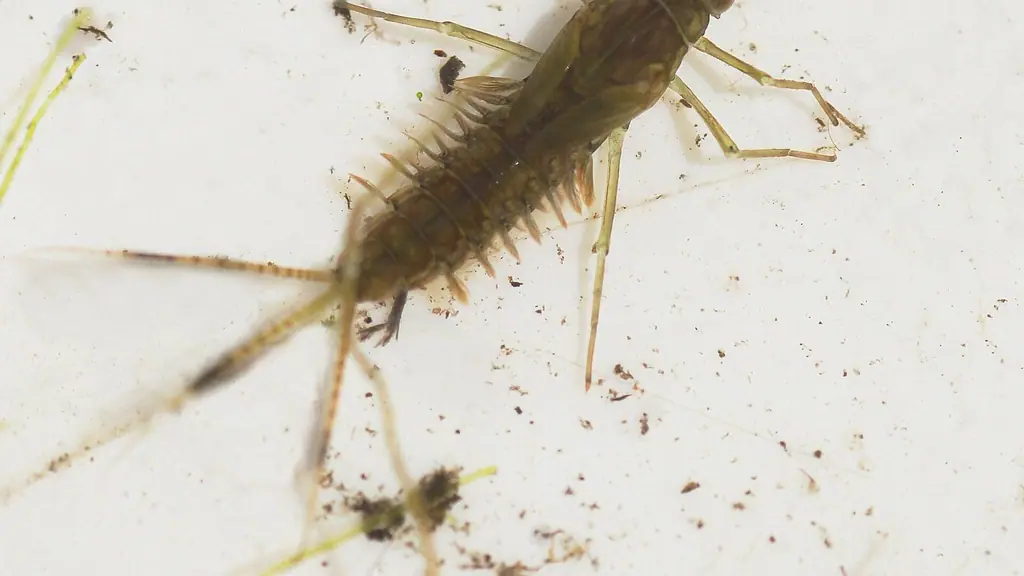
- Record wildlife, especially freshwater invertebrates such as mayfly and caddisfly larvae, whose presence or absence says a great deal about water quality over time.
- Observe and report: river flow, litter, signs of pollution such as sewage fungus, foam or oily films, invasive plants, and changes after restoration work.
What makes it science rather than a nature walk is the method. Volunteers follow a written protocol, record when and where they sampled, submit results to a shared database, and often repeat the same measurements at the same site for months or years. That consistency lets a single volunteer's monthly visits build into a long-term record of what is normal for that stretch of river.
Key idea: A single reading tells you little; the same simple measurement repeated at the same place, by trained people following the same method, is what turns volunteer effort into evidence.
Established schemes you can join
Freshwater citizen science is offered by charities, government agencies, universities and education programmes. The schemes below were all running when this article was published; check their websites for current details, training dates and age limits.
| Scheme | Run by | What volunteers do | Who can take part |
|---|---|---|---|
| Riverfly Monitoring Initiative (RMI) | The Riverfly Partnership, with the statutory environment agencies | Monthly three-minute kick sample and one-minute hand search at a fixed river site; count eight key groups of riverflies | Adults (18 and over) after a training day |
| FreshWater Watch and the Great UK WaterBlitz | Earthwatch Europe | Test nitrate, phosphate and turbidity with simple kits; record results in an app; WaterBlitz events twice a year | Individuals and community groups; WaterBlitz open to the public |
| Water quality records for ponds and other waters | Freshwater Habitats Trust | Test nitrate and phosphate with a purchased rapid test kit and submit results through an online form | Anyone with a kit and safe access to a waterbody |
| Volunteer water monitoring programmes (United States) | Many local organisations, supported by the US Environmental Protection Agency | Programme-specific water quality and biological monitoring | Varies by programme |
| GLOBE hydrosphere protocols | The GLOBE Program, sponsored by NASA | Students measure water temperature, pH, dissolved oxygen, transparency, conductivity and freshwater macroinvertebrates | Schools and teachers worldwide who register with GLOBE |
Sources: the scheme websites listed at the end of this article.
Riverflies: the river's early-warning system
Riverflies, the mayflies, caddisflies and stoneflies, spend most of their lives as larvae on the riverbed and are very sensitive to changes in water quality. The Riverfly Partnership calls them the "canaries of our rivers". Its Riverfly Monitoring Initiative grew out of a project begun in 2002, was trialled with the Environment Agency, and was launched nationally in March 2007 at a conference at the Natural History Museum in London.
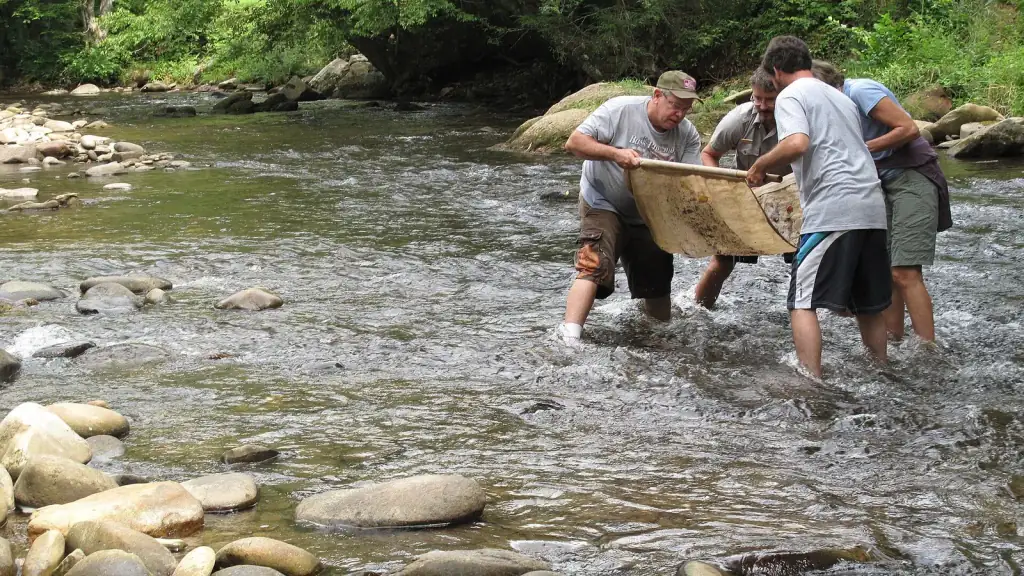
Trained monitors visit their site once a month, take a standard kick sample, sort the animals in a tray, count each target group and return them to the river. The total is compared with a trigger level set for that site by the statutory agency's ecologist: the minimum score a healthy sample should reach. If a sample falls below it, the monitor takes a second sample, and if that also breaches the trigger, the result is passed to the agency. The Partnership also runs Urban Riverfly, which adds six groups including some pollution-tolerant animals, and Extended Riverfly, which covers 33 invertebrate groups. Our beginner's guide to kick sampling for river invertebrates explains the technique.
Nutrient testing: FreshWater Watch and the WaterBlitz
Earthwatch Europe's FreshWater Watch trains community groups to test rivers and other waters for nitrate, phosphate and turbidity, three measures linked to farm runoff, sewage and soil erosion. In the UK it involves more than 80 community groups and over 2,000 members who collect data every month and upload it to an open-access global platform. Its twice-yearly Great UK WaterBlitz invites anyone to test a local waterbody over the same few days. In spring 2026, 4,677 people surveyed 2,315 sites; in autumn 2026, 8,507 people surveyed 4,456.
Ponds and small waters: Freshwater Habitats Trust
Through its Clean Water for Wildlife survey, which ran in 2016–17, the Freshwater Habitats Trust supplied more than 30,000 rapid nitrate and phosphate test kits to volunteers across England and Wales, to map nutrient pollution and find clean-water habitats. That funded project has finished and the Trust no longer sends out kits, but it still collects results: anyone who buys a kit can submit readings for a pond, stream or lake through its online form.
Outside the UK
In the United States, volunteer water monitoring is long established and organised locally. The US Environmental Protection Agency supports a national Volunteer Monitoring Network and publishes quality-assurance tools for participatory science projects. The GLOBE Program offers schools around the world standard hydrosphere protocols, so that a class measuring its local stream uses the same methods as classes elsewhere. Many other countries have their own schemes, often run by river trusts, angling organisations, universities or environment agencies.
In numbers: In the autumn 2026 Great UK WaterBlitz, 8,507 citizen scientists surveyed 4,456 freshwater sites across the UK over four days.
Source: Earthwatch Europe, FreshWater Watch in the UK.
How volunteer data are used
Good citizen science data rarely sit unused. Some of the routes are direct:
- Pollution alerts. When a Riverfly monitor's sample breaches the site's trigger level twice, the agency's ecology contact is informed and can investigate. Monitors are also asked to report visible pollution to the 24-hour incident hotline and record the incident number.
- Open databases. Riverfly data are stored in the Cartographer database, and verified data are freely available under the Open Government Licence. FreshWater Watch results go to an open-access platform. Researchers, regulators and campaigners can all use them.
- Filling gaps. Volunteers can sample small streams, ponds and ditches that official monitoring networks rarely reach, and can sample more often.
- Local and state decisions. The US EPA's webinar series on volunteer data gives examples of community-collected water quality data being used by state programmes in Connecticut, Utah, Michigan, Missouri and Wisconsin, and by regional efforts such as the Chesapeake Monitoring Cooperative.
- Measuring change. Long-term records show whether restoration projects, such as new riverside trees or a fixed sewage outfall, are working.
Keeping data reliable
Volunteer data are only as good as the method behind them, and the best schemes are open about their limits. The Freshwater Habitats Trust, for example, notes that the rapid test kits used in its surveys place samples in the correct water quality class about 80 per cent of the time, and that they consistently underestimate nitrate, so roughly one in five samples may suggest cleaner water than there really is. Knowing that, the results can still be used sensibly, for example to compare sites or to flag waters for follow-up testing.
Five habits make any volunteer's records more useful:
- Get trained and follow the protocol exactly. A three-minute kick sample means three minutes, at the same kind of habitat each time.
- Record the basics every time: date, time, exact location, weather and recent rain, and who sampled.
- Return to the same site. Monthly visits to one place are worth more than single visits to many.
- Note anything unusual, such as high flows after a storm, which can change results.
- Submit everything, including "boring" results. A record of a healthy site is the baseline against which a future problem will be seen.
Programmes that feed data to regulators usually have a written quality-assurance plan. The US EPA provides a template and a handbook for participatory science projects.
Staying safe near water
Safety: Never monitor alone, and children always need an adult within arm's reach near water. Check the weather and flood warnings first, and do not sample if the water is high, fast, cold or muddy brown. Stay out of deep or fast water, off steep or crumbling banks and ice, and away from weirs. Cover cuts with waterproof plasters, wear gloves, do not eat by the water, and wash your hands with soap afterwards, because river water can carry leptospirosis (Weil's disease). If you see obvious signs of pollution, do not touch the water: report it.
Schemes set their own rules. The Riverfly Partnership requires monitors to be at least 18 and physically able to enter a river in wellies or waders, and says monitors are not expected to put themselves at risk. Many other activities, such as observing from a bank or testing a water sample collected with a bucket on a rope, can be done safely by families and school groups with adult supervision. Our guide to doing a simple river survey sets out a full safety routine, and our printable river survey recording sheet begins with a safety checklist.
Choosing a project
Ask yourself a few questions before signing up:
- How much time do you have? A WaterBlitz takes one visit; the RMI asks for a monthly commitment, ideally for years.
- What do you enjoy? Counting insects in a tray, testing water chemistry and making careful observations each suit different people.
- Where can you get to safely? A site you can reach easily, with safe access to the water's edge, will keep you going through winter.
- Who will use the data? Prefer schemes that explain where your results go and publish them.
For a first step, learn to recognise what lives in your local stream or pond with our beginner's guide to freshwater wildlife identification, and read our explainer on what scientists measure in water and why. Then contact your local river trust, wildlife trust or angling club: many host monitoring groups and training days. For more ideas, browse our citizen science section.
Sources
- Frequently Asked QuestionsThe Riverfly Partnership
- Riverfly Monitoring Initiative (RMI)The Riverfly Partnership
- FreshWater Watch in the UKEarthwatch Europe
- Clean Water for WildlifeFreshwater Habitats Trust
- Volunteer MonitoringUS Environmental Protection Agency
- GLOBE Teacher's Guide: HydrosphereThe GLOBE Program (NASA)
Spotted an error? Write to contact@freshwateraction.net. Our editorial policy explains how we correct articles.