Climate Change and Freshwater
How a warming climate is intensifying the water cycle: heavier rain, deeper droughts, shrinking glaciers and warmer rivers, the IPCC's findings and adaptation.
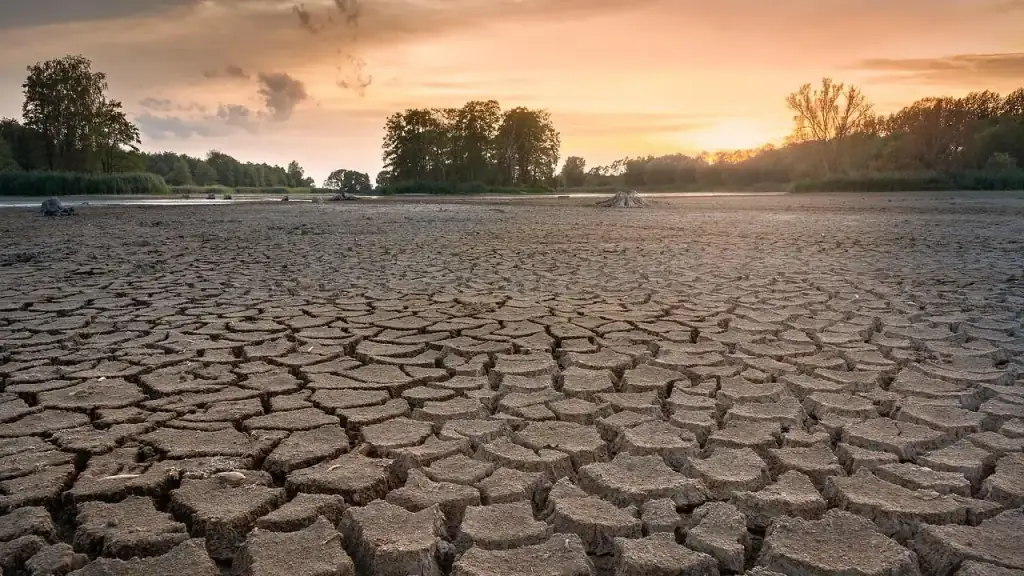
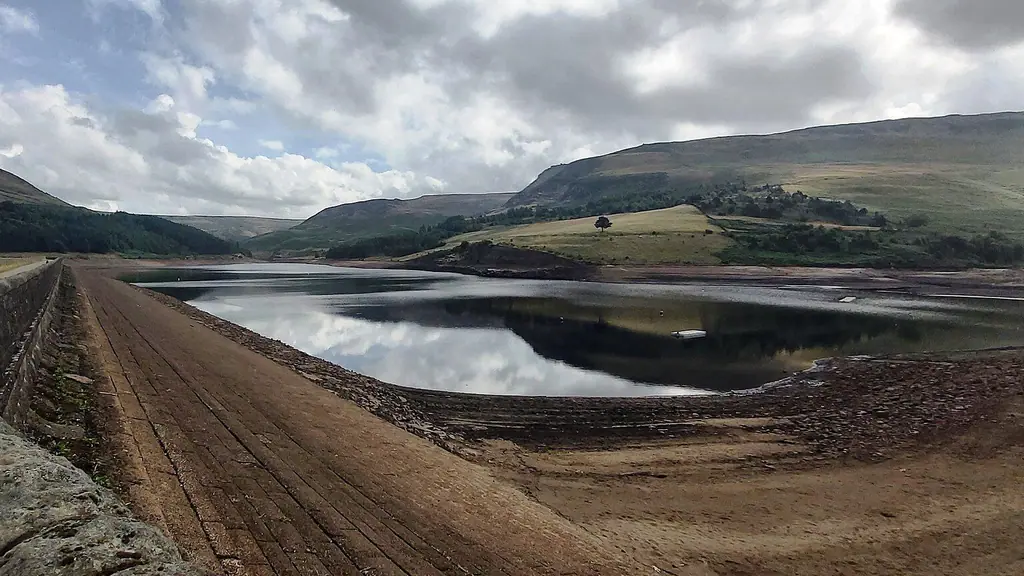
In October 2026 the UK government declared severe drought in parts of Cornwall, Devon, Dorset, Somerset and East and West Sussex, after south-east and south-west England had their driest April to September in over a century. A month earlier, the World Meteorological Organization (WMO) had published its State of Global Water Resources 2025, which described 2025 as one of the driest years for river discharge in 35 years and reported glacier loss across all regions of the world for the fourth year in a row.
No single drought or flood can be blamed on climate change alone, and dry years have always happened. But scientists now have strong evidence that a warming climate is changing the water cycle as a whole: how much water the air can hold, how hard it rains, how quickly soils dry out, and when mountain snow and ice release their water.
This guide explains the physics behind those changes, what the Intergovernmental Panel on Climate Change (IPCC) has concluded about changes already observed and those projected, how they affect water quality and freshwater life as well as supply, and what adaptation can and cannot achieve. Our clusters on droughts, floods and glaciers, snow and meltwater go deeper into each hazard.
Why warming changes the water cycle
The starting point is a law of physics. Warmer air can hold more water vapour before it condenses. The IPCC's Sixth Assessment Report (AR6) puts the increase in near-surface water-holding capacity at about 7 per cent for each 1 °C of warming, and its 2021 chapter on water cycle changes notes that this explains a similar intensification of heavy precipitation events. When conditions trigger a downpour, there is more moisture available to fall.
Warming also raises evaporative demand: the drying power of the air. Soils, plants and open water lose moisture faster on hot days, so the same rainfall goes less far. That is why a warmer world can bring both heavier rain and more severe droughts, sometimes in the same region in different seasons.
Global totals change more slowly than extremes. The IPCC reports that global average precipitation and evaporation increase by only about 1 to 3 per cent per 1 °C of warming (a very likely range). The bigger effect is on variability and on where and when water arrives. In the words of the IPCC Working Group I Summary for Policymakers, continued global warming "is projected to further intensify the global water cycle, including its variability, global monsoon precipitation and the severity of wet and dry events".
Key idea: A warmer atmosphere holds about 7 per cent more water vapour per degree Celsius and dries the land surface faster, so climate change tends to make wet extremes wetter and dry spells more damaging, even where average rainfall changes little.
How to read IPCC language
The IPCC uses calibrated terms, and they matter for accurate reporting.
- Confidence (very low, low, medium, high, very high) reflects the strength of the evidence and the degree of agreement among studies.
- Likelihood (virtually certain, very likely, likely and so on) gives a probability where a finding can be quantified. Very likely means a 90 to 100 per cent probability; likely means 66 to 100 per cent.
A finding with medium confidence is not a guess; it means the evidence or agreement is not yet as strong as for findings with high confidence. This article keeps the IPCC's own qualifiers in brackets.
What has already changed
The IPCC's Working Group I concluded that "human-caused climate change has driven detectable changes in the global water cycle since the mid-20th century" (high confidence). Its Working Group II chapter on water, published in 2022, assessed how those changes are already affecting people and ecosystems. Among its findings:
| Observed change | IPCC assessment |
|---|---|
| Intensification of the water cycle is affecting the physical aspects of water security | High confidence |
| About 709 million people live in regions where the largest annual one-day rainfall has increased since the 1950s, against about 86 million where it has decreased | Medium confidence |
| About 700 million people are experiencing longer dry spells since the 1950s, more than are experiencing shorter ones | Medium confidence |
| Extreme weather causing highly damaging floods and droughts has become more likely and/or more severe because of human-caused climate change | High confidence |
| Global glacier mass loss exceeded 0.5 metres water equivalent a year over the last two decades | High confidence |
| Streamflow has increased in northern high latitudes | High confidence |
Source: IPCC AR6 Working Group II, Chapter 4 (Water), Executive Summary, 2022.
The Working Group I summary adds that globally averaged precipitation over land has likely increased since 1950, with a faster rate since the 1980s (medium confidence), and that human influence is very likely the main driver of the global retreat of glaciers since the 1990s.
The latest monitoring fits this picture. The WMO's 2025 report found that the past seven years have had the fewest rivers with normal flows since 1991, and that water stored on the land surface has decreased over the past ten years.
Droughts and floods
Droughts and floods are where climate change meets everyday life most directly, and the IPCC treats both with care.
On droughts, the Working Group II chapter states that human-caused climate change has contributed to the increased likelihood and severity of the impact of droughts, especially agricultural and hydrological droughts, in many regions (high confidence). Droughts are relatively rare as disaster events but deadly: between 1970 and 2019 they made up 7 per cent of all disaster events worldwide but contributed 34 per cent of disaster-related deaths, mostly in Africa. Our guide to droughts explains the different kinds and how they are measured.
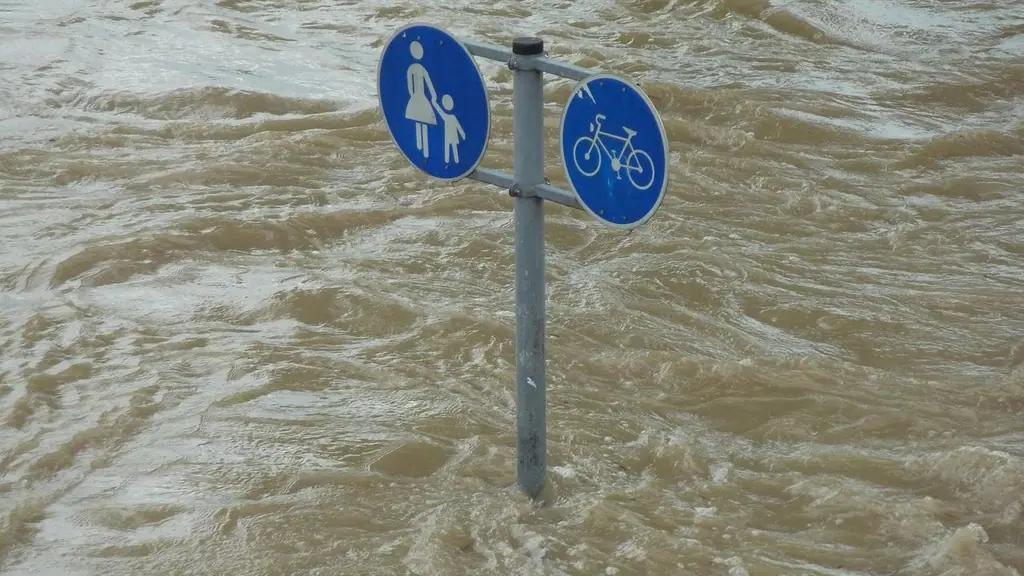
On floods, the same chapter reports that since the 1970s, 44 per cent of all disaster events have been flood-related, and that between 1970 and 2019, 31 per cent of all economic losses from disasters were flood-related. Several recent heavy rainfall events that caused substantial flooding, in places including western Europe, China, Japan, the United States, Peru, Brazil and Australia, were made more likely by human-caused climate change (high confidence). Our guide to floods explains why rivers overflow and how flood risk is managed.
In numbers: Between 1970 and 2019, droughts accounted for 7 per cent of disaster events worldwide but 34 per cent of disaster-related deaths, while floods accounted for 31 per cent of economic losses from disasters.
Source: IPCC AR6 Working Group II, Chapter 4 (Water), 2022.
Snow, ice and the timing of water
In mountain regions, snowpack and glaciers act as natural reservoirs, storing winter precipitation and releasing it in spring and summer. Warming disrupts that timing. The IPCC Working Group I has high confidence in an earlier onset of spring snowmelt, and Working Group II reports high confidence that warming over the last 40 to 60 years has led to spring floods arriving about 10 days earlier per decade.
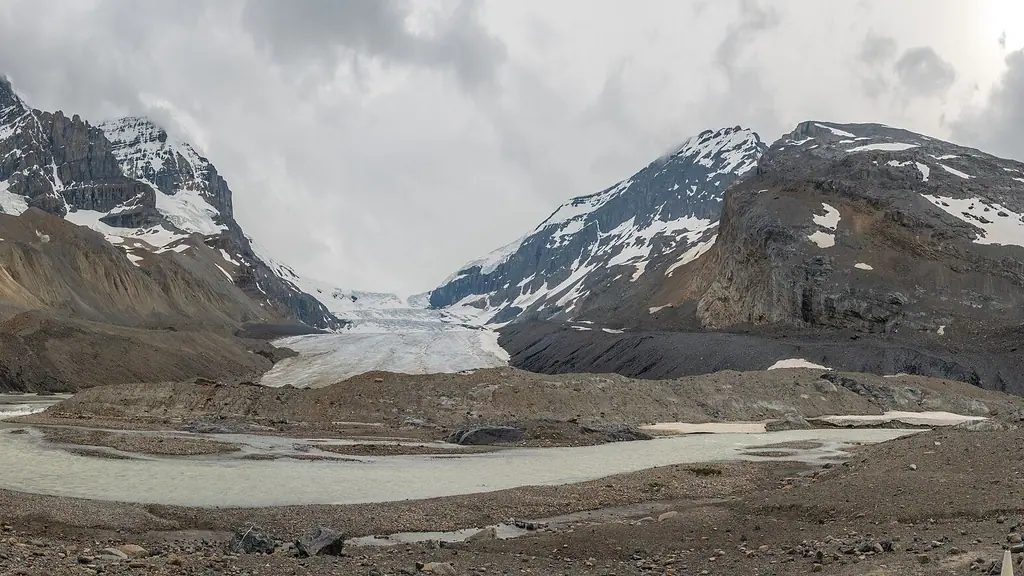
Glaciers are shrinking almost everywhere. The WMO reported that glaciers lost about 450 billion tonnes of ice in the 2024 hydrological year, the fourth most negative year on record, and that all 19 of the world's glacier regions lost mass for the third year in a row. In some regions the meltwater that rivers rely on in late summer is already past its peak. Our article on glaciers, snow and the water towers of the world explains why.
Water quality and freshwater life
Climate change affects how clean water is, not just how much there is. The IPCC Working Group II chapter notes that warming directly affects the temperature of rivers and lakes and promotes harmful algal blooms, which can affect drinking water and harbour toxins. It cites research estimating that about 10 per cent of the global population faced adverse water-quality issues between 2000 and 2010, and studies linking extreme weather to drinking-water problems in Asia, Africa and the Americas. Droughts reduce the volume of water available to dilute pollution, while heavy rain washes more sediment, nutrients and sewage into rivers. The chapter is careful, however: although climate-induced water-quality degradation has been observed (medium confidence), evidence of global-scale changes is limited because many studies cover single places.
For freshwater ecosystems, the IPCC assesses with high confidence that climate change, changes in land use and water pollution are key drivers of loss and degradation. Warmer water holds less dissolved oxygen, as our guide to water quality explains, and cold-water species such as trout and salmon are especially sensitive. Our guide to nutrient pollution and algal blooms describes how warm, still conditions combine with excess nutrients to fuel blooms.
Looking ahead: risks rise with every increment of warming
Projections depend on how much more the world warms. The IPCC's key messages for water are consistent:
- Water-related risks are projected to increase with every degree of global warming (high confidence), with more vulnerable and exposed people facing greater risks (medium confidence).
- Roughly half of the world's population currently experiences severe water scarcity for at least part of the year, from a combination of climatic and non-climatic factors (medium confidence).
- Between 3 billion and 4 billion people are projected to be exposed to physical water scarcity at 2 °C and 4 °C of global warming respectively (low confidence).
- Drought risks are projected to increase over the 21st century in many regions (very high confidence).
- Flood risk could potentially double between 1.5 °C and 3 °C of warming, and the population at risk of river flooding is estimated to increase by 120 per cent at 2 °C and 400 per cent at 4 °C (medium confidence).
- Limiting warming to 1.5 °C would reduce water-related risks across regions and sectors (high confidence).
Uncertainty is largest at the regional scale. Climate models agree well on the global physics but less well on how rainfall patterns will shift over particular river basins, which is why water planners use ranges of scenarios rather than a single forecast.
Adapting: what works, and what backfires
People are already adapting. The IPCC reports that around 60 per cent of documented adaptation interventions respond to water-related hazards (high confidence), from irrigation and rainwater harvesting to flood defences, early warning and changes in farming.
Adaptation is not automatically beneficial. The IPCC notes that irrigation stabilises and increases crop yields but is associated with adverse outcomes including groundwater over-extraction (medium confidence), and that roughly one-third of case studies on water adaptation also document maladaptation: responses that increase vulnerability elsewhere or later (high confidence). A flood wall that moves water onto a neighbouring community, or a reservoir that encourages more water-hungry farming, are examples of the kind of trade-off the term describes.
The chapter also finds that the effectiveness of projected adaptations falls sharply beyond 2 °C of warming, and that at warming levels beyond 1.5 °C, regions dependent on glaciers and snowmelt and small islands may reach biophysical limits to adaptation because water resources are limited (medium confidence). It stresses that adaptation works best when it combines Indigenous knowledge, local knowledge and technical knowledge (medium confidence), and that many of the countries and social groups most threatened by climate change have contributed least to it (high confidence).
Effective water adaptation typically includes:
- Reducing demand and losses, from leaky pipes to inefficient irrigation, so that systems have more slack in dry years. Our guide to water conservation around the world looks at places that have done this under pressure.
- Diversifying supply, including wastewater reuse and desalination, which the IPCC assesses as adaptation responses; both need energy and careful management.
- Working with nature: restoring wetlands, floodplains and catchment vegetation to slow floods and store water.
- Early warning and planning, so that drought restrictions and flood warnings are triggered in time.
- Protecting the people most exposed, with attention to fairness in who bears the cost.
What you can watch and do
Climate change works through the water cycle, so understanding the cycle is the place to start; our guide to the water cycle explains the stores and flows involved. Locally, national environment agencies publish river flows, groundwater levels and reservoir storage, and many issue drought and flood updates; following them through a year shows how variable water already is. At home, using water carefully in dry periods eases pressure on rivers and reservoirs when they are most stretched, as explained in how to save water at home. More guides are in the climate and freshwater section.
Sources
- Climate Change 2021: The Physical Science Basis. Summary for PolicymakersIntergovernmental Panel on Climate Change (IPCC), Working Group I
- Climate Change 2021: The Physical Science Basis. Chapter 8: Water Cycle ChangesIntergovernmental Panel on Climate Change (IPCC), Working Group I
- Climate Change 2022: Impacts, Adaptation and Vulnerability. Chapter 4: Water (Caretta et al.)Intergovernmental Panel on Climate Change (IPCC), Working Group II
- State of Global Water Resources 2025World Meteorological Organization
- Glacier melt will unleash avalanche of cascading impacts (21 March 2025)World Meteorological Organization
- Government activates plan to protect consumers as severe drought declared in parts of England (15 October 2026)Department for Environment, Food & Rural Affairs, GOV.UK
Spotted an error? Write to contact@freshwateraction.net. Our editorial policy explains how we correct articles.