Who Fetches the Water? Time, Distance and Gender
Who carries water when there is no tap at home, how the 30-minute threshold works, what surveys show about women and girls, and the costs to health and time.
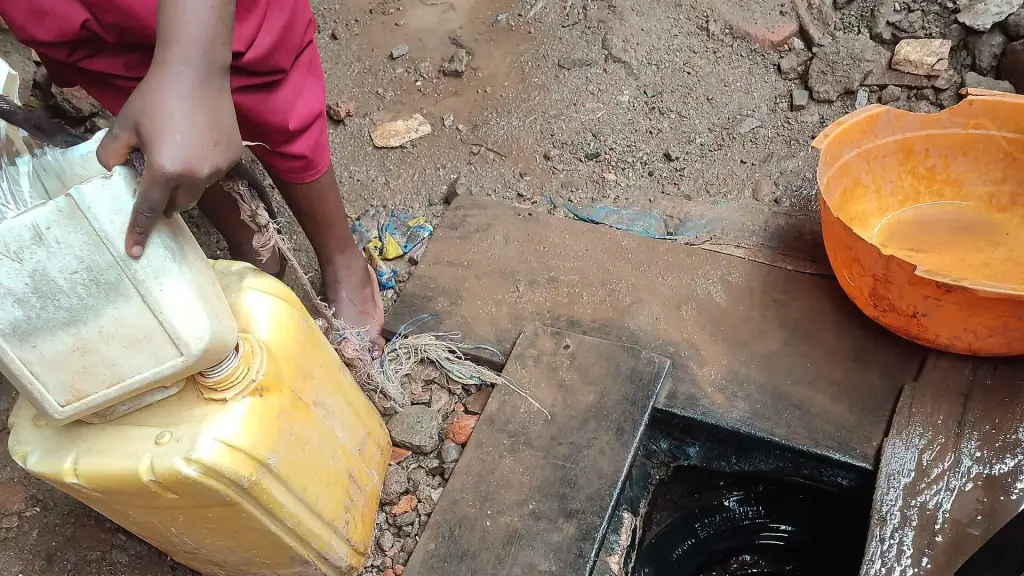
In Malawi, a national survey in 2020 asked households who usually goes to collect their drinking water. In 76 per cent of households the answer was a woman or a girl; in 7 per cent it was a man or a boy. In half of all households, women and girls spent more than 30 minutes a day on the task. Those figures, published by the WHO/UNICEF Joint Monitoring Programme (JMP) in 2025, are among the starkest in its data, but the pattern they show is common.
Fetching water is invisible in most statistics about water access. A household counts as having a "basic" service if the round trip to an improved source takes 30 minutes or less, but the measure says nothing about who makes that trip, how many times a day, carrying how much weight. This article looks at what household surveys reveal about the people who carry water, how the work is measured, and what it costs in health, time and opportunity.
How many people still carry water home
Most of the world's people have water on their premises. The JMP estimates that in 2024, 1.7 billion people still lacked an improved water source accessible on their premises, and more than two thirds of them, 1.2 billion, lived in rural areas. In every SDG region except two, more than 75 per cent of people had water on premises. The exceptions were Oceania, at 50 per cent, and sub-Saharan Africa, at 33 per cent. In rural sub-Saharan Africa only 16 per cent of people had water accessible at home.
Without water on the premises, someone has to go and get it, from a standpipe, kiosk, borehole, well, spring or, for 106 million people worldwide, directly from a river, lake or pond. The JMP's drinking water ladder uses collection time to separate two levels of service from an improved source:
| Service level | Collection time |
|---|---|
| Basic | Round trip, including queuing, of 30 minutes or less |
| Limited | Round trip, including queuing, of more than 30 minutes |
Source: WHO/UNICEF JMP service ladder definitions. "Safely managed" water must be accessible on premises, so collection time does not apply.
In 2024, 287 million people used a limited service. Long trips are not only a rural issue. In urban areas, the number of people spending more than 30 minutes collecting water from improved sources doubled between 2000 and 2024, from 44 million to 90 million, while the urban population grew by about two thirds.
Key idea: The 30-minute threshold measures the time for one round trip, including the queue; a household that needs several trips a day can spend far longer than that, and the indicator does not record who goes.
What surveys show about women and girls
Global water statistics are calculated per household, so they cannot show differences inside a home. But a large number of national surveys, such as the Multiple Indicator Cluster Surveys and Demographic and Health Surveys, ask how long it takes to collect water and the age and sex of the person who usually does it. That is the basis for the JMP's gender analysis.
In 2023, UNICEF and WHO published the first in-depth global analysis of gender inequalities in household water, sanitation and hygiene. It found that 1.8 billion people lived in households without water supplies on premises. In 7 out of 10 of those households, women and girls aged 15 and over were primarily responsible for collecting water, compared with 3 in 10 for men and boys of the same age. Among younger children, girls under 15 were more likely than boys under 15 to fetch water: 7 per cent compared with 4 per cent.
The JMP's 2025 report added country detail. In the majority of countries with data, women and girls were more likely than men and boys to be responsible for water collection, and likely to spend more time on it each day.
| Country (survey year) | Women and girls mainly responsible | Men and boys mainly responsible |
|---|---|---|
| Malawi (2020) | 76% of households | 7% |
| Central African Republic (2019) | 73% | 14% |
| Chad (2019) | 70% | 8% |
| Mongolia (2023) | 15% | 36% |
Source: WHO/UNICEF JMP, Progress on household drinking water, sanitation and hygiene 2000–2024 (2025). Shares are of all households surveyed; in the remaining households neither group was reported as mainly responsible, for example because water is piped to the home.
The time burden followed the same lines. Women and girls spent more than 30 minutes a day collecting water in over a quarter of households in the Central African Republic, Chad, the Democratic Republic of the Congo, Madagascar and Zimbabwe. In Chad, Malawi and Yemen, more than one in ten households relied on women and girls for trips reportedly taking more than two hours a day. Only in Afghanistan, the Central African Republic, Ghana and Yemen did more than 1 per cent of households rely on men and boys for such long trips, and even there women and girls spent between two times (Afghanistan) and eight times (Central African Republic) as much time on water carriage.
Mongolia shows that the pattern is not universal. There, men and boys were responsible in 36 per cent of households, but only 2 per cent of households spent more than 30 minutes a day collecting water. The JMP found that the heaviest burdens were concentrated in sub-Saharan Africa and Central and Southern Asia.
Peer-reviewed research has found the same pattern. Jay Graham, Mitsuaki Hirai and Seung-Sup Kim analysed surveys from 24 sub-Saharan African countries, carried out between 2005 and 2012, and published their results in PLOS ONE in 2016. Among households where collecting water took more than 30 minutes, adult women were the main collectors in every country, ranging from 46 per cent of such households in Liberia to 90 per cent in Côte d'Ivoire. When children did the work, girls made up 62 per cent of child collectors and boys 38 per cent. Across the 24 countries, the authors estimated that 13.54 million adult women and 3.36 million children were responsible for collecting water in households where it took more than 30 minutes.
In numbers: In 7 out of 10 households without water on premises, women and girls aged 15 and over are mainly responsible for collecting it, compared with 3 in 10 for men and boys.
Source: UNICEF and WHO, Progress on household drinking water, sanitation and hygiene 2000–2022: special focus on gender (2023).
The costs: bodies, time and safety
Carrying water is heavy, repetitive physical work. A litre of water weighs a kilogram, so a full 20-litre container, a common size, weighs about 20 kg before the container itself is counted. Researchers have begun to document what that does to the body over a lifetime. A 2024 scoping review in PLOS Global Public Health by Meeuwisse and colleagues gathered the evidence from sub-Saharan Africa and found that water carrying, both day to day and over years, is closely linked to musculoskeletal pain and dysfunction, which in turn affect women's and households' health and wellbeing. The authors also found large gaps in the research, especially on older people and other vulnerable groups.
Time is the other cost. Hours spent walking and queuing are hours not spent in school, paid work, farming, caring or resting. The 2023 UNICEF-WHO report noted that longer trips cost women and girls time in education, work and leisure, and also expose them to physical injury and other dangers on the way. The same analysis found that women and girls were more likely than men and boys to feel unsafe walking alone at night, and more likely to feel unsafe using a toilet outside the home.
Water carried home is also more likely to be contaminated by the time it is drunk. The JMP's 2025 report found that drinking water is generally more likely to be free from contamination at the point of collection than in the household container at the point of use, which is one reason the SDG standard asks for water on premises rather than simply a nearby improved source. Households that must ration what they carry may also use less water for washing and hygiene; our article on handwashing with soap explains why that matters.
Climate and the walk to water
The length of the walk is not fixed. When wells and nearby sources dry up, people go further. A study published in Nature Communications in 2025 by Paulos and colleagues linked almost 980,000 survey observations from 31 sub-Saharan African countries to local rainfall and temperature records. More rain over the previous year shortened fetching times: each additional centimetre of weekly rainfall cut walking time by about 3.5 minutes. Warmer conditions lengthened them: each 1 °C rise over the previous year added about 0.76 minutes. Rural households were more affected by recent weather than urban ones, but rural households with electricity were less affected.
The authors concluded that climate change may increase the burden of fetching water, and that providing electricity and water infrastructure together could help to offset it.
What reduces the burden
The most direct solution is the one built into SDG target 6.1: water accessible on the premises, available when needed and safe. Every household that moves from a distant source to a tap at home removes the walk entirely. That is why the JMP treats water on premises as part of the definition of a safely managed service.
Getting there takes time and money, and progress is uneven. Our guide to SDG 6 sets out how far the world still has to go. In the meantime, several practical steps shorten trips and share the load:
- More water points closer to homes, such as standpipes, protected wells and kiosks, so round trips fall below 30 minutes.
- Reliable supply. A tap that runs dry for days sends people back to distant sources, so maintenance and operation matter as much as construction.
- Better data. Surveys that record who collects water, how often and for how long make the burden visible to planners. The JMP notes that national household surveys only sometimes include separate questionnaires for individual women and girls.
- Women's participation in decisions about where water points go and how they are run. SDG target 6.b calls for local communities to take part in water and sanitation management, and the human rights to water and sanitation emphasise participation; our practical guide to those rights explains how communities use them.
Safety: An adult sets up and supervises this activity. Use a sturdy bucket with a handle on a dry, non-slip floor or outdoors, lift with bent knees and a straight back, and only raise it a few centimetres. Younger children should use a smaller container with 2 or 3 litres instead. Nobody carries the bucket around, and the water goes on plants afterwards.
Try this: For a class or family discussion, fill a bucket with 10 litres of water and let older children and adults each lift it briefly. It weighs about 10 kg. Then talk about the survey figures above: how would your day change if this were half the water your household used, and it had to be carried from 15 minutes away?
Finding the data for a country
The JMP's data portal at washdata.org shows, for each country, the share of people with water on premises, the share with a limited service and, where surveys allow, who collects water. Remember that the figures describe households, not individuals, and that the latest survey for a country may be several years old.
For more on how access to water and sanitation is measured and improved, browse our water access and sanitation section.
Sources
- Progress on household drinking water, sanitation and hygiene 2000–2024: special focus on inequalitiesWHO/UNICEF Joint Monitoring Programme for Water Supply, Sanitation and Hygiene (JMP)
- Women and girls bear brunt of water and sanitation crisis – new UNICEF-WHO report (6 July 2023)UNICEF
- An Analysis of Water Collection Labor among Women and Children in 24 Sub-Saharan African Countries (Graham, Hirai and Kim, PLOS ONE, 2016)PLOS ONE
- Water fetching and musculoskeletal health across the life-course in Sub-Saharan Africa: A scoping review (Meeuwisse et al., PLOS Global Public Health, 2024)PLOS Global Public Health
- Temperature and precipitation affect the water fetching time burden in Sub-Saharan Africa (Paulos et al., Nature Communications, 2025)Nature Communications
Spotted an error? Write to contact@freshwateraction.net. Our editorial policy explains how we correct articles.