Chhaupadi, Menstrual Hygiene and the Right to Sanitation
What chhaupadi is, how Nepal's law and communities are tackling it, and why menstrual health is part of the human right to water, sanitation and hygiene.
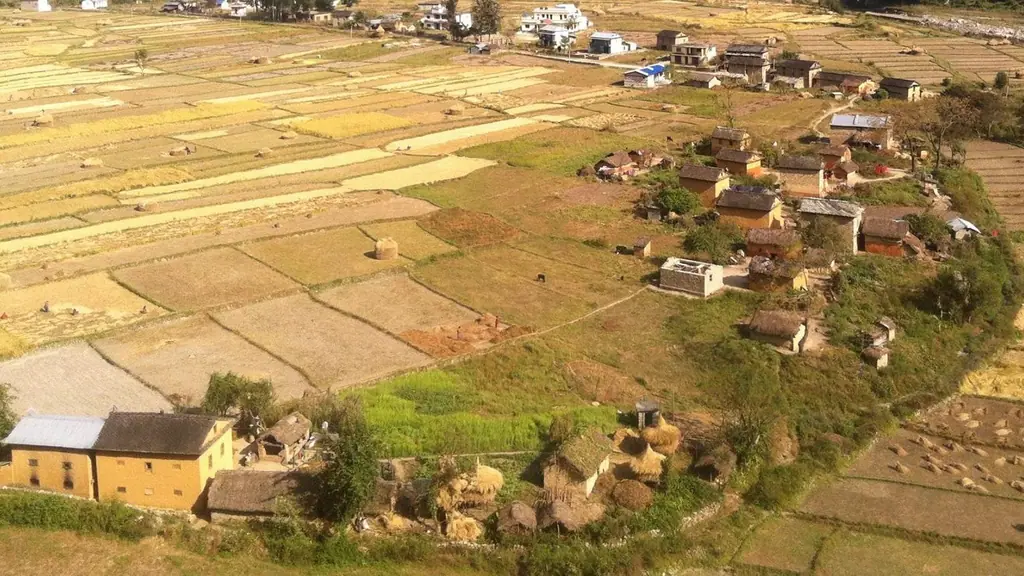
Section 168 of Nepal's National Penal (Code) Act, which came into force on 17 August 2018, contains a sentence that few criminal codes anywhere would need. It prohibits banishing a woman to a shed during menstruation or after childbirth, a practice known as chhaupadi, and makes it punishable by up to three months in prison, a fine of up to 3,000 rupees, or both, with an additional penalty for public servants.
The law is a response to a custom concentrated in Nepal's far west. It also sits within a much wider issue that affects hundreds of millions of women and girls worldwide: whether they can manage menstruation safely, privately and with dignity. This article explains what chhaupadi is, what the law and community campaigns have changed, what the evidence shows, and why menstrual health is now treated as part of the human rights to water and sanitation.
What chhaupadi is
The word comes from the far west of Nepal, where menstruation is called chhau. Under chhaupadi, menstruating women and girls, and women who have recently given birth, are regarded as impure. They may face restrictions at home and in religious life, and in the practice's most severe form are made to stay in a small hut or animal shed, called a chhaugoth, during their periods and after childbirth.
The harms are serious. Women and girls in huts have faced cold, infections and respiratory illness, the threat of sexual assault and attacks by animals, and deaths have been reported in recent years, including that of a teenage girl bitten by a snake in 2023, according to a 2024 commentary in the International Journal of Public Health by Ghimire. Seclusion can also mean poor access to water for washing and the lasting message that a normal bodily process is shameful.
It is important to keep the practice in proportion. Chhaupadi in its hut-based form is regional, not national. Using Nepal's 2022 Demographic and Health Survey of more than 13,000 women aged 15 to 49, Barini and colleagues found that 6.2 per cent reported chhaupadi, with strong geographical clustering in the west. Milder menstrual restrictions were far more common: 84.8 per cent of women reported some form of restriction, most often religious restrictions, ranging from 79 per cent in Bagmati Province to 95.6 per cent in Sudurpashchim. Women in the wealthiest households were much less likely to experience chhaupadi.
In numbers: In Nepal's 2022 Demographic and Health Survey, 6.2 per cent of women who had menstruated in the past year reported chhaupadi, and 84.8 per cent reported some form of menstrual restriction.
Source: Barini et al., PLOS Global Public Health (2024).
From court ruling to criminal law
Legal action against chhaupadi has unfolded over two decades:
- 2005: Nepal's Supreme Court recognised chhaupadi as a discriminatory and harmful custom. Ghimire describes the practice as outlawed since 2005; Baumann and colleagues date an initial ban to 2006.
- 2009: chhaupadi was declared a form of violence against women, according to the timeline set out by Baumann and colleagues.
- 2017: Parliament adopted the National Penal (Code) Act, whose Section 168 explicitly criminalised chhaupadi; it took effect on 17 August 2018.
- Late 2019: a government campaign to demolish menstrual huts (chhaugoth), directed by the Ministry of Home Affairs and district administrations, was formally launched, according to Jnawali and colleagues.
Laws alone have not ended the practice. In a qualitative study in Kalikot district, Baumann and colleagues found that community members and police generally saw criminalisation as a positive step, and a third of participants said they planned to change their behaviour after learning about the penalties. But accurate knowledge of the law was very low, and participants expected change to be gradual. Ghimire's 2024 commentary describes a continuing gap between policy and practice, sustained by deep-rooted beliefs, poverty, poor housing and resistance from some community leaders.
The hut demolition campaign shows both progress and its limits. In a survey of 385 women and girls in Chaurpati Rural Municipality, Achham district, carried out in 2024 and published in 2026, Jnawali and colleagues found that 93.5 per cent reported that huts in their community had been demolished and 85.5 per cent now stayed in a separate room at home during menstruation. Yet 11 per cent still used huts, often covertly, and menstrual hygiene remained poor: about half used sanitary pads, and many disposed of them by burning or in water sources.
Key idea: Banning huts moves women indoors; changing the beliefs behind the seclusion, and providing water, privacy and safe disposal, takes longer.
Menstrual health as part of WASH
Chhaupadi is the most visible form of a wider problem. Wherever they live, women and girls need certain things to manage menstruation: clean materials, water and soap for washing, a private and safe place to change, a way to dispose of or wash and dry materials, accurate information, and freedom from stigma. A systematic review of qualitative research from 35 low- and middle-income countries, published in PLoS Medicine in 2019 by Hennegan and colleagues, found that menstrual stigma and gender norms shaped women's and girls' experiences across the studies, with effects on their health, education and well-being.
This is why menstrual health is now treated as part of water, sanitation and hygiene, and of the rights to them. The UN General Assembly's resolution 70/169 of 2015, which recognised the human rights to safe drinking water and sanitation as distinct rights, expressed deep concern that a lack of water and sanitation, including for menstrual hygiene and especially in schools, reinforces the stigma around menstruation and harms gender equality and girls' right to education. Our practical guide to the human rights to water and sanitation explains how acceptability and privacy form part of those rights.
Monitoring is catching up. The WHO/UNICEF Joint Monitoring Programme now collects menstrual health data. Its 2025 report, drawing on data from 70 countries, found that most women and adolescent girls had menstrual materials and a private place to change, but many lacked enough materials to change as often as needed, and girls aged 15 to 19 were less likely than adult women to take part in activities during menstruation.
Schools are a particular focus, because that is where many girls first menstruate and where a lack of private toilets, water and disposal is most disruptive. Our article on why toilets in schools matter looks at the evidence on school facilities and girls' attendance.
What helps
Researchers and practitioners in Nepal and elsewhere point to several elements that work together:
- Information before menarche. Teaching girls and boys, and their parents, about menstruation as normal biology before it begins.
- Engaging community and religious leaders. Beliefs about purity are held across generations; change is faster when respected local figures take part.
- Making the law known. Baumann and colleagues found that knowledge of the penalties was low even among police.
- Water, privacy and disposal at home and school. Without them, ending seclusion can simply move the problem indoors.
- Listening to women and girls. They are best placed to say what would make menstruation easier to manage where they live.
For readers in the region, regional sanitation commitments also matter: governments at the 2016 South Asian Conference on Sanitation committed to prioritise menstrual hygiene management, as our article on the SACOSAN conferences describes. Target 6.2 of the Sustainable Development Goals covers sanitation and hygiene and calls for special attention to the needs of women and girls, as explained in SDG 6 explained, and more articles are collected in water access and sanitation.
Until about 2016–2018 this web address belonged to the Freshwater Action Network, a civil-society network on water and sanitation. FreshwaterAction is a separate, independent publication. It is not that network, does not speak for it and is not its successor. This article is newly written on the same subject.
Sources
- The National Penal (Code) Act, 2017 (Nepal), English translationNepal Law Commission, via the Asian Development Bank Law and Policy Reform portal
- Spatial heterogeneity of menstrual discriminatory practices against Nepalese women: a population-based study using the 2022 Demographic and Health Survey (Barini et al., PLOS Global Public Health, 2024)PLOS Global Public Health
- Is criminalization the answer? Perspectives of community members and police on menstrual seclusion policy in Far-West Nepal (Baumann et al., Health Policy and Planning, 2021)Health Policy and Planning (Oxford University Press)
- Menstrual exile: Nepal's chhaupadi and the policy-practice divide (Ghimire, International Journal of Public Health, 2024)International Journal of Public Health
- Menstrual hygiene management practices after the chhaugoth demolition campaign in Achham, Nepal (Jnawali et al., PLoS ONE, 2026)PLoS ONE
- Women's and girls' experiences of menstruation in low- and middle-income countries: a systematic review and qualitative metasynthesis (Hennegan et al., PLoS Medicine, 2019)PLoS Medicine
- 1 in 4 people globally still lack access to safe drinking water – WHO, UNICEF (26 August 2025)World Health Organization
- Resolution 70/169: The human rights to safe drinking water and sanitationUnited Nations General Assembly
Spotted an error? Write to contact@freshwateraction.net. Our editorial policy explains how we correct articles.