The Human Rights to Water and Sanitation: A Practical Guide
What the human rights to water and sanitation require of governments, the five standards and three duties behind them, and how campaigners use them in practice.
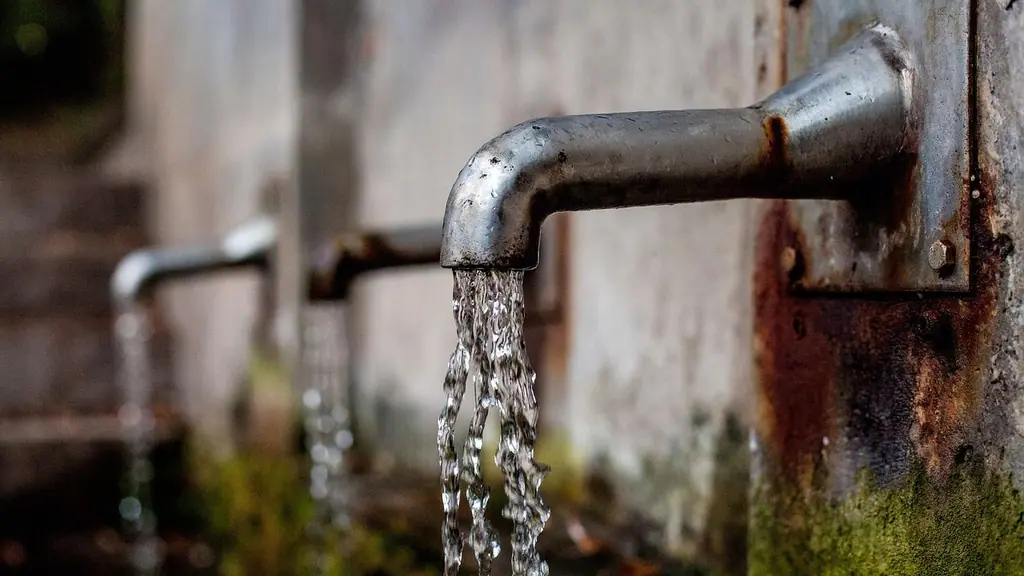
Imagine a neighbourhood on the edge of a fast-growing city where the piped network stops three streets short. Residents buy water from tankers at several times the utility tariff, share a handful of pit latrines and wait for a promised extension that never appears in the budget. A human rights approach starts from a simple question about that street: who is responsible for this, and what exactly do they owe the people who live there?
Since 2010 the United Nations has recognised safe drinking water and sanitation as human rights, and since 2015 as two distinct rights. This guide explains what the rights contain, what they require of governments and service providers, what they do not mean, and how community groups and campaigners put them to work. For the story of how the UN reached that point, see our account of how the UN recognised the human right to water and sanitation.
Where the rights come from
The rights are not set out in a single treaty of their own. The Human Rights Council's resolution 15/9 of September 2010 affirmed that they derive from the right to an adequate standard of living in Article 11 of the International Covenant on Economic, Social and Cultural Rights, and are closely tied to the rights to health, life and dignity. Most countries are parties to that Covenant, so the obligations described below rest on commitments governments have already made.
The detailed content comes mainly from three texts: General Comment No. 15 (2002) of the Committee on Economic, Social and Cultural Rights on the right to water; the Committee's 2010 statement on the right to sanitation; and General Assembly resolution 70/169 of December 2015, which defines each right separately. National constitutions and laws then translate these into domestic duties, as our article on the right to water in national law describes.
The five standards
General Comment No. 15 and resolution 70/169 describe a set of standards that any water or sanitation service has to meet. They apply whether the provider is a city utility, a private company, a community committee or a household's own well.
| Standard | Water | Sanitation |
|---|---|---|
| Availability | Enough water, continuously, for drinking, cooking, washing and hygiene | Enough facilities, so that queues and long waits do not prevent use |
| Quality and safety | Free from microbes, chemicals and radiological hazards that threaten health | Hygienically safe to use, separating people from excreta, with water and soap for handwashing |
| Acceptability | Acceptable colour, odour and taste | Culturally acceptable, private and dignified, including for menstrual hygiene |
| Physical accessibility | Within safe reach of every household, school, workplace and health centre | Safe to reach and use at any time of day or night, including for people with disabilities, older people and children |
| Affordability | Costs that do not force people to give up other essentials such as food, housing or medicine | The same, covering construction, emptying and maintenance as well as fees |
General Comment No. 15 links the quantity of water to World Health Organization guidance rather than fixing a single figure, and stresses that adequacy should not be read narrowly as a number of litres. Water, it says, should be treated as a social and cultural good, not primarily as an economic good.
Key idea: A tap that runs two hours a week, a latrine nobody can reach safely at night, or water nobody can afford all fall short of the rights, even if they count as "access" on paper.
Three duties: respect, protect, fulfil
Human rights law describes state obligations in three layers, and General Comment No. 15 applies each one to water.
- Respect. The state must not interfere with people's existing access. That rules out arbitrary disconnections, polluting water from state-owned facilities, destroying water infrastructure as a punishment, or interfering with customary water-sharing arrangements.
- Protect. The state must stop others from interfering. That means regulating companies, landlords and other users so they do not pollute sources, take an unfair share or deny access, and, where services are run by private or community providers, setting and enforcing rules on price, quality and disconnection.
- Fulfil. The state must take positive steps: plan and finance services, promote hygiene and the protection of water sources, and provide services directly when people cannot secure them by their own means.
Most of this is subject to progressive realisation: governments must move as quickly and effectively as possible, using the maximum of their available resources, towards full enjoyment of the rights. That is not a licence to wait. The Committee identified core obligations with immediate effect, including access to the minimum essential amount of safe water to prevent disease, non-discriminatory access to services, and a national strategy and plan of action. It also set a strong presumption against retrogressive steps, such as cutting services without careful justification.
The Human Rights Council added a point that matters wherever services have been contracted out: handing water or sanitation to a third party does not release the state from its obligations, and whatever the form of provision, it must be transparent, non-discriminatory and accountable.
Principles that run through everything
Alongside the standards, five principles shape how the rights are put into practice:
- Non-discrimination and equality. Priority goes to those without even basic services, and to groups who are often missed: informal settlements, remote rural areas, people with disabilities, ethnic minorities, prisoners, refugees and people experiencing homelessness.
- Participation. People affected by decisions on tariffs, technologies and plans should be able to take part in them, with enough information to do so meaningfully.
- Access to information. Data on water quality, budgets, service levels and plans should be public and understandable.
- Accountability. There must be ways to complain and to obtain a remedy, from a utility's complaints desk to a regulator, an ombudsperson or a court.
- Sustainability. Services must keep working, and water resources must be managed so that future generations can also enjoy the rights.
What the rights do not mean
Three misunderstandings come up often.
"Water must be free." It need not be. General Comment No. 15 says payment must be based on equity, so that services are affordable for all, whether publicly or privately provided, and that poorer households should not carry a disproportionate share of costs. Many countries meet this with social tariffs or a free basic allowance, but charging for water is compatible with the rights.
"Everyone gets a tap and a flush toilet at home." The rights are about outcomes against the standards above, not one technology. A well-run public standpipe or a properly emptied pit latrine can be compatible with them, provided it is safe, accessible, acceptable and affordable.
"The rights cover all water use." They concern water for personal and domestic purposes. Water for farming, industry and ecosystems matters greatly, and General Comment No. 15 discusses some of it, but those uses are governed mainly by other rights and by water-resources law.
Using the rights in advocacy
Rights language changes the conversation from charity to obligation, and from "beneficiaries" to rights-holders who can ask questions. In practice, campaigners use the rights in a few recurring ways:
- Mapping gaps against the standards. A community survey that records where taps run dry, where latrines are unsafe at night and how much households pay turns a general complaint into evidence about specific standards.
- Following the money. Comparing water and sanitation budgets with plans, and spending with budgets, tests whether a government is really using the maximum of available resources. Our article on governance and transparency covers budget tracking and social audits in more detail.
- Using official monitoring. UN treaty bodies and the Universal Periodic Review regularly question governments about water and sanitation, and civil-society groups can submit their own reports.
- Going to court. Where the rights are in a constitution or law, disconnections, discrimination or failure to act can be challenged. Results vary by country, so legal advice matters.
- Building coalitions. Regional civil-society networks, such as ANEW in Africa and FANSA in South Asia, have used the rights to hold ministers to account for their declarations.
In numbers: In 2024, 2.1 billion people lacked safely managed drinking water, 3.4 billion lacked safely managed sanitation and 1.7 billion lacked basic hygiene services at home.
Source: WHO/UNICEF Joint Monitoring Programme, report published August 2025.
Handbooks worth reading
Two free handbooks explain all of this in much more depth.
The most authoritative is Realising the human rights to water and sanitation, published in 2014 by the first UN Special Rapporteur on the subject, Catarina de Albuquerque. It comes as nine booklets (introduction, legal frameworks, finance, services, monitoring, access to justice, principles, checklists and sources) and is written for governments, regulators and donors as well as civil society. The booklets can be downloaded from UN-Habitat. The checklists booklet is particularly useful for groups assessing a local service.
An earlier and shorter guide, Right to water and sanitation: a handbook for activists, was published in 2010 by the Freshwater Action Network in cooperation with the Centre on Housing Rights and Evictions (COHRE) and Both ENDS, with a foreword by Catarina de Albuquerque, then the UN independent expert. Aimed at civil-society organisations, it introduces the content of the rights and state obligations and walks through planning advocacy to influence decision-makers. It predates the 2015 separation of the two rights and the SDGs, so its figures and some terminology are dated. FreshwaterAction does not republish it; India Water Portal keeps a listing page with a full PDF copy.
Until about 2016–2018 this web address belonged to the Freshwater Action Network, which published the 2010 activists' handbook described above. FreshwaterAction is a separate, independent publication. It is not that network, does not speak for it and is not its successor. This guide is newly written.
Where to go next
- Read the short UN texts themselves: resolution 70/169 sets out both rights in a single paragraph.
- Look up your country's figures on the JMP's washdata.org website and check what its constitution and water laws say.
- Explore how the rights work in particular places, from Mexico's 2012 constitutional amendment to community water systems in Costa Rica and Central America, and how they apply when rivers cross borders.
- Browse the full water rights and governance section.
Sources
- General Comment No. 15 (2002): The right to water (E/C.12/2002/11)UN Committee on Economic, Social and Cultural Rights
- Resolution 15/9: Human rights and access to safe drinking water and sanitation (A/HRC/RES/15/9)UN Human Rights Council
- Resolution 70/169: The human rights to safe drinking water and sanitation (A/RES/70/169)United Nations General Assembly
- Realising the human rights to water and sanitation: a handbook by the UN Special Rapporteur Catarina de Albuquerque (2014)UN-Habitat
- Right to water and sanitation: a handbook for activists (2010), listing and PDF copyIndia Water Portal
- 1 in 4 people globally still lack access to safe drinking water – WHO, UNICEF (26 August 2025)World Health Organization
Spotted an error? Write to contact@freshwateraction.net. Our editorial policy explains how we correct articles.