Handwashing with Soap: The Science of a Simple Habit
How soap removes germs, what the evidence says about handwashing and diarrhoea, who still lacks a place to wash with soap and water, and how to teach children.
On 15 October 2008, children in more than 70 countries washed their hands with soap at the same time. It was the first Global Handwashing Day, founded by the Global Handwashing Partnership, and it has been held on the same date every year since. The idea was deliberately simple: take one of the cheapest ways of preventing disease and make it visible.
Handwashing looks too ordinary to need a day of its own. Yet the evidence for it is strong, and access to a place to wash with soap and water is still far from universal. This article explains how soap works, what the research says about handwashing and health, who lacks the means to do it, and how to make it a habit, with an activity to try with children.
How soap works
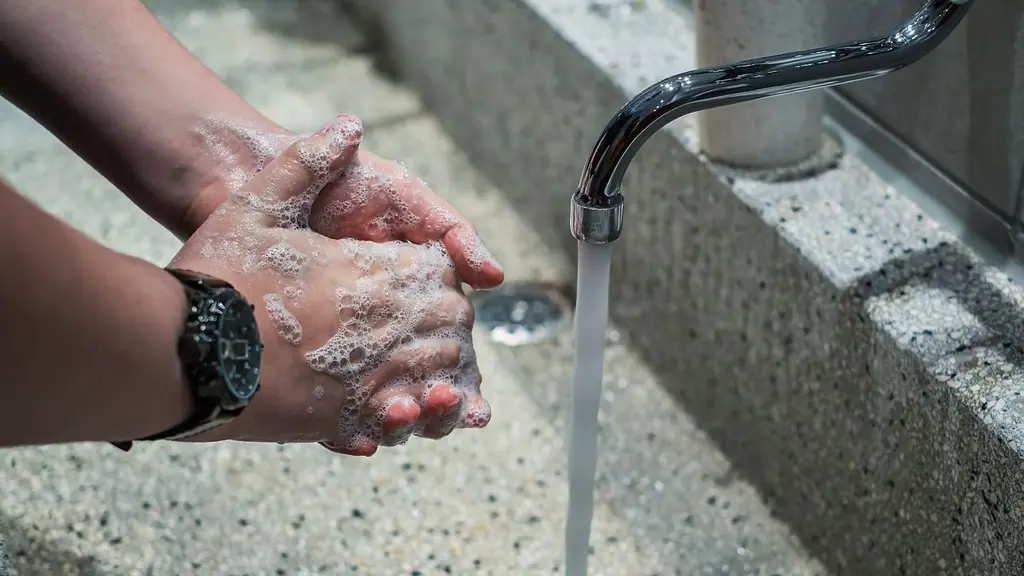
Water alone rinses away some dirt, but it is poor at removing grease, and many microbes cling to the oils and organic matter on skin. Soap molecules are surfactants: one end is attracted to water, the other to oils and fats. When you lather, soap molecules surround tiny droplets of oil and dirt, along with the bacteria and viruses caught in them, so that running water can carry them away. Some viruses, including influenza and coronaviruses, have a fatty outer envelope that soap can also disrupt.
The physical action matters as much as the chemistry. According to the US Centers for Disease Control and Prevention (CDC), lathering and scrubbing create friction that lifts dirt, grease and microbes from skin, and people tend to scrub more thoroughly when they use soap. The CDC also notes that, for everyday use, plain soap works as well as antibacterial soap.
The CDC's recommended method is:
- Wet your hands with clean running water, turn off the tap and apply soap.
- Lather the backs of your hands, between your fingers and under your nails.
- Scrub for at least 20 seconds; evidence suggests 15 to 30 seconds removes more germs than shorter washes.
- Rinse well under clean running water.
- Dry your hands with a clean towel, or let them air-dry.
Key idea: Soap does not need to kill germs to work; it lets water carry them away, and the 20 seconds of scrubbing does much of the job.
What the evidence shows
Most diarrhoeal infections spread by the faecal–oral route: microbes from faeces reach the mouth via hands, food, water or surfaces. Hands are one of the easiest routes to interrupt, which is why handwashing at key moments, after using the toilet, after cleaning a child, and before preparing food or eating, has such a large effect.
The most comprehensive recent estimate comes from a systematic review and meta-analysis published in The Lancet in 2022 by researchers led by the World Health Organization. Wolf and colleagues pooled 124 studies of water, sanitation and hygiene interventions in low- and middle-income countries. They found that promoting handwashing with soap reduced the risk of diarrhoea in children by about 30 per cent.
The CDC's summary of the research points the same way: community handwashing education reduced diarrhoeal illness by 23 to 40 per cent and respiratory illnesses such as colds by 16 to 21 per cent, and cut absences from school for gastrointestinal illness by 29 to 57 per cent.
In numbers: Promoting handwashing with soap reduced the risk of diarrhoea in children by about 30 per cent, across studies in low- and middle-income countries.
Source: Wolf et al., The Lancet (2022).
Promotion is not the same as practice, though. A message to wash hands can only be acted on when soap and water are actually to hand. That is why practical details matter: a handwashing station next to the toilet or kitchen, soap that is always there, and reminders built into daily routines.
Who lacks a place to wash
The WHO/UNICEF Joint Monitoring Programme (JMP) measures hygiene at home with a simple ladder:
| Service level | Definition |
|---|---|
| Basic | A handwashing facility with soap and water available at home |
| Limited | A facility at home, but lacking soap or water |
| No facility | No handwashing facility at home |
According to the JMP's 2025 report, 1.7 billion people still lacked basic hygiene services at home in 2024, including 611 million with no facility at all. Least developed countries were more than three times as likely as others to lack basic hygiene. There has been real progress: in rural areas worldwide, basic hygiene coverage rose from 52 per cent in 2015 to 71 per cent in 2024.
South Asia has seen some of the fastest change. JMP estimates compiled by the World Bank show the share of South Asians with a basic handwashing facility rising from 57 per cent in 2015 to 87 per cent in 2024, compared with a world figure of 78 per cent in 2024. Within the region, coverage in 2024 ranged from around 68 per cent in Nepal and 72 per cent in Bangladesh to 85 per cent in Pakistan and 90 per cent in India.
Homes are only part of the picture. Schools, health centres, markets and workplaces all need handwashing stations too, and children often learn the habit at school. Our article on why toilets in schools matter looks at school water, sanitation and hygiene.
Teaching children
Children are the main audience of Global Handwashing Day: school is where many learn the habit, and they can carry messages home. Some approaches that help:
- Make the moments concrete. Focus on a few key times: after the toilet, before eating, after playing outside or touching animals.
- Give it a rhythm. Twenty seconds is about as long as humming a short song twice through, or counting slowly to twenty.
- Put the station where it is needed. A tap or a simple bottle-and-basin station right by the toilet or eating area makes washing the easy choice.
- Show, don't lecture. Seeing why soap matters, as in the activity below, can be more memorable than being told.
Safety: An adult should supervise this activity. Use only ordinary hand soap, cool or lukewarm tap water and a small amount of vegetable oil. Do not use hand sanitiser, bleach or other cleaning products, and keep soap away from eyes; if soap gets in an eye, rinse it with plenty of clean water.
Try this: Rub half a teaspoon of vegetable oil over both hands so they feel greasy, a stand-in for the oils that microbes cling to. Rinse under cool running water without soap for 20 seconds, then dry on a paper towel and look at how much oil is still there. Now wash again with soap, lathering and scrubbing for 20 seconds, rinse and dry. Compare the two paper towels and the feel of your hands. Talk about why the soap made the difference, and which parts of the hands, such as thumbs, fingertips and between the fingers, were hardest to get clean.
For more experiments that use safe household materials, see our collection of safe water science experiments for children, and for whole-class ideas, environmental activities for schools.
Handwashing in the bigger picture
Handwashing is one of three parts of WASH, alongside safe drinking water and sanitation, and the three reinforce each other: handwashing needs water, and safe sanitation reduces the amount of faecal contamination that hands pick up in the first place. Governments in South Asia have included handwashing in their regional sanitation commitments, as our article on the SACOSAN conferences describes, and hygiene is part of target 6.2 of the Sustainable Development Goals, explained in SDG 6 explained.
Until about 2016–2018 this web address belonged to the Freshwater Action Network, which marked Global Handwashing Day here in its early years. FreshwaterAction is a separate, independent publication. It is not that network, does not speak for it and is not its successor. This article is newly written on the same subject.
Sources
- Handwashing facts (17 April 2024)US Centers for Disease Control and Prevention
- Effectiveness of interventions to improve drinking water, sanitation, and handwashing with soap on risk of diarrhoeal disease in children in low-income and middle-income settings (Wolf et al., The Lancet, 2022)The Lancet
- About Global Handwashing DayGlobal Handwashing Partnership
- 1 in 4 people globally still lack access to safe drinking water – WHO, UNICEF (26 August 2025)World Health Organization
- World Development Indicators: people with basic handwashing facilities including soap and water, world and South Asia, 2015–2024 (data from the WHO/UNICEF JMP)World Bank
Spotted an error? Write to contact@freshwateraction.net. Our editorial policy explains how we correct articles.