Water Conservation Around the World: Lessons from Dry Places
How Cape Town, Melbourne, Singapore, Israel and Indian cities cut demand and widened supply in droughts and scarcity, and which lessons travel elsewhere.
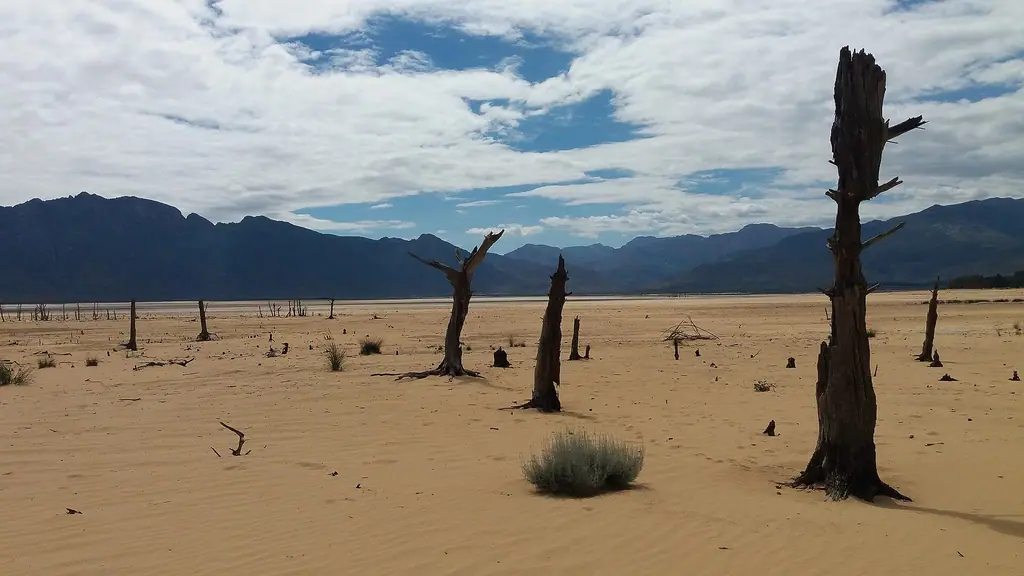
On 22 January 2018, the City of Cape Town's models showed that the reservoirs supplying the city of about four million people would fall to 13.5 per cent of capacity on 12 April. That level, which officials called "Day Zero", was the point at which most taps would be turned off and residents would queue at collection points for a ration of 25 litres a person a day. Two months later, the projected date had moved into August. Day Zero never arrived.
What changed was mostly demand. Under the strictest restrictions, in force from 1 February 2018, each resident was asked to use no more than 50 litres a day, and the city set a target of 450 million litres a day for all uses, roughly half its unconstrained demand. Tariffs, pressure management, leak repairs, flow limiters and an intense public campaign all played a part, alongside cuts in water released to farms.
Cape Town is one of several places where scarcity forced large, fast changes in how water is used. This article looks at five of them, from a city that nearly ran dry to countries that have redesigned their whole water supply, and draws out the lessons that apply far beyond dry climates.
Cape Town: a city that cut its use in half
Cape Town draws almost all its water from rain-fed dams shared with farms and other towns. After several years of low rainfall, the city's April 2018 Water Outlook report set out the measures it used to cut demand:
- Restrictions. Level 6 restrictions began on 1 January 2018 and the stricter Level 6B on 1 February, limiting individuals to 50 litres a day (6,000 litres a month for a household of four), and requiring businesses to cut use by 45 per cent.
- Tariffs. Steeply stepped prices made each additional block of water more expensive, while the first 10,500 litres a month remained free for households registered as indigent.
- Pressure management. Automated control of water pressure across zones of the network reduced leaks and use, with savings of nearly 50 million litres a day reported by April 2018.
- Flow regulators. Devices that limit a household's daily supply were fitted to high-use homes, with 38,600 installed between October 2017 and April 2018. The number of non-indigent households using more than 20,000 litres a month fell by over 87 per cent in a year.
- Communication. Campaigns explained how to live on 50 litres, how to find leaks and how the dams were tracking each week.
The report also highlighted an inequality behind the averages: informal settlements, home to about 15 per cent of households, used only about 4 per cent of the city's water. Cuts fell mainly on the formal suburbs where use had been highest.
In numbers: Under Level 6B restrictions, Cape Town's target for all water use was 450 million litres a day, compared with the city's unconstrained demand of 888 million litres a day.
Source: City of Cape Town, Water Outlook 2018, revision 24 (17 April 2018).
Australia: lessons from the Millennium Drought
The Australian Bureau of Meteorology describes the Millennium Drought as a prolonged period of dry conditions across much of southern Australia from late 1996 to mid-2010, particularly severe in the densely populated south-east and south-west. It hit cities and the irrigated farms of the Murray-Darling Basin together.
Melbourne's best-known response was a voluntary household target: Target 155, asking each person to use no more than 155 litres a day. When the Victorian government relaunched the campaign in December 2016, it said Melburnians had cut water consumption by 22 per cent over the previous decade. Announcing the relaunch, the state government also pointed to its investment in water infrastructure and an expanded state water grid, warning that climate change and population growth continue to pose a serious risk to water security.
The Bureau of Meteorology also notes a longer-term decline in rainfall over parts of southern Australia, such as a 10 to 20 per cent drop in winter rainfall in the south-west of Western Australia since around 1970, accompanied by much larger reductions in streamflow. That is why Australian water planners treat conservation as a permanent habit rather than an emergency measure.
Singapore: four taps and a closed loop
Singapore is a densely populated island with limited land on which to collect and store rain. Its national water agency, PUB, describes a strategy of Four National Taps:
- Local catchment water: rainwater captured through the island's waterways and reservoirs.
- Imported water from the Linggiu Reservoir in Johor, Malaysia.
- NEWater: high-grade water recycled from treated used water.
- Desalinated water produced from seawater.
NEWater is the most distinctive. PUB explains that treated used water passes through three stages: microfiltration or ultrafiltration to remove particles and bacteria, reverse osmosis to remove viruses, metals, pesticides and other contaminants, and ultraviolet disinfection. After a demonstration plant built in 2000 and testing by an international expert panel, NEWater was launched to the public on 9 August 2002, when 60,000 people toasted the National Day Parade with bottles of it; the first two plants opened the following year. An expert panel recommended NEWater for indirect potable use: it is added to reservoirs, where it blends with rainwater and is treated again before reaching taps, an approach called indirect potable reuse. PUB currently operates four NEWater plants.
Singapore's lesson is that water used once need not be wasted, provided treatment is rigorous and the public trusts it.
Israel: using every drop twice
Israel's climate is semi-arid to arid in much of the country, and it has relied for decades on careful management of a small natural supply. A 2017 World Bank report identifies several pillars of its approach:
- Efficient irrigation. Israeli companies were pioneers, from the early 1950s, of drip irrigation and mini-sprinklers, which deliver water directly to plant roots. The report notes that the average volume of water applied per hectare of farmland fell from 7,000 cubic metres in 1990 to 5,000 in 2000.
- Wastewater reuse. More than 87 per cent of treated wastewater effluent is reused for agriculture, according to the World Bank, providing roughly half of all irrigation water. Much of it receives tertiary treatment so that it can be used on any crop.
- Desalination. Over about 15 years, five large seawater reverse-osmosis plants were built on the Mediterranean coast. A 2023 US EPA report on a delegation to Israel states that desalinated seawater now makes up approximately 90 per cent of Israel's domestic fresh water supply.
- Pricing and institutions. The national Israel Water Authority regulates the sector, and tariffs were raised gradually towards full cost recovery, which the World Bank describes as a strong signal that water is not to be wasted.
These choices have trade-offs. The World Bank notes that energy typically represents between half and two-thirds of the price of desalinated water, and the EPA report highlights continuing research on the long-term effects of irrigating with recycled water on soils and crops. Israel's model also depends on national institutions and investment that many water-scarce countries do not have.
India: catching the rain where it falls
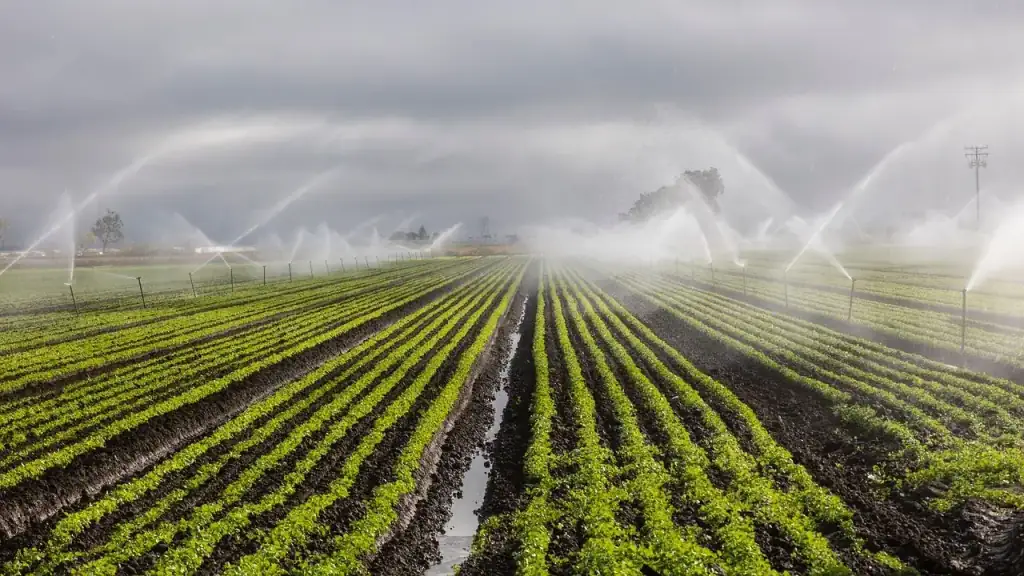
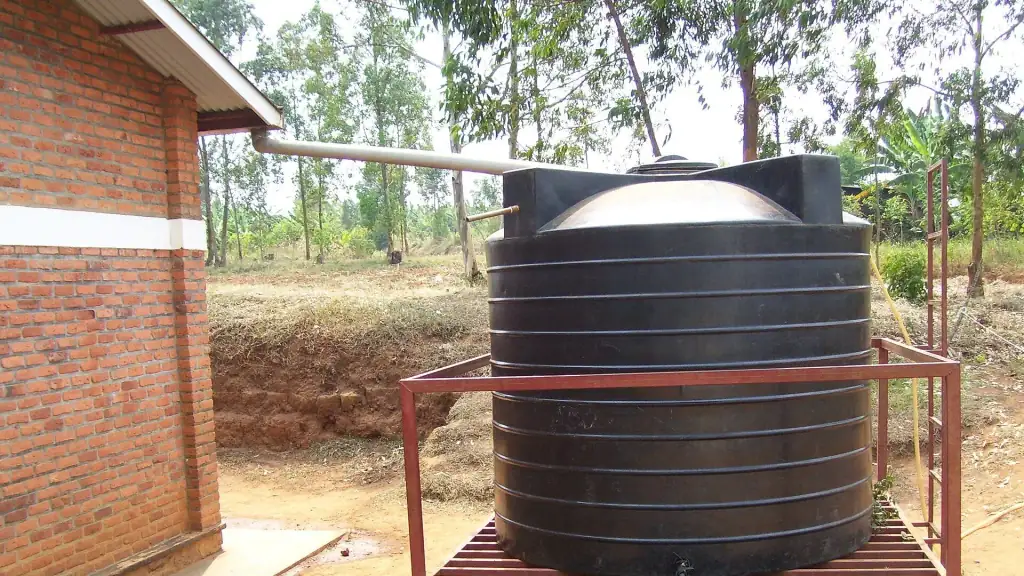
In parts of India where groundwater is pumped faster than rain can replace it, water tables have fallen. One response has been to require buildings to capture rain and send it back underground. According to the Centre for Science and Environment, a Delhi-based research organisation, the Government of Tamil Nadu made rainwater harvesting mandatory for all public and private buildings in the state through an ordinance of 19 July 2003, and in Delhi the Ministry of Urban Development has required it since June 2001 for new buildings with roof areas of more than 100 square metres.
These rules build on much older traditions of tanks, step wells and ponds that stored monsoon rain for the dry season. Their effectiveness depends on enforcement and maintenance: a recharge pit that silts up or a system that is never connected saves nothing. Our introduction to rainwater harvesting explains how systems work and the safety rules that apply.
What these places have in common
| Place | Main pressure | Key measures | Main lesson |
|---|---|---|---|
| Cape Town, South Africa | Multi-year drought in a rain-fed system | Strict per-person limits, stepped tariffs, pressure management, flow regulators, communication | Demand can fall fast when the reason is clear and the measures are combined |
| Melbourne, Australia | Millennium Drought (1996–2010) | Target 155 household campaign, investment in supply | Keep conservation going after the rain returns |
| Singapore | Little land to store rain; reliance on imports | Four National Taps, NEWater, desalination | Treat used water as a resource |
| Israel | Arid climate, scarce natural supply | Drip irrigation, reuse of 87%+ of effluent for farming, desalination, cost-based pricing | Match each water quality to a use |
| Tamil Nadu and Delhi, India | Falling groundwater | Mandatory rainwater harvesting in buildings | Recharge needs enforcement and upkeep |
Summarised from the sources listed for this article. Each measure reflects local conditions and is not a template to copy unchanged.
Several themes recur:
- Combine measures. No place relied on one tool. Restrictions worked alongside prices, engineering and persuasion.
- Fix the network as well as habits. Leaks and high pressure waste water before it reaches anyone; Cape Town's pressure management alone saved nearly 50 million litres a day.
- Diversify supply. Singapore and Israel reduced their dependence on rainfall by adding recycled and desalinated water, at a cost in energy and money.
- Protect fairness. A free basic allowance, as in Cape Town, keeps restrictions from falling hardest on people who already use least.
- Keep the habit. Use tends to creep back after a crisis; Melbourne relaunched its household target years after the drought ended.
Key idea: Places that have come through severe scarcity combined lower demand, repaired networks and new sources of water, and kept those changes after the crisis passed.
What this means at home
Most readers of this article will never face a Day Zero. But the measures that worked in Cape Town and Melbourne are the same ones any household can use: find leaks, shorten showers, water gardens wisely and collect rain. Our guide to how to save water at home ranks them by impact, and the household water use calculator shows what 50 litres a person a day would mean in practice. Much of the water we depend on is also hidden in food and goods, which is why the next step is understanding your water footprint. For more on how warming is changing droughts, see climate change and freshwater, and browse the water conservation section for related guides.
Sources
- Water Outlook 2018 Report, revision 24 (17 April 2018)City of Cape Town, Department of Water and Sanitation
- Recent rainfall, drought and southern Australia's long-term rainfall decline (2015)Australian Government Bureau of Meteorology
- Summer's here: it's time to Target 155 (1 December 2016)Premier of Victoria
- Our Water Story: Four National TapsPUB, Singapore's National Water Agency
- NEWaterPUB, Singapore's National Water Agency
- Water Management in Israel: Key Innovations and Lessons Learned for Water-Scarce Countries (2017)World Bank, Water Global Practice
- From Water Stressed to Water Secure: Lessons from Israel's Water Reuse Approach (2023)US Environmental Protection Agency
- Legislation on rainwater harvesting: implementation of the bye-laws in different states and citiesCentre for Science and Environment (India)
Spotted an error? Write to contact@freshwateraction.net. Our editorial policy explains how we correct articles.