Water Conservation Activities for Families
Hands-on water activities for children and adults by age: leak detective tests, bucket flow checks, shower challenges, rain collection and a family audit.
A toilet cistern that leaks silently into the bowl can waste up to 400 litres of water a day, according to Waterwise, the UK water-efficiency organisation. Finding out whether yours does takes a few drops of food colouring and ten minutes of patience. For a child, it feels like detective work; for the household, it can be the single most useful water-saving discovery of the year.
That is the idea behind the activities in this guide. Rather than telling children to "save water", they measure it: how fast the shower runs, how much water disappears down the plughole while they brush their teeth, how much rain a roof collects. Numbers they have gathered themselves are more persuasive than any rule, and the same measurements tell adults where the household's water really goes.
The activities are grouped by age, but most work for mixed ages with an adult taking the steps that need one. For the reasoning behind the changes, and the figures used here, see our pillar guide on how to save water at home.
Which activity suits which age
| Age (rough guide) | Activity | What children practise |
|---|---|---|
| 4–7, with an adult doing each step | Leak detectives (taps and toilet colour test); tooth-brushing bowl test | Observing, counting, comparing "more" and "less" |
| 7–11 | Bucket-and-stopwatch flow challenge; shower song challenge; rain collection | Measuring volume and time, simple multiplication, tables and bar charts |
| 11 and over | Meter-reading leak test; one-week family water budget with the calculator | Rates, percentages, graphs, presenting evidence |
Safety: These activities are for doing with an adult, not alone. An adult lifts and replaces toilet cistern lids, which are heavy and can crack. Use cold water only for all flow tests, mop up spills straight away so nobody slips, and use nothing but food colouring in any test: never bleach, cleaning products or other chemicals. Keep buckets and containers of water away from babies and toddlers and empty them as soon as you finish, because young children can drown in very little water.
Activity 1: Leak detectives
Safety: An adult opens the toilet cistern and adds the colouring. Children watch the bowl, not the cistern. Flush once the test is over so the colouring does not stain.
You need: food colouring, a timer, a notebook or our printable household water audit worksheet.
- Taps. Go round every tap in the house, including outside taps. Turn each one off normally and watch it for one minute. Count the drips. A tap dripping once a second, the US Environmental Protection Agency (EPA) says, can waste more than 3,000 US gallons (over 11,000 litres) a year.
- Toilets. The adult lifts the cistern lid and adds a few drops of food colouring to the water in the cistern. Do not flush. Wait 10 minutes. If any colour appears in the bowl, the cistern is leaking; the EPA's Fix a Leak Week guidance uses exactly this test.
- Record and report. Write down what you found for each tap and toilet. If you find a leak, the adults decide how to fix it; Waterwise notes that many water suppliers will fix a leaking toilet free of charge.
Talk about it: Why might a leak go unnoticed for months? Where does the leaked water go?
Activity 2: The bucket-and-stopwatch flow challenge
Safety: Use cold water only. An adult turns the shower on and off. Stand on a non-slip mat and keep electrical items well away from the water.
You need: a bucket or jug whose volume you know (fill it from a measuring jug if it has no markings), a stopwatch, a calculator.
- Turn the shower or a tap on to its usual setting.
- Hold the container under the flow and start the stopwatch at the same moment.
- Stop the watch when the container is full, then turn the water off.
- Work out the flow: litres per minute = litres ÷ seconds × 60. For example, a 5-litre bucket that fills in 30 seconds gives 5 ÷ 30 × 60 = 10 litres a minute.
- Use the collected water to water plants rather than pouring it away.
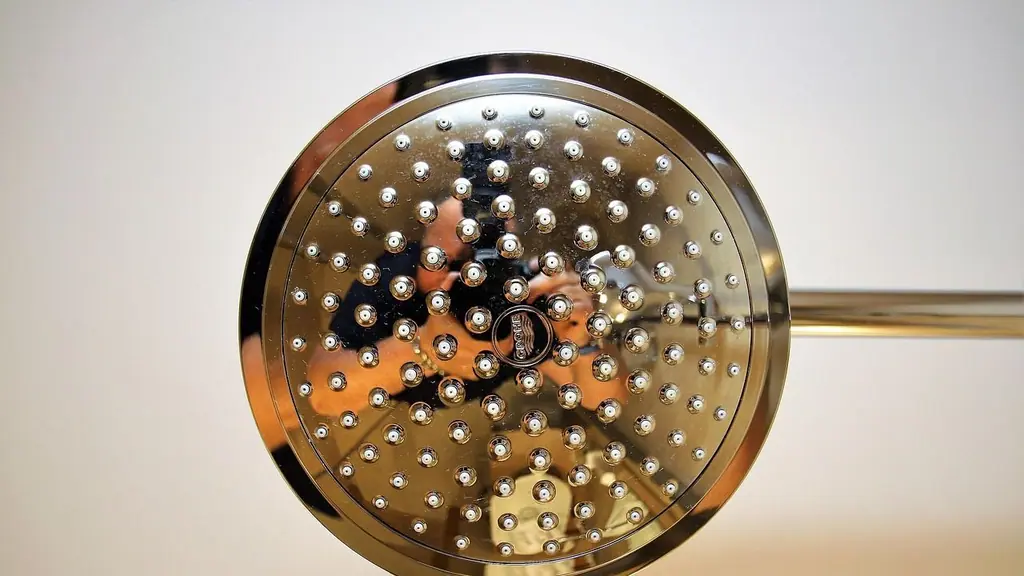
Compare your results with published figures: Waterwise says a low-flow shower head uses around 6 litres a minute and a standard one 10 to 15. Older children can measure every tap in the house and draw a bar chart. Who has the fastest tap?
Extend it: Multiply your shower's flow by how long each person usually showers. How many litres does the household use in showers each day? Each week?
Activity 3: The tooth-brushing bowl test
Safety: Use a plastic washing-up bowl, not glass. An adult helps lift and carry the full bowl, which will be heavy.
You need: a clean washing-up bowl, a measuring jug.
- Put the bowl in the basin under the tap.
- Brush your teeth for two minutes the "old way", leaving the tap running the whole time. All the water collects in the bowl.
- Measure the water with the jug.
- Next time, brush with the tap off, turning it on only to wet the brush and rinse. Measure again.
The difference is often surprising. The EPA estimates that turning off the tap while brushing twice a day saves about 8 US gallons (around 30 litres) a day. Your results will depend on how far you open the tap. Use the collected water on houseplants or the garden.
Activity 4: The shower song challenge
Safety: No speakers, phones or other electrical devices in the bathroom. Play the song from outside the door.
You need: the flow you measured in Activity 2, a chart on the bathroom door, a favourite song of about four minutes.
- For one week, each person records how long they shower without trying to change anything.
- In the second week, everyone tries to finish before their chosen song ends.
- Calculate the water used each week: minutes × litres per minute, added up for everyone.
- Compare the two weeks in a bar chart.
Over a 10-minute shower, Waterwise calculates that a low-flow head instead of a standard one saves up to 90 litres. Shortening a shower saves in the same way, with no new equipment, and it saves the energy used to heat the water too.
Activity 5: From roof to plants
Safety: A water butt must always have a secure, close-fitting lid, and young children should never be left alone near it or any garden water. RoSPA, the UK accident-prevention charity, reports that garden ponds are involved in about one in four child drownings in the home, and it stresses close supervision. Collected rainwater is for plants only: it is never for drinking or for filling paddling pools.
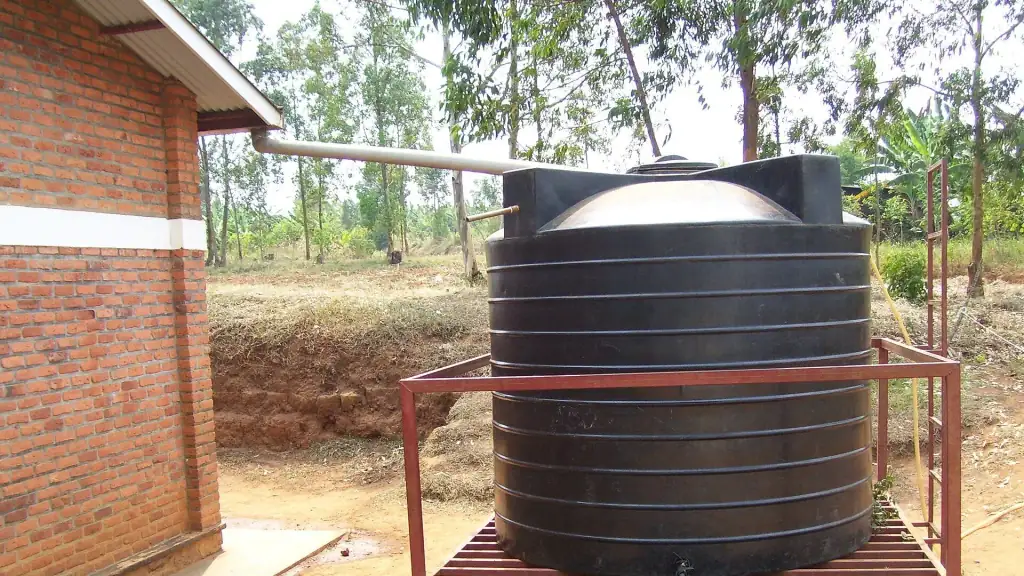
The Royal Horticultural Society (RHS) describes rainwater as the best option for watering gardens, because it is naturally soft and low in minerals. A water butt connected to a downpipe is the easiest way to collect it.
- Measure the harvest. After rain, use a marked stick or the butt's own markings to estimate how much it holds. Keep a simple chart over a month alongside a home-made rain gauge.
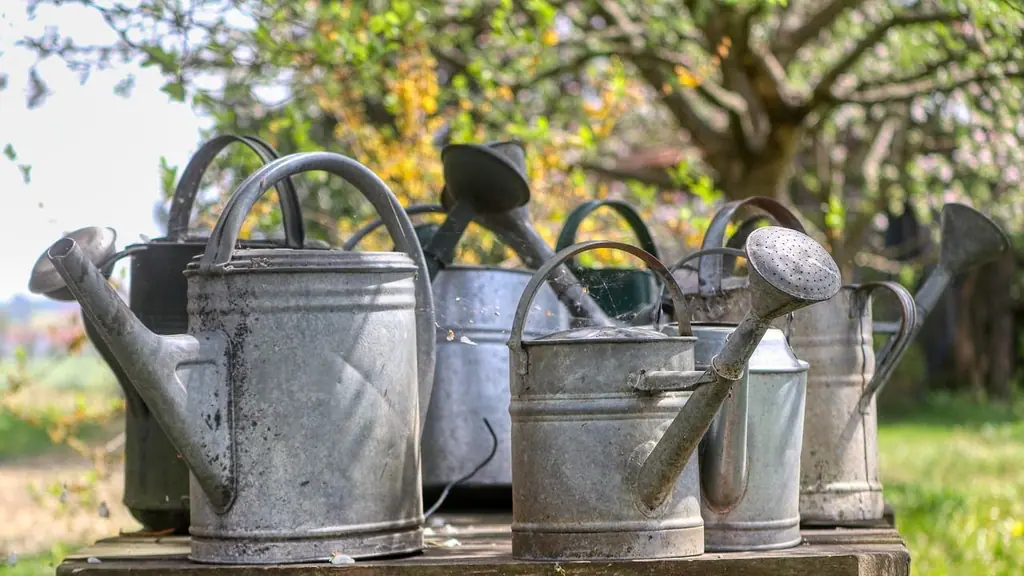
- Count the cans. How many watering cans can you fill from a full butt? The RHS notes that, in dry south-east England, a small shed roof can collect 2,500 to 3,500 litres of rain a year.
- Watering can versus hose. Time how long it takes to water a bed with a can, and work out how much a hose would have used in the same time at Bristol Water's figure of about 1,000 litres an hour, a figure used in our water use comparison tool.
The RHS recommends using water-butt water on established plants rather than seedlings, which can be harmed by disease spores in stored water. For the bigger picture, including how to size a system, read our introduction to rainwater harvesting.
Activity 6: A family water budget (age 11 and over)
Safety: Water meters are often in a pavement chamber, under the kitchen sink or in a cupboard. An adult should open pavement covers, which can be heavy and are next to traffic.
Older children can run a full household investigation.
- Find the meter. If your home has a water meter, read it at the same time each day for a week.
- Do the overnight leak test. The EPA suggests reading the meter before and after a two-hour period when no water is used. If the reading changes at all, there is probably a leak.
- Estimate use activity by activity. Enter the household's habits into our household water use calculator and compare the estimate with the meter readings.
- Choose three changes the family agrees to try, predict the saving, then measure again after a month.
- Present the findings as a short talk or poster: what surprised you, what changed, and what was hard to change.
Try this: Before you measure anything, ask everyone to guess how many litres the household uses in a day and write the guesses down. Compare them with the result at the end of the week.
Keeping it going
The measurements are the start, not the end. Families who keep a simple chart on the fridge, repeat the leak checks each season and revisit the calculator after making changes can see whether their efforts are working. Children who have measured a shower's flow themselves can also explain it to friends and grandparents, often more convincingly than an adult.
For more experiments that explore how water behaves, see our guide to safe water science experiments for children. For more on conservation at home and beyond, browse the water conservation section.
Sources
- Fix a Leak WeekUS Environmental Protection Agency, WaterSense
- How to save waterWaterwise
- Statistics and FactsUS Environmental Protection Agency, WaterSense
- Collecting, storing and reusing waterRoyal Horticultural Society
- Saving water in the gardenBristol Water
- Pond safetyRoyal Society for the Prevention of Accidents (RoSPA)
Spotted an error? Write to contact@freshwateraction.net. Our editorial policy explains how we correct articles.