Why Toilets in Schools Matter
Why school toilets, drinking water and handwashing matter for health, dignity and learning, what India's Supreme Court ordered, and what the latest global data show.
On 18 October 2011, India's Supreme Court made an unusual order in a long-running case about conditions in schools. It found that the lack of toilets was keeping children, and girls in particular, out of school, which violated their constitutional right to education. It told every state to provide toilets in all schools, with temporary facilities in place by 30 November 2011 where permanent ones could not be built in time. A year later the court went further and ordered toilets for boys and girls, drinking water, enough classrooms and staff in every school in the country, government or private, within six months.
Few courts have taken so direct an interest in school toilets. This article explains why the issue matters, what the Indian orders required, what the evidence says about toilets and girls' education, and where the world stands now.
Why school toilets matter
Children spend a large part of their waking day at school. If there is nowhere safe and private to go to the toilet, no water to drink and no soap to wash their hands, the effects reach well beyond the school gate.
- Health. Schools without sanitation and hygiene are places where diarrhoeal and other infections spread easily between children, who then carry them home.
- Dignity and safety. Children, especially older girls, may avoid drinking water all day so they do not need the toilet, or leave the school grounds to find somewhere private.
- Menstruation. Adolescent girls need private toilets with water, soap and somewhere to dispose of or wash menstrual materials. Without them, menstruation can disrupt schooling, although, as the evidence below shows, the effect on attendance has proved hard to measure. Our article on chhaupadi, menstrual hygiene and the right to sanitation explores this further.
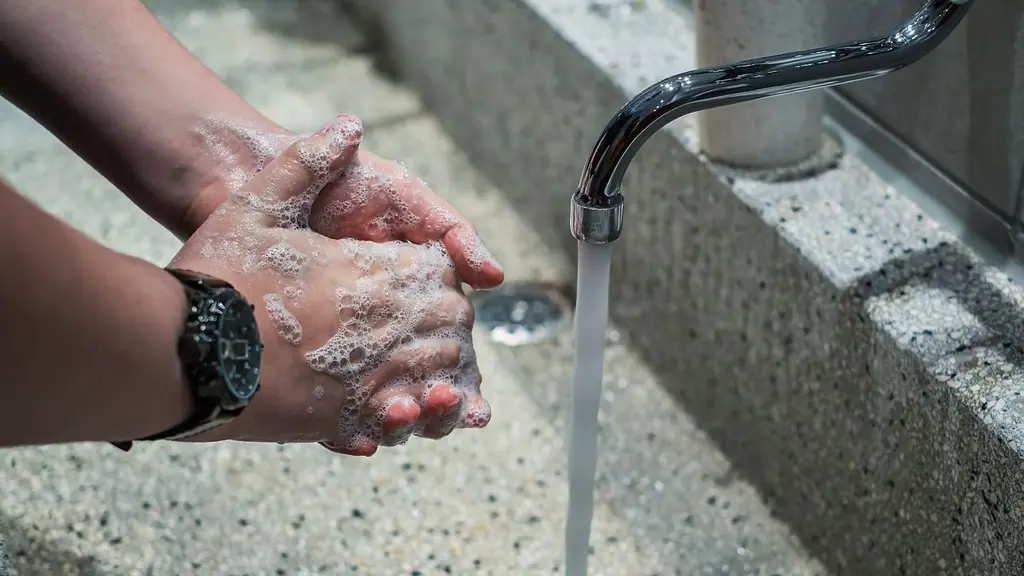
- Learning habits. School is where many children learn to use a toilet properly and wash their hands with soap, habits they take home, as our article on handwashing with soap explains.
The UN General Assembly recognised these links in resolution 70/169 of 2015, which expressed deep concern that a lack of water and sanitation, including for menstrual hygiene and especially in schools, reinforces the stigma around menstruation and harms girls' right to education.
What India's Supreme Court ordered
The orders came in a public interest case, Environment & Consumer Protection Foundation v. Delhi Administration and Others, filed in 2004 by a registered charitable society seeking better conditions in schools so that the right to free and compulsory education under Article 21A of the constitution could be realised. According to the Global Health and Human Rights Database's summary, the case unfolded over several years:
- 2009: while the case was pending, Parliament passed the Right of Children to Free and Compulsory Education (RTE) Act.
- 18 October 2011: the court held that the absence of toilets violated Article 21A, ordered temporary toilets in all schools by 30 November 2011 where permanent ones were not feasible, and permanent toilets by 31 December 2011.
- March 2012: states that had fallen behind were directed to commit to separate permanent toilets for boys and girls in all schools by 31 March 2012.
- 3 October 2012: the court disposed of the case, directing all states to provide toilets for boys and girls, drinking water, sufficient classrooms and teaching and non-teaching staff within six months, in all schools, whether government or private, aided or unaided.
Enforcement was another matter. In May 2014, ruling on a petition against one state government, the court again insisted that every school must have separate toilets for girls and boys and drinking water, describing these facilities as integral to the RTE Act and rejecting a request for more time, as reported by Down To Earth. The orders show both the power of a court to set deadlines and the difficulty of meeting them across hundreds of thousands of schools.
Key idea: India's Supreme Court treated a school toilet not as a convenience but as part of a child's constitutional right to education.
Do school toilets keep girls in school?
It is often said that girls drop out of school when they reach puberty because there is no private toilet. The evidence supports part of that claim, and it is worth stating carefully.
The strongest study comes from India itself. Using a national school latrine construction programme and school-level administrative data, the economist Anjali Adukia, writing in the American Economic Journal: Applied Economics in 2017, found that building latrines substantially increased the enrolment of girls of pubescent age, but mainly where schools built separate latrines for girls and boys. Only sex-specific latrines narrowed the gender gap in enrolment, which the author attributes to privacy and safety concerns. Younger children of both sexes benefited from any kind of latrine. Test scores, however, did not improve.
Evidence on menstruation and school attendance is weaker. A systematic review in PLoS ONE in 2016 by Hennegan and Montgomery found only eight eligible studies of menstrual health interventions, mostly education programmes or the provision of pads or menstrual cups. Results were promising, but the studies were small, varied and at high risk of bias, so the authors concluded there was not yet enough evidence to establish an effect on education.
The fair summary is that separate, private, usable toilets matter for older girls' enrolment, and that toilets alone do not guarantee better learning. They are a necessary condition for a decent school, not a complete one.
Where the world stands
The WHO/UNICEF Joint Monitoring Programme tracks water, sanitation and hygiene in schools. A school has a "basic" sanitation service if it has improved, single-sex toilets that are usable at the time of the survey. Its latest report, covering 2015 to 2025, was summarised by UN News in September 2026:
| Schools with a basic service | 2015 | 2025 | Children without, 2025 |
|---|---|---|---|
| Drinking water | 67% | 78% | 429 million |
| Sanitation | 67% | 77% | 460 million |
| Hygiene (handwashing with soap and water) | 59% | 72% | 545 million |
Source: WHO/UNICEF JMP, Progress on drinking water, sanitation and hygiene in schools 2015–2025, via UN News.
The gaps are widest in the poorest countries. In low-income countries only half of schools had basic sanitation in 2025, against more than 99 per cent in richer countries. In sub-Saharan Africa, 43 per cent of schools had basic sanitation, and about 264 million children lacked it. To reach universal basic sanitation in schools by 2030, the report found, progress would need to be about five times faster.
In numbers: In 2025, 460 million school-age children worldwide had no basic sanitation service at school.
Source: WHO/UNICEF Joint Monitoring Programme, schools report 2015–2025 (September 2026).
What makes a school toilet work
Building toilets is the start. Keeping them usable is the harder part. Things to look for:
- Enough toilets, separated by sex, with doors that lock and are safe to reach.
- Water and soap at or near the toilets, every day, not just on inspection days.
- A cleaning and repair budget, with someone responsible for it.
- Menstrual facilities: a bin or disposal system, water inside the cubicle where possible, and information for girls and boys.
- Accessibility for children with disabilities.
- Children's voices: pupils who can report problems without embarrassment.
Pupils can investigate their own school's facilities as a class project, with care for privacy. Ideas for classroom work on water are collected in our guide to environmental activities for schools. For the global goal that schools are measured against, see SDG 6 explained.
Until about 2016–2018 this web address belonged to the Freshwater Action Network, which reported on the Indian Supreme Court's 2011 order here. FreshwaterAction is a separate, independent publication. It is not that network, does not speak for it and is not its successor. This article is newly written on the same subject.
Sources
- Millions of children return to schools that still can’t provide clean water or a working toilet (22 September 2026)UN News
- Environment & Consumer Protection Foundation v. Delhi Administration & Others (Supreme Court of India, 3 October 2012)Global Health and Human Rights Database
- All schools must have separate toilets for girls and boys: Supreme Court (13 May 2014)Down To Earth, Centre for Science and Environment
- Sanitation and Education (Adukia, American Economic Journal: Applied Economics, 2017)American Economic Association
- Do menstrual hygiene management interventions improve education and psychosocial outcomes for women and girls in low and middle income countries? A systematic review (Hennegan and Montgomery, PLoS ONE, 2016)PLoS ONE
- Resolution 70/169: The human rights to safe drinking water and sanitationUnited Nations General Assembly
Spotted an error? Write to contact@freshwateraction.net. Our editorial policy explains how we correct articles.