The Ramsar Convention Explained
How the 1971 Convention on Wetlands works: its definition of wetlands, wise use, Ramsar Sites, the Montreux Record, World Wetlands Day and the UK's sites.
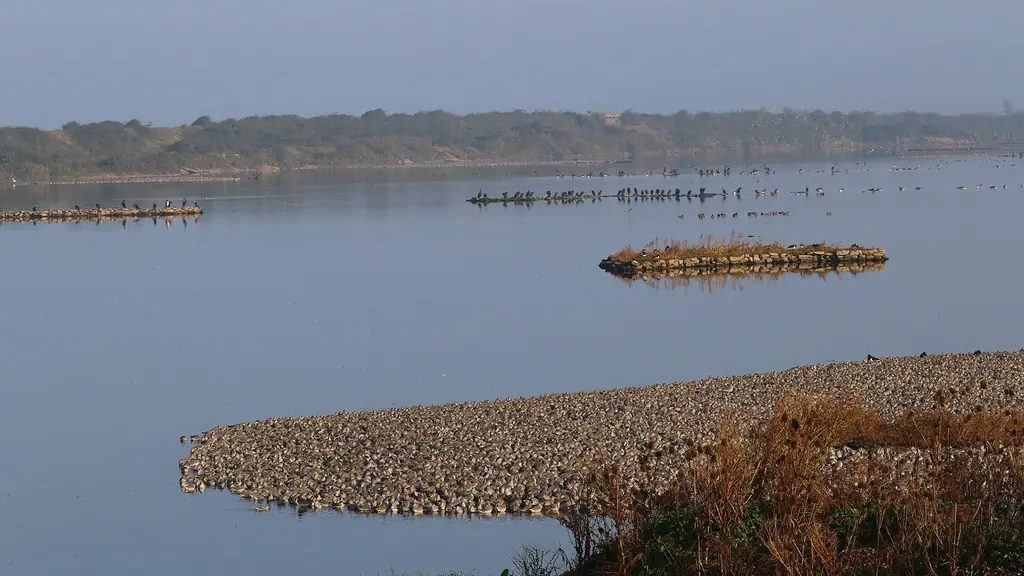
On 2 February 1971, delegates meeting at Ramsar, a resort town on the Caspian coast of Iran, signed a short treaty about wetlands. It ran to just twelve articles. Its full title, the Convention on Wetlands of International Importance especially as Waterfowl Habitat, shows what worried its founders most: the loss of the marshes, lakes and estuaries on which migrating ducks, geese and waders depend, often across several countries.
More than half a century later, that treaty, usually called the Ramsar Convention or the Convention on Wetlands, had 172 Contracting Parties and a network of over 2,530 Wetlands of International Importance in 2025, according to the Convention's Global Wetland Outlook 2025 site. Its scope has grown from waterbirds to every service wetlands provide, from water supply to carbon storage.
This article explains what the Convention requires, how a wetland becomes a Ramsar Site, what happens when a site is damaged, and how the system works in the UK. For why wetlands matter in the first place, see our guide to wetlands and biodiversity.
A short history
The Convention was adopted at Ramsar on 2 February 1971 and, as the Joint Nature Conservation Committee (JNCC) notes, came into force in December 1975. Its text was later amended by a protocol in 1982 and by amendments agreed in 1987.
Some milestones:
- 1971: Convention adopted at Ramsar, Iran (2 February).
- 1975: Convention enters into force (December).
- 1976: The UK ratifies and designates its first Ramsar Sites.
- 1990: The fourth Conference of the Parties, at Montreux in Switzerland, asks the Secretariat to keep a record of sites whose ecological character is changing; this becomes the Montreux Record.
- 1997: World Wetlands Day first celebrated on 2 February.
- 2021: The UN General Assembly proclaims 2 February World Wetlands Day (Resolution 75/317).
- 2025: The fifteenth Conference of the Parties, held at Victoria Falls in Zimbabwe, adopts a new strategic plan.
What counts as a wetland under Ramsar
The treaty's definition, in Article 1, is famously broad. Wetlands are "areas of marsh, fen, peatland or water, whether natural or artificial, permanent or temporary", with water that is static or flowing, fresh, brackish or salt, including areas of marine water whose depth at low tide does not exceed six metres.
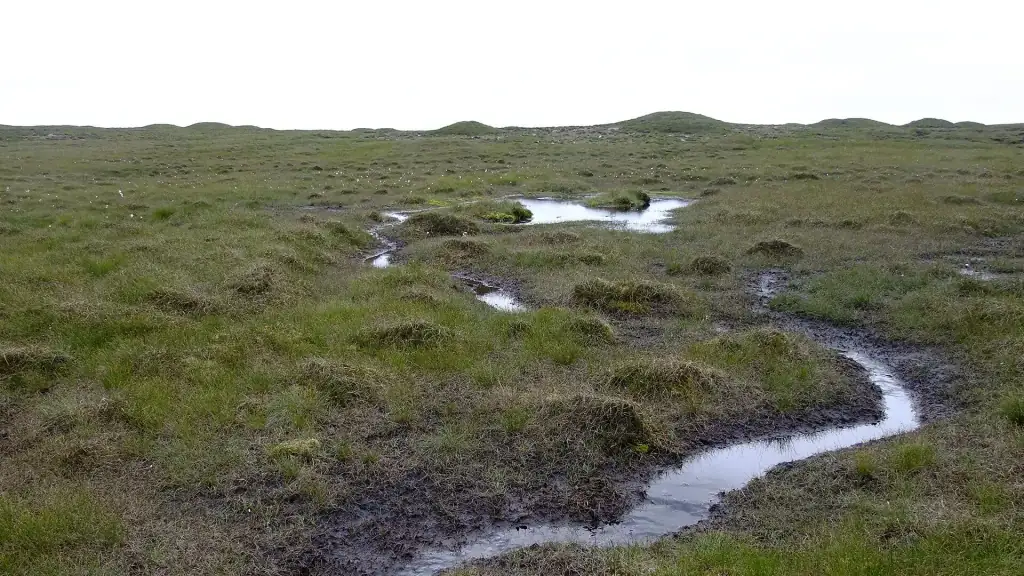
That covers far more than marshes. Rivers, lakes, ponds, peat bogs, wet grasslands, estuaries, saltmarshes, mangroves, shallow coastal waters, reservoirs, rice fields and fish ponds can all be wetlands for the Convention's purposes. The breadth is deliberate: wetlands are connected, and protecting a lake makes little sense if the river feeding it is ignored.
Key idea: The Ramsar Convention commits countries to protect their most important wetlands and to use all their wetlands wisely, under a definition that includes almost every shallow water body, natural or artificial.
The three pillars
JNCC summarises the obligations of Contracting Parties as three "pillars":
- Designating Wetlands of International Importance. Each Party must designate at least one suitable wetland for the List when it joins, and the treaty requires that each site's boundaries be precisely described and mapped (Article 2).
- Wise use of all wetlands. Under Article 3.1, Parties must plan so as to promote the conservation of listed wetlands and, as far as possible, the wise use of wetlands in their territory. Wise use does not mean no use: it means managing wetlands so that their ecological character, the mix of features and processes that make them what they are, is maintained while people benefit from them.
- International cooperation. Parties consult each other about shared wetlands, shared river basins and migratory species, and cooperate on research and funding.
The Convention works mainly through national commitments, reporting, scientific guidance, discussion between Parties and advice to sites in trouble, rather than through penalties. Its strength depends on how seriously each country takes it and on the national laws that back it up.
How a wetland becomes a Ramsar Site
A government nominates a site and submits a Ramsar Information Sheet and map to the Secretariat, showing that it meets at least one of the Convention's criteria for international importance. JNCC describes the criteria as relating to representative, rare or unique wetland types and to international importance for conserving biological diversity, for example as habitat for threatened species or for large numbers of waterbirds or fish.
Designation does not transfer ownership or management. The site remains under national law; what changes is that the country has made an international commitment to maintain its ecological character, and has agreed to report if that character changes.
In numbers: In 2025, the Convention's 172 Contracting Parties had designated over 2,530 Wetlands of International Importance, covering around 2.58 million square kilometres, approximately 14–17 per cent of the world's wetlands.
Source: Convention on Wetlands, Global Wetland Outlook 2025 site.
Site numbers change every year as new sites are designated, so always check the Convention's own figures and their date before quoting a total.
When things go wrong: Article 3.2 and the Montreux Record
Article 3.2 of the treaty requires each Party to arrange to be informed if the ecological character of any listed wetland "has changed, is changing or is likely to change as the result of technological developments, pollution or other human interference", and to pass that information on without delay.
In 1990, at the fourth Conference of the Parties in Montreux, Switzerland, Recommendation 4.8 instructed the Convention's Bureau (now the Secretariat), in consultation with the country concerned, to maintain a record of Ramsar Sites where such changes "have occurred, are occurring or are likely to occur". This list became known as the Montreux Record. The recommendation asked the Bureau to distinguish between sites where no remedy had yet been identified and those where the country had begun or planned action, and to give priority to the Ramsar Monitoring Procedure, the Convention's system of advice and support, at sites on the record. It is a flag for priority attention rather than a penalty, and it depends on cooperation with the country concerned.
Ramsar in the UK
The UK ratified the Convention and designated its first Ramsar Sites in 1976. According to JNCC, as of March 2026 there were 176 Ramsar Sites under the UK's responsibility, covering 1,290,656 hectares:
| Area | Sites | Hectares |
|---|---|---|
| England (including 4 sites shared with Scotland or Wales) | 73 | 412,166 |
| Scotland | 50 | 283,083 |
| Wales | 7 | 11,366 |
| Northern Ireland | 20 | 88,152 |
| Crown Dependencies | 9 | 22,693 |
| Overseas Territories | 17 | 473,196 |
| Total | 176 | 1,290,656 |
Source: JNCC, designated Ramsar Sites as of March 2026. The England row combines 69 England-only sites with 1 cross-border site shared with Scotland and 3 shared with Wales.
In Great Britain and Northern Ireland, JNCC explains, Ramsar designation has generally been underpinned by first notifying the areas as Sites of Special Scientific Interest (Areas of Special Scientific Interest in Northern Ireland), which gives them protection in domestic law. Many UK Ramsar Sites are estuaries and coastal wetlands of great importance for wintering waterbirds, alongside lakes, fens and peat bogs.
World Wetlands Day and the Convention today
The Convention's World Wetlands Day site notes that 2 February has been celebrated as World Wetlands Day since 1997, and that the UN General Assembly proclaimed it an international day in 2021 through Resolution 75/317. Each year has a theme, and schools, reserves and community groups around the world hold events.
The Convention's Parties meet every three years at a Conference of the Parties. At the fifteenth meeting, held in Zimbabwe in July 2025, IUCN reported that Parties adopted a new strategic plan with four goals and 18 targets and adopted resolutions on topics including wetland restoration, river dolphins and waterbirds, flyway conservation, the criteria for designating Wetlands of International Importance, and urban wetlands.
The challenges remain large. The Global Wetland Outlook 2025 estimates that 411 million hectares of wetlands, about 22 per cent of the global total, have been lost since 1970. Ramsar Sites cover only part of the world's wetlands, so the "wise use" obligation for all wetlands matters as much as site designation.
Finding a Ramsar Site near you
Safety: On estuaries and coastal marshes, check tide times before you go: incoming tides can cut off mudflats and creeks quickly. Stay on marked paths, keep children within arm's reach near water and soft mud, and keep dogs on leads near feeding and roosting birds.
- Look it up. JNCC lists UK Ramsar Sites, and the Convention runs an online Ramsar Sites Information Service with maps and site descriptions worldwide.
- Visit. Many Ramsar Sites are nature reserves with paths, hides and visitor centres. Winter is often the best time to see large flocks of waterbirds on estuaries and lakes.
- Get involved. Volunteer with a wetland reserve, take part in waterbird counts or other freshwater citizen science, or mark World Wetlands Day with a local event.
To explore particular wetland types, read about peatlands and carbon and why ponds matter, or browse our wetlands section.
Sources
- Convention on Wetlands of International Importance especially as Waterfowl Habitat (treaty text)InforMEA (United Nations Environment Programme)
- Ramsar Convention (Convention on Wetlands)Joint Nature Conservation Committee (JNCC)
- Global Wetland Outlook 2025Convention on Wetlands (Ramsar Convention Secretariat)
- Recommendations of the 4th Meeting of the Conference of the Contracting Parties, Montreux, 1990Convention on Wetlands, hosted by the Ministry of the Environment, Japan
- What is World Wetlands Day?Convention on Wetlands
- Ramsar COP15 concludes with strengthened global commitment to wetland restorationInternational Union for Conservation of Nature (IUCN)
Spotted an error? Write to contact@freshwateraction.net. Our editorial policy explains how we correct articles.