Drinking Water Quality in Pakistan: Standards, Risks and Progress
Pakistan's national drinking water standards compared with WHO guidelines, arsenic in Indus Valley groundwater, microbial contamination, and how quality is monitored.
In 2021 Pakistan's science minister gave the National Assembly the results of the latest round of water testing by the Pakistan Council of Research in Water Resources (PCRWR). According to Dawn's report, only 38 per cent of the water sources monitored in 2020–21 in 29 major cities were safe to drink. Bacterial contamination was the most common problem, found in 39 per cent of samples, followed by arsenic in 8 per cent and nitrate and fluoride in 4 per cent each.
Those figures describe a problem with two very different parts. One is microbial: water contaminated with faecal bacteria, which can make people ill within days. The other is chemical: naturally occurring arsenic in groundwater, which harms health slowly, over years of drinking. This article explains Pakistan's national drinking water standards, how they compare with World Health Organization guidelines, where the main risks come from, and what is being done.
Pakistan's national standards
Pakistan's National Standards for Drinking Water Quality were formally established by the Pakistan Environmental Protection Agency, with the approval of the Pakistan Environmental Protection Council, as Statutory Regulatory Order 1063(I)/2010, published in the Gazette of Pakistan on 26 November 2010. FreshwaterAction does not republish them; the gazetted text can be read on the UN Food and Agriculture Organization's legal database, FAOLEX.
For most parameters, the national standards follow WHO's Guidelines for Drinking-water Quality. The important exceptions are a few toxic metals.
| Parameter | Pakistan standard (2010) | WHO guideline |
|---|---|---|
| E. coli or thermotolerant coliform bacteria | Must not be detectable in any 100 mL sample | Must not be detectable in any 100 mL sample |
| Arsenic | 0.05 mg/L (50 µg/L) | 0.01 mg/L (10 µg/L), provisional |
| Lead | 0.05 mg/L | 0.01 mg/L |
| Fluoride | 1.5 mg/L | 1.5 mg/L |
Source: Gazette of Pakistan, 26 November 2010, as reproduced in FAOLEX. Selected parameters only.
The gazetted text explains the differences. It notes that existing treatment infrastructure could not meet WHO limits, that arsenic in south Punjab and parts of Sindh exceeded the revised WHO guideline and would take time to control through treatment, and that old urban pipes kept lead levels above the WHO value. It presents the higher limits as a step towards WHO values, and specifies that bottled water must meet WHO limits for arsenic, lead, cadmium and zinc.
Key idea: Pakistan's arsenic limit of 50 µg/L is five times WHO's 10 µg/L guideline, a pragmatic choice that means water can meet the national standard while still carrying a health risk.
Arsenic in the Indus Valley
Arsenic is not added to water by people in most cases. It occurs naturally in sediments and is released into groundwater under particular chemical conditions. Long-term exposure, according to the World Health Organization, causes skin lesions and cancers of the skin, bladder and lungs, and is associated with cardiovascular disease, diabetes and impaired cognitive development in children. WHO estimates that about 140 million people in at least 70 countries drink water with arsenic above 10 µg/L.
In Pakistan, the most detailed national picture comes from a study published in Science Advances in 2017 by researchers from the Swiss Federal Institute of Aquatic Science and Technology (Eawag) and Pakistani and Chinese institutions. Podgorski and colleagues used nearly 1,200 groundwater samples from across the country to build maps of arsenic hazard. They found that much of the Indus Plain is likely to have elevated arsenic, while most of the rest of the country is relatively safe.
The mechanism differs from the better-known arsenic problem in Bangladesh and West Bengal. In the arid Indus Plain, the authors concluded, arsenic is mainly released under alkaline (high-pH) conditions, linked to alkaline topsoils and the intensive irrigation that recharges the shallow, unconfined aquifers. They estimated that 50 million to 60 million people use groundwater within the area at risk, with hot spots around Lahore and Hyderabad, and called for testing of all drinking-water wells in the Indus Plain. Our explainer on groundwater and aquifers describes how such aquifers are recharged and drawn down.
In numbers: An estimated 50 million to 60 million people in Pakistan use groundwater in areas where arsenic is likely to exceed safe levels.
Source: Podgorski et al., Science Advances (2017).
Microbial contamination
Arsenic attracts attention, but bacteria are the more widespread problem. In the 2020–21 monitoring round reported to parliament, bacterial contamination affected 39 per cent of samples, nearly five times as many as arsenic. City by city, the share of unsafe underground sources ranged widely: three cities had no safe sources among those tested, while two had only safe ones.
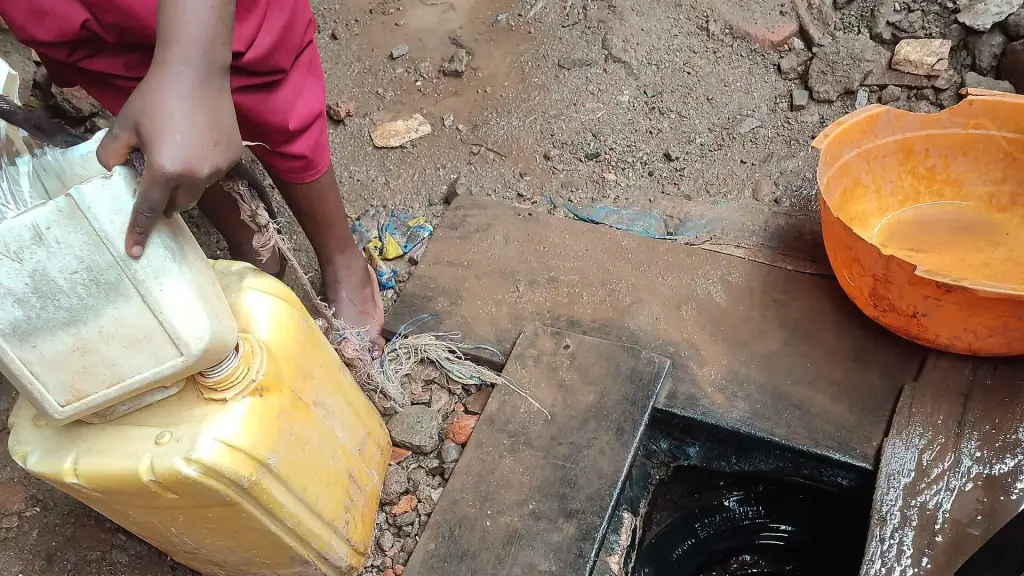
Microbial contamination usually comes from human or animal faeces reaching water through leaking sewers, pit latrines and septic tanks near wells, or contamination inside old, intermittently pressurised pipes. Intermittent supply is a particular risk: when pressure drops, contaminated groundwater can be drawn into the network through cracks. Household storage adds further opportunities for contamination. Good treatment and disinfection, a well-maintained network and safe sanitation are all needed, as our explainer on how drinking water treatment works sets out.
The PCRWR also tests bottled water each quarter. In its April–June 2025 round, as reported by Dawn, 23 brands were found unsafe because of microbial or chemical contamination, out of 203 samples collected in 21 cities; the problems included bacteria, arsenic and excess sodium. Bottled water is not automatically safe.
How Pakistan compares
National averages from the WHO/UNICEF Joint Monitoring Programme, as compiled by the World Bank, show how access and quality differ:
| Indicator, Pakistan (2024) | Share of population |
|---|---|
| At least basic drinking water | 91% |
| Safely managed drinking water | 45% |
| At least basic sanitation | 72% |
| Practising open defecation | 8% |
Most people have an improved water source within reach, but fewer than half have water that is on premises, available when needed and free from contamination. The gap between the two figures reflects those extra conditions, and the monitoring results above suggest that contamination accounts for much of it. Sanitation matters here too, because faecal contamination of water sources is closely tied to how human waste is contained and treated; our article on faecal sludge management in South Asian cities looks at that link.
What helps
The responses that work are well established, even if scaling them up is hard:
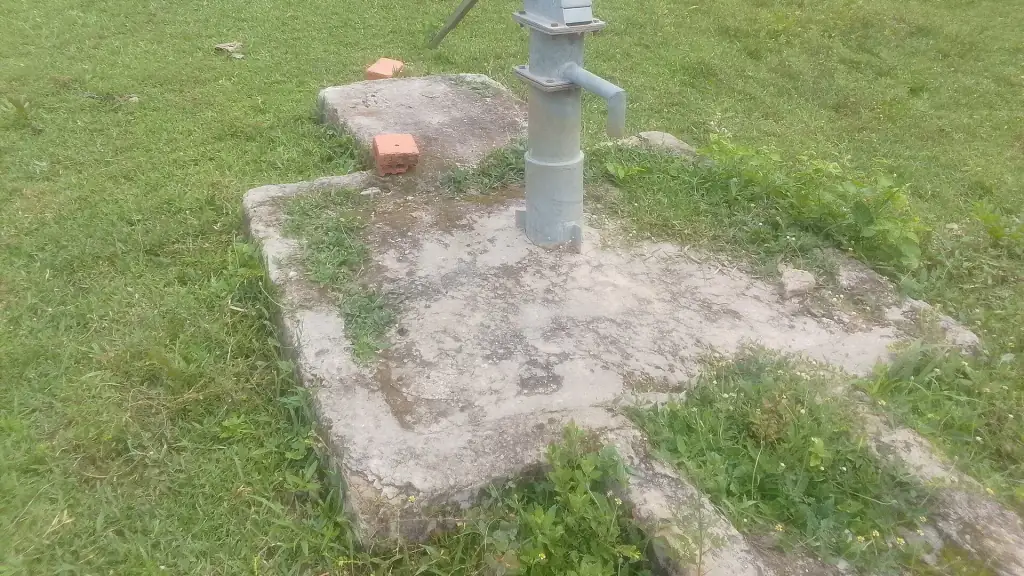
- Test, then mark. Testing wells for arsenic and bacteria, and marking safe and unsafe sources, lets households choose. WHO lists this among the main arsenic mitigation options.
- Switch sources. Deeper or alternative aquifers, treated surface water or rainwater can replace high-arsenic shallow wells, provided they are tested too.
- Treat and disinfect. Chlorination and filtration at treatment plants, and safe household treatment where supply is unreliable, cut microbial risk.
- Protect wells and pipes. Keeping latrines and sewers away from wells, sealing wellheads and replacing leaking pipes prevent contamination in the first place.
- Publish results. Regular, public reporting of monitoring results, as PCRWR does for cities and bottled water, gives citizens and officials a basis for action.
For a plain guide to what water scientists measure and why, see water quality explained. For the global targets that Pakistan's progress is measured against, see SDG 6 explained.
Until about 2016–2018 this web address belonged to the Freshwater Action Network, which hosted a copy of Pakistan's drinking water standards here. FreshwaterAction is a separate, independent publication. It is not that network, does not speak for it and is not its successor. This article is newly written on the same subject.
Sources
- National Standards for Drinking Water Quality, S.R.O. 1063(I)/2010 (Gazette of Pakistan, 26 November 2010)Pakistan Environmental Protection Agency, via FAO FAOLEX
- Arsenic: fact sheet (7 December 2022)World Health Organization
- Extensive arsenic contamination in high-pH unconfined aquifers in the Indus Valley (Podgorski et al., Science Advances, 2017)Science Advances (AAAS)
- No safe drinking water in major cities, NA told (10 August 2021)Dawn
- PCRWR quarterly monitoring of bottled water, April–June 2025 (2 August 2025)Dawn
- World Development Indicators: drinking water and sanitation, Pakistan, 2000–2024 (data from the WHO/UNICEF JMP)World Bank
Spotted an error? Write to contact@freshwateraction.net. Our editorial policy explains how we correct articles.