Glaciers, Snow and the Water Towers of the World
How mountain snow and glaciers store water and feed rivers, which regions depend on them, why glaciers are shrinking, and what peak water means for supplies.
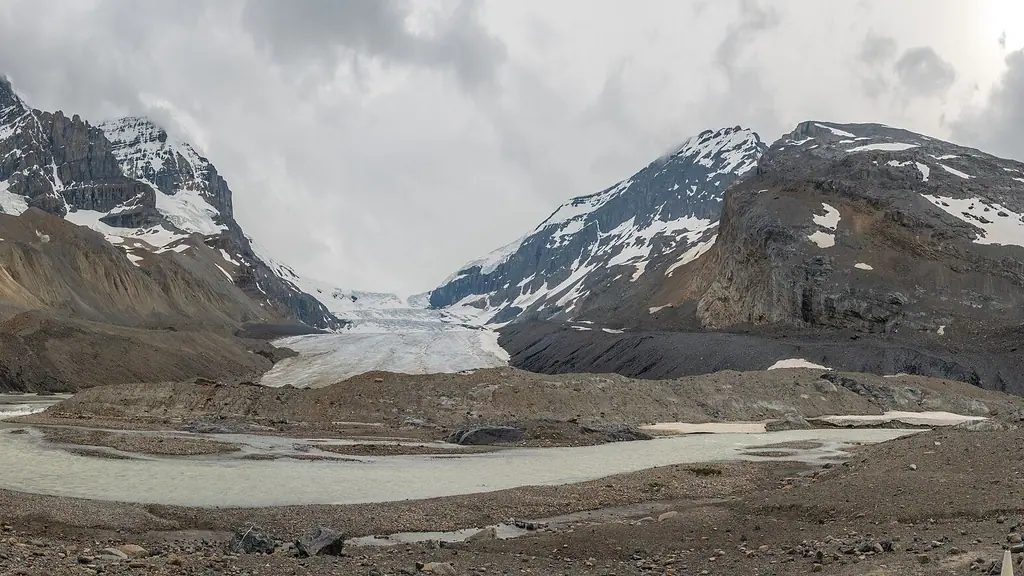
In the 2024 hydrological year, the world's glaciers lost about 450 billion tonnes of ice, according to the World Meteorological Organization (WMO). It was the fourth most negative year since measurements began, and the third year in a row in which every one of the world's 19 glacier regions lost mass. Since 1975, the cumulative loss has reached about 9,000 billion tonnes, equivalent to about 25 millimetres of global sea-level rise. The WMO's State of Global Water Resources 2025, published in September 2026, added a fourth consecutive year of glacier loss across all regions.
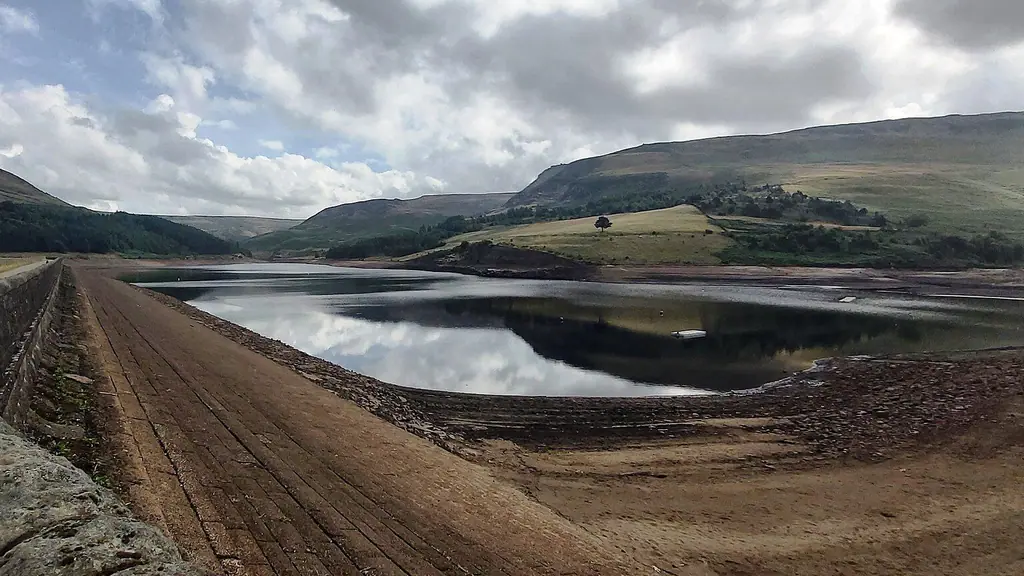
Sea level is only part of the story. For hundreds of millions of people, mountain snow and ice are a water supply: a frozen reservoir that fills in winter and releases water in spring and summer, often in the hottest, driest months when rivers would otherwise run low.
This guide explains how mountains act as "water towers", which regions depend on them most, what is happening to snow and glaciers as the climate warms, and why some rivers fed by glaciers have already passed "peak water". It is part of our coverage of climate change and freshwater.
Why mountains are water towers
Mountains gather more water than the lowlands around them, and they hold it for longer. In their 2020 study in Nature, Walter Immerzeel, Arthur Lutz and 30 co-authors describe two reasons:
- More precipitation. As moist air is forced up over mountains, it cools and drops more rain and snow than falls on the plains below. This is called orographic precipitation.
- Delayed release. Because high ground is cold, much of that precipitation is stored as snow and glacier ice, and in lakes, and released gradually as it melts.
Snowpack and glaciers play different roles. Seasonal snow stores the winter's precipitation and releases it within months, mostly in spring and early summer. Glaciers are much longer-term stores, built up over centuries. In a stable climate, a glacier's annual meltwater is roughly balanced by new snowfall on its upper slopes. In warm, dry summers, glacier melt provides a buffer: the Immerzeel study notes that the water towers' buffering capacity includes supplying glacier meltwater during hot and dry periods.
Key idea: Mountains capture extra precipitation and store it as snow and ice, releasing it slowly to rivers downstream, so changes high in the mountains affect water supplies far away.
Who depends on the water towers
The 2020 Nature study created a global Water Tower Index, ranking 78 mountain systems by how much water they supply and how much ecosystems and people downstream depend on it, and assessing each one's vulnerability to water stress, governance, political tension over water and future climatic and socio-economic change. The authors concluded that the most important water towers are also among the most vulnerable, and that changes could negatively affect 1.9 billion people: 0.3 billion living in mountain areas and 1.6 billion directly downstream.
According to Utrecht University, which led the research, the most relied-upon water tower in the world is the Indus, which spans parts of Afghanistan, China, India and Pakistan and is also one of the most vulnerable. Other high-ranking water towers include the southern Andes, the Rocky Mountains and the European Alps.
| Continent | Five most relied-upon water towers (Immerzeel et al.) |
|---|---|
| Asia | Indus, Tarim, Amu Darya, Syr Darya, Ganges-Brahmaputra |
| Europe | Rhône, Po, Rhine, Black Sea North Coast, Caspian Sea Coast |
| North America | Fraser, Columbia and Northwest United States, Pacific and Arctic Coast, Saskatchewan-Nelson, Colorado |
| South America | South Chile, South Argentina, Negro, La Puna region, North Chile |
Source: Utrecht University summary of Immerzeel et al. (2020). Rankings reflect the study's index of supply and downstream demand, not the size of the mountains.
What is happening to snow and ice
The IPCC's Working Group I concluded in 2021 that human influence is very likely the main driver of the global retreat of glaciers since the 1990s, and that it very likely contributed to the decrease in Northern Hemisphere spring snow cover since 1950. Its Working Group II chapter on water reports with high confidence that, over the last two decades, the global rate of glacier mass loss has exceeded 0.5 metres water equivalent per year, meaning that on average glaciers have lost a layer of ice that would make half a metre of water across their whole area every year.
Recent monitoring shows the trend accelerating. The WMO reported in March 2025 that seven of the ten most negative years for glacier mass balance have occurred since 2016, and that five of the past six years have seen the most rapid glacier retreat on record. In 2024, glaciers in Scandinavia, Svalbard and North Asia had their largest annual mass loss on record. The WMO also warned that, at current rates of melting, glaciers in many regions, including western Canada and the United States, Scandinavia, Central Europe, the Caucasus, New Zealand and the tropics, are not expected to survive the 21st century.
Snow is changing too. The IPCC has high confidence in an earlier onset of spring snowmelt, and reports with high confidence that warming over the last 40 to 60 years has brought spring floods about 10 days earlier per decade. When snow melts earlier, more water arrives in spring, when it may not be needed and may be harder to store, and less in late summer.
In numbers: Glaciers lost about 450 billion tonnes of ice in the 2024 hydrological year, and about 9,000 billion tonnes since 1975, enough to raise global sea level by about 25 millimetres.
Source: World Meteorological Organization, 21 March 2025, citing World Glacier Monitoring Service data.
Peak water: more meltwater, then less
A shrinking glacier does not immediately mean less water. As it first warms, a glacier melts faster, so rivers fed by it can carry more water for years or decades. But because the ice is not replaced, the glacier gets smaller and the extra melt cannot last. Eventually meltwater reaches a maximum, called peak water, and then declines as less and less ice remains.
The IPCC Working Group II chapter notes that glacier runoff has already declined in regions where glaciers have passed their peak water stage, giving the Canadian Rocky Mountains, the European Alps, the tropical Andes and the North Caucasus as examples. It also reports medium confidence that accelerated glacier melting has negatively affected glacier-supported irrigation systems worldwide.
Looking ahead, the IPCC projects that by 2100, one-third of 56 large glacier-fed river basins will see mean annual runoff decline by more than 10 per cent, with the largest reductions in central Asia and the Andes (low confidence). It estimates that roughly 1.5 billion people will critically depend on runoff from mountains by the mid-21st century, under one intermediate emissions scenario.
Hazards as well as shortages
Melting ice brings sudden dangers too. As glaciers retreat, meltwater can collect in lakes dammed by loose rock or ice. The IPCC notes that the growth of such lakes can increase the risk of glacial lake outburst floods, in which a dam fails and a wall of water and debris rushes down a valley. Thawing permafrost and retreating ice can also destabilise mountain slopes. The WMO notes that in the short term glacier melt increases natural hazards such as floods, and warns of cascading impacts on economies, ecosystems and communities, not just in mountain regions.
Adapting in mountain regions
Communities that depend on snow and ice are adapting in several ways: building or enlarging reservoirs to capture earlier meltwater, improving irrigation efficiency, monitoring glacial lakes and installing early-warning systems, and planning water allocation across borders. But the IPCC warns that at warming beyond 1.5 °C, regions dependent on glaciers and snowmelt may reach biophysical limits to adaptation because the water itself will be limited (medium confidence). Reducing greenhouse gas emissions remains the only way to slow the loss of ice.
The United Nations declared 2025 the International Year of Glaciers' Preservation, with 21 March as the annual World Day for Glaciers, to draw attention to these changes.
Follow the story
- Look at your own water's source. Many cities, even far from mountains, draw on rivers fed partly by snow; our guide to catchments and watersheds explains how to trace a river's drainage area.
- Watch the seasons. In mountain regions, earlier spring floods and lower late-summer flows are among the first signs of change.
- Understand the wider cycle. Glaciers and snow are stores in the water cycle; their decline is one part of the changes described in climate change and freshwater.
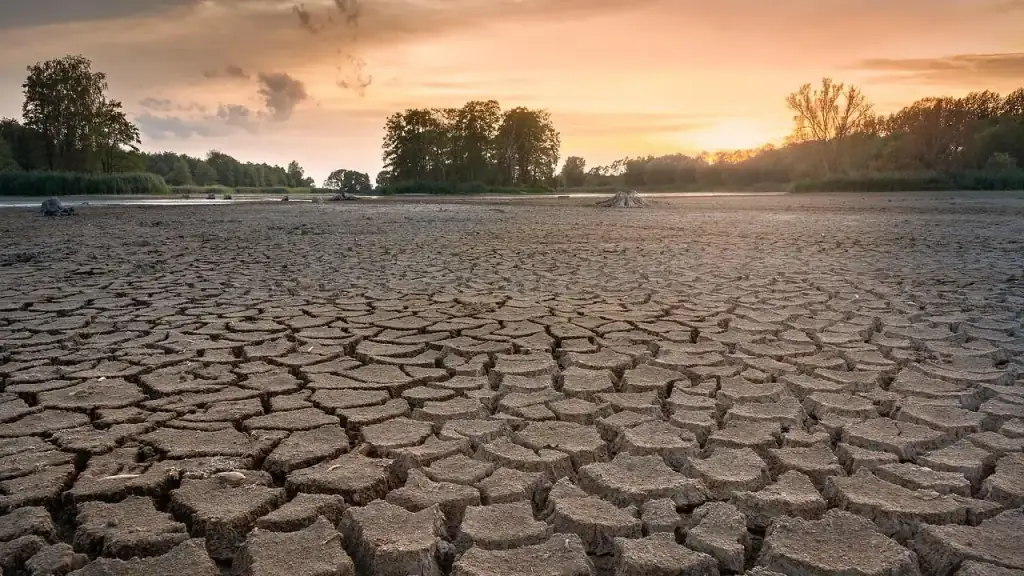
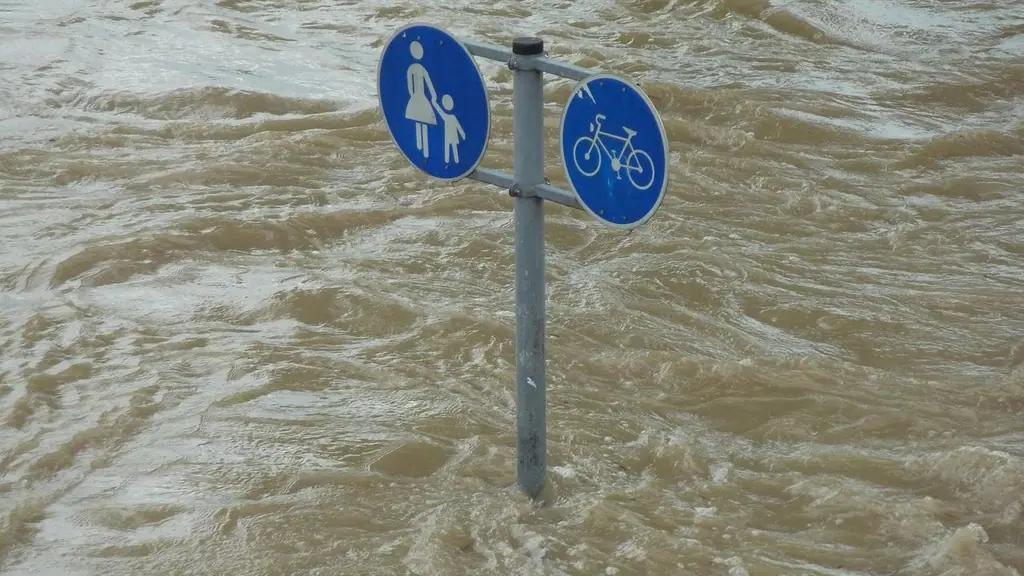
For lowland extremes linked to the same warming, see droughts explained and floods explained, and browse the climate and freshwater section.
Sources
- Importance and vulnerability of the world's water towers (Immerzeel et al., Nature, 2020; accepted manuscript)Nature (author manuscript via IIASA repository)
- Water Towers of the world ranked on vulnerability (9 December 2019)Utrecht University
- Glacier melt will unleash avalanche of cascading impacts (21 March 2025)World Meteorological Organization
- State of Global Water Resources 2025World Meteorological Organization
- Climate Change 2022: Impacts, Adaptation and Vulnerability. Chapter 4: WaterIntergovernmental Panel on Climate Change (IPCC), Working Group II
- Climate Change 2021: The Physical Science Basis. Summary for PolicymakersIntergovernmental Panel on Climate Change (IPCC), Working Group I
Spotted an error? Write to contact@freshwateraction.net. Our editorial policy explains how we correct articles.