How Lakes Work: Layers, Seasons and Life
How lakes form, why deep lakes split into warm and cold layers in summer and mix in spring and autumn, what trophic states mean, and why lakes are sensitive.
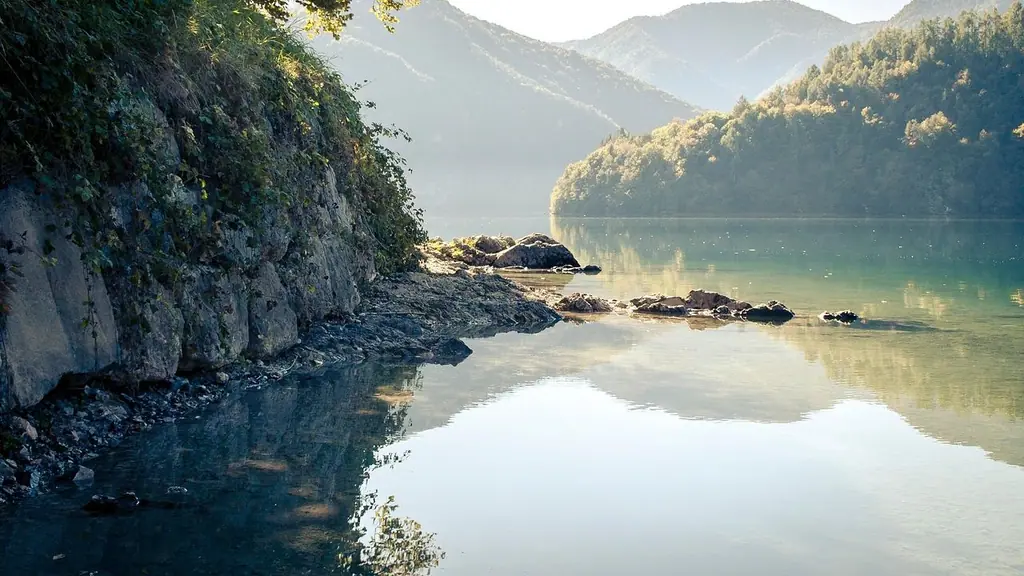
Lower a thermometer on a line into a deep lake on a hot August afternoon and the readings tell a surprising story. Through the top few metres the water is pleasantly warm; then, a little further down, the temperature drops sharply over a short distance, as if the thermometer had passed through an invisible floor. In a sense it has. In summer, many lakes split into layers of water at different temperatures that barely mix with one another for months at a time.
That layering, and the way it breaks down each spring and autumn, controls how oxygen, nutrients and living things are distributed through a lake. It is one of the main reasons why lakes behave so differently from rivers, even though rivers feed and drain most of them.
This guide explains how lakes form, how they stratify and turn over with the seasons, what scientists mean by a lake's trophic state, and why lakes are so sensitive to what happens in their catchments. It is part of our rivers and lakes coverage, which starts with why healthy rivers matter.
What counts as a lake
There is no single scientific definition of a lake, but the term is generally used for a body of standing (still or slow-moving) water in a basin, large enough that waves and wind, rather than plants rooted on the bottom, dominate much of it. Smaller, shallower waters are usually called ponds, which have their own ecology and value; see ponds: small waters with big value.
The UK has a great many standing waters. Writing for the Freshwater Biological Association in 2024, Stephen Maberly, Laurence Carvalho and Philip Taylor reported 43,470 documented UK standing waters, with the UK Lakes Portal holding data on nearly 42,000 larger than about 0.01 hectares. Lough Neagh and the two basins of Lough Erne in Northern Ireland are the UK's largest standing waters by area; Loch Morar is the deepest, and Loch Ness holds the greatest volume.
How lakes form
A lake needs a hollow in the land and a supply of water to fill it. Douglas Branstrator, in a 2009 chapter of the Encyclopedia of Inland Waters, describes 22 types of lake basin created by 10 principal forces, and concludes that glacial, tectonic and fluvial (river) processes together created roughly nine-tenths of the world's lake basins, with glaciers far more important than all the others combined.
- Glacial lakes. Ice sheets and glaciers scour hollows in rock, and leave behind ridges of debris (moraines) that dam valleys. Most lakes in Scotland, the English Lake District, Scandinavia and Canada are glacial in origin. Kettle lakes form where blocks of buried ice melted, leaving pits in glacial deposits.
- Tectonic lakes. Movements of the Earth's crust create deep basins, such as the rift valley lakes of East Africa and Lake Baikal in Siberia.
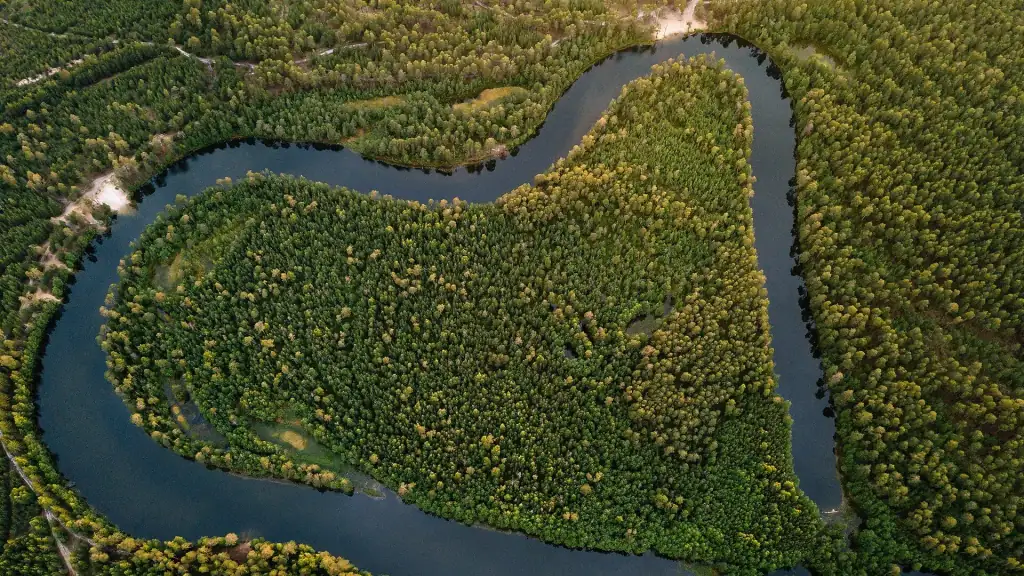
- River lakes. Rivers create lakes when meanders are cut off as oxbow lakes, or when sediment dams a side valley; our guide to the parts of a river shows how oxbows form.
- Volcanic lakes. Water fills craters and collapsed volcanic calderas, or lava flows dam valleys.
- Lakes made by animals and people. Beavers build dams, and people have created reservoirs, mill ponds, gravel pits and flooded quarries. The FBA authors estimate that at least 10 per cent of the named sites in the UK Lakes Portal are likely to be hydraulically modified, judging only by names such as Reservoir, Dam or Mill, and that the true share is likely greater.
How a lake was formed shapes its depth, its catchment and its chemistry, which in turn shape how it behaves.
Why lakes form layers
The key to lake layering is an unusual property of water: it is densest at about 4 °C. The Missouri Department of Conservation puts it plainly: water is most dense and heavy at 4 °C (39 °F). Warmer water is lighter and floats on top; so, surprisingly, is colder water, which is why ice forms on the surface and the water beneath stays liquid.
Summer stratification
In spring and early summer, the Sun warms the surface of a lake faster than wind can mix that heat downwards. The warm, light surface water floats on colder, denser water below, and a lake that is deep enough divides into three layers:
- Epilimnion. The warm, well-mixed surface layer, stirred by wind, in contact with the air and usually rich in oxygen. Most algae grow here because it is sunlit.
- Metalimnion. A transition layer where temperature falls steeply with depth. The plane of steepest change is the thermocline. The Missouri Department of Conservation describes it as a layer where the temperature drops by at least 0.5 °F for every foot of depth (roughly 1 °C per metre).
- Hypolimnion. The cold, dark, dense bottom layer, cut off from the air for the rest of the summer.
The density difference acts like a lid. Wind mixes the epilimnion, but it rarely has the strength to stir the cold water below. Shallow lakes may not stratify at all, or may stratify only briefly in calm, hot weather.
Oxygen trouble in the depths
Cut off from the atmosphere and too dark for photosynthesis, the hypolimnion cannot gain new oxygen. Meanwhile, dead algae and other organic matter sink into it and are broken down by bacteria, which use oxygen. The Missouri Department of Conservation notes that, in productive ponds, the bottom layer may be completely without oxygen by mid-July, and fish cannot survive there.
Key idea: Because water is densest at about 4 °C, deep lakes in temperate climates float a warm layer on top of a cold one in summer, and the cold bottom water can run short of oxygen until the lake mixes again.
The lake's year: turnover
As autumn air cools the surface, the epilimnion loses heat, becomes denser and sinks, and the warm layer gets thinner. Eventually the whole lake reaches nearly the same temperature, the lid disappears, and wind can mix the water from top to bottom. This is autumn turnover. Oxygen returns to the deep water and nutrients from the bottom are carried up into the light.
In lakes that freeze, a reverse layering forms in winter: water at about 4 °C sits on the bottom with colder water, and then ice, above it. When the ice melts in spring and the surface warms to about 4 °C, the lake again has a uniform temperature and mixes in a spring turnover, before summer stratification begins once more.
| Season | What happens in a typical deep temperate lake |
|---|---|
| Spring | Ice melts; surface warms to about 4 °C; whole lake mixes (spring turnover) |
| Summer | Warm epilimnion floats on cold hypolimnion; deep water may lose oxygen |
| Autumn | Surface cools and sinks; layers break down; whole lake mixes (autumn turnover) |
| Winter | Coldest water and ice at the top, water near 4 °C at the bottom; little mixing under ice |
Limnologists (lake scientists) classify lakes by how often they mix. Lakes that mix twice a year, as above, are dimictic; this pattern is common where winters are cold enough for lakes to freeze. Lakes that rarely freeze can stay mixed right through the winter and stratify only in summer, mixing once a year (monomictic), while shallow lakes may mix almost continuously.
Productive and unproductive lakes: trophic states
Lakes differ enormously in how much life they support, largely according to how much nutrient (especially phosphorus and nitrogen) reaches them. Scientists describe this as the lake's trophic state:
- Oligotrophic lakes are low in nutrients and algae. Their water is usually clear and well oxygenated at depth. Many upland glacial lakes are like this.
- Mesotrophic lakes have moderate nutrient levels and productivity.
- Eutrophic lakes are rich in nutrients, with abundant algae and plants, greener and less clear water, and a high risk that deep water runs out of oxygen in summer.
- Hypereutrophic lakes have very high nutrient levels and frequent dense algal blooms.
Some lakes are naturally eutrophic, especially shallow lowland lakes on fertile soils. The concern is cultural eutrophication, in which extra nutrients from farming, sewage and urban run-off push a lake into a more enriched state than it would naturally have. That can bring blooms of cyanobacteria (blue-green algae), some of which produce toxins harmful to people, pets and livestock. Our article on nutrient pollution and algal blooms explains the process and the safety advice.
In numbers: In the US Environmental Protection Agency's 2022 National Lakes Assessment, 50 per cent of lakes were in poor condition for phosphorus and 47 per cent for nitrogen; cyanotoxins were detected in 50 per cent of lakes and exceeded the EPA's recreational criterion in 2 per cent.
Source: US EPA, National Lakes Assessment 2022 results summary.
Why lakes are sensitive
Lakes collect whatever their catchments send them, and they hold on to it. Water moves through a large lake far more slowly than through a river, so nutrients and pollutants can accumulate in the water and sediments rather than being flushed quickly away, and recovery after the sources are reduced can take years. Our guide to catchments and watersheds explains why controlling what enters a lake means managing the land around it.
Windermere, England's largest natural lake, shows both pressures at work. In a 2022 information note for the Freshwater Biological Association, Stephen Maberly and Suzanne McGowan reported that oxygen at the bottom of the lake became depleted during summer stratification in the early 1990s, and that minimum oxygen levels at depth rose again after phosphorus inputs were reduced. They also report that the lake's average annual surface temperature has risen by around 1.7 °C over 70 years of records, that the stratified period now tends to start earlier and end slightly later, and that the lake's Arctic charr have declined dramatically since the late 1980s, probably mainly because of warmer winters.
The EPA's National Lakes Assessment, a statistical survey of the condition of lakes, ponds and reservoirs across the United States, found nutrient pollution to be the most widespread stressor it measured in 2022, with chlorophyll a, a measure of algae, in excess in 49 per cent of lakes.
Getting to know a lake
Safety: Lakes can be very cold and deep close to the shore, even in summer, and cold water shock can affect strong swimmers. Never go onto frozen lakes. Keep young children within arm's reach at the water's edge, stay out of water with visible scum or algae warnings, and wash hands with soap after contact with lake water.
You can see many of these processes for yourself, safely, from the shore:
- Watch the seasons. Notice when a local lake freezes and thaws, and when the water turns green in late summer.
- Look at clarity. Clear water often means few algae; green, murky water in summer suggests a nutrient-rich lake.
- Read the warnings. Many lakes post notices when blue-green algae are present. Keep children and dogs out of the water when they do.
- Find local data. In England, the Environment Agency classifies larger lakes alongside rivers; the UK Lakes Portal and national agencies elsewhere publish lake information.
Lakes are home to a distinctive community of plankton, plants, insects, fish and birds; our guide to freshwater ecosystems explains how it fits together. For more, browse our rivers and lakes section.
Sources
- The vital statistics of standing waters in the United Kingdom (Maberly, Carvalho and Taylor, 2024)Freshwater Biological Association
- Origins of Types of Lake Basins (Branstrator, Encyclopedia of Inland Waters, 2009)University of Minnesota / Elsevier
- Pond TurnoverMissouri Department of Conservation
- National Lakes Assessment 2022: key resultsUS Environmental Protection Agency
- National Lakes AssessmentUS Environmental Protection Agency
- The state of Windermere (Maberly and McGowan, FBA Info Note, 2022)Freshwater Biological Association
Spotted an error? Write to contact@freshwateraction.net. Our editorial policy explains how we correct articles.