Looking for River Invertebrates: A Beginner's Guide to Kick Sampling
How kick sampling works, how to sort and identify river invertebrates, what sensitive and tolerant animals say about water quality, and how to sample safely.
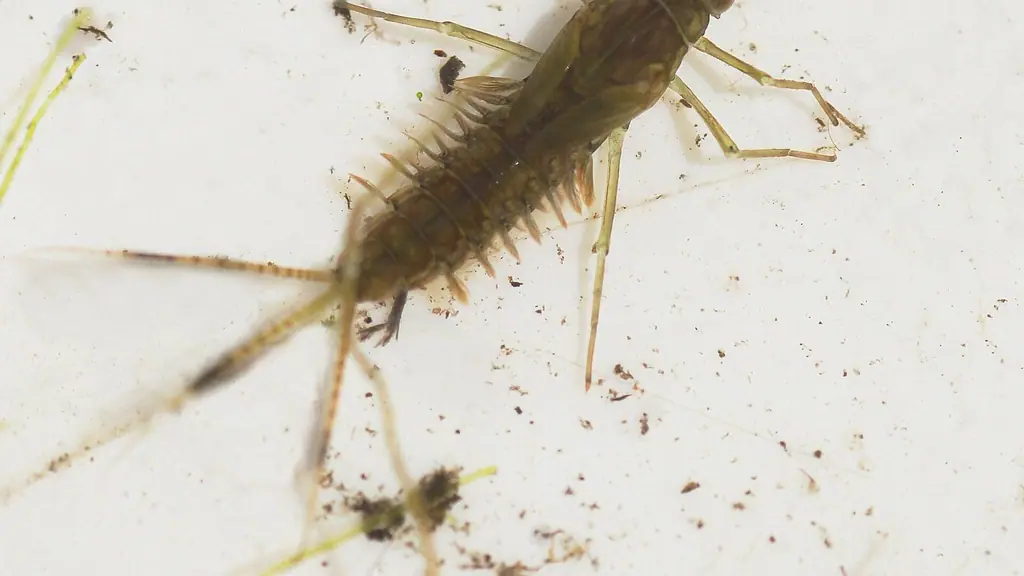
Pour the contents of a kick net into a white tray of stream water and, for a few seconds, nothing seems to happen. Then the sediment settles and the tray comes alive: a flattened mayfly nymph clinging to a pebble, a caddis larva dragging a tube of sand grains, a freshwater shrimp swimming on its side, a stonefly nymph flexing its two tails. Within a few minutes a careful observer can say a good deal about the stream's recent history from what is in that tray.
Freshwater invertebrates, animals without backbones such as insect larvae, snails, worms and crustaceans, are the most widely used living indicators of river health. This guide explains why they are such good indicators, how a standard kick sample is taken, how to sort and identify the main groups, and how to interpret what you find without jumping to conclusions.
Why invertebrates are good indicators
A water sample shows the chemistry at the moment it was taken. A pollution incident that passed through last week may leave no trace in the water today, but it can leave a gap in the animals living on the bed. The Riverfly Partnership explains that riverflies make good indicators because of their limited mobility, relatively long life cycles, year-round presence and specific tolerances to environmental change. They respond not only to pollution but also to siltation and low flows.
Different groups tolerate different conditions. Mayflies, stoneflies and many caddisflies need clean, well-oxygenated water; worms, leeches and midge larvae can survive in poorer water. A stream with a wide range of animals, including plenty of sensitive ones, is usually healthier than one with only a few tolerant groups. Because riverflies sit low in the food chain, the Partnership notes, a drop in their numbers can affect the whole ecosystem.
Key idea: Invertebrates live in the river all the time and cannot easily escape, so the mix of sensitive and tolerant animals records conditions over weeks and months, not just on the day you visit.
Who should sample, and where
Kick sampling means standing in a stream and disturbing the bed, so it is an activity for adults, or for older children closely supervised by trained adults in a shallow, slow, safe stretch. The Riverfly Partnership's monitors must be at least 18 and physically capable of entering a river in wellies or waders, and are not expected to put themselves at risk.
Younger children can still take full part. An adult takes the sample while children watch from the bank, then everyone sorts and identifies the animals in trays set out on level ground well back from the edge.
Safety: Only sample in shallow, slow-flowing water with a firm bed, where the water is well below knee height, and never alone. Adults supervise throughout and stay within arm's reach of young children, who remain on the bank. Check the weather and flood warnings; do not sample after heavy rain or if the water is high, fast, cold or murky. Stay away from deep pools, steep or crumbling banks, ice and weirs. RoSPA's Water Safety Code reminds everyone that children should always go near water with an adult and to watch for hidden currents, slippery banks and hidden rubbish. Cover cuts with waterproof plasters, wear gloves, do not eat by the water, and wash hands with soap afterwards: river water can carry leptospirosis (Weil's disease). If you see obvious pollution, do not sample.
Choose a riffle: a shallow stretch where water ripples over stones and gravel. Riffles usually hold plenty of invertebrates in stony streams, and they are also the safest place to stand because the water is shallow. Sample the same kind of habitat each time so that visits can be compared.
How to take a kick sample
The method below follows the US Environmental Protection Agency's volunteer streamside biosurvey and the Riverfly Partnership's standard sample. You need a pond net or kick net with a fine mesh (the EPA uses 500-micron mesh), a bucket, one or two white trays, an ice cube tray or small pots for sorting, a spoon, a soft paintbrush or plastic pipette, an identification chart and a hand lens.
- Fill the trays first with a few centimetres of clean stream water and set them in the shade on level ground.
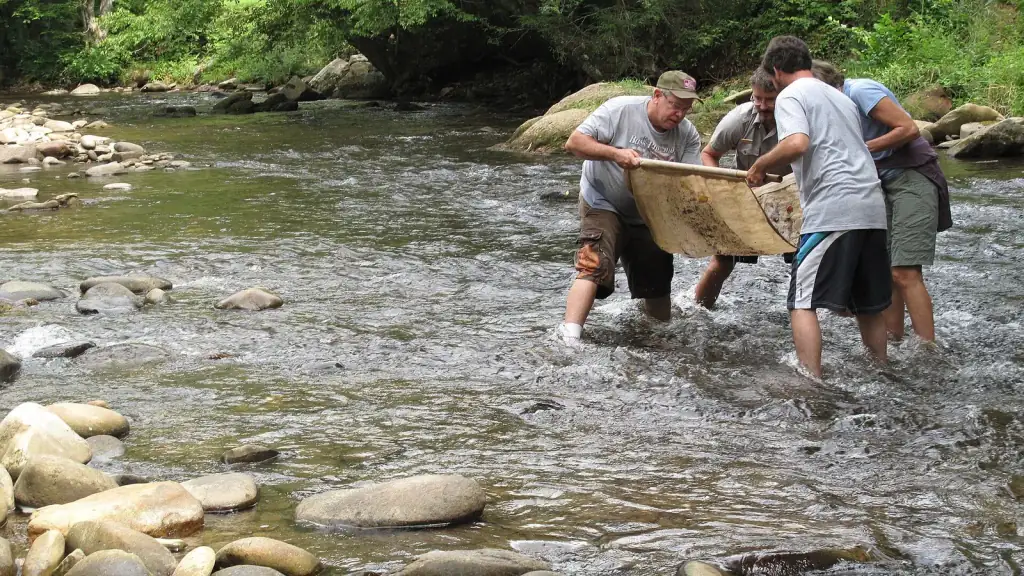
- Hold the net on the bed facing upstream. The person sampling stands downstream of the area to be disturbed and holds the net at about 45 degrees, with its bottom edge pressed tightly against the bed so animals cannot escape underneath.
- Kick and stir upstream of the net. Shuffle and kick the gravel and stones just upstream so that dislodged animals are carried by the current into the net. Lift larger stones and gently rub them by hand in front of the net to free animals clinging to them. The Riverfly Partnership's standard sample is a three-minute kick sample followed by a one-minute hand search of stones and plants; the EPA describes disturbing each spot for about three minutes, or until it has been thoroughly worked over.
- Lift the net out smoothly, carry it to the bank and empty it into a tray, rinsing the net into the tray with a little stream water.
- Let the tray settle for a minute so that silt sinks and animals start to move.
Sorting and identifying
Use a spoon, pipette or soft paintbrush to move animals into compartments of an ice cube tray, putting similar-looking animals together, with a little water in each. Handle them as little as possible and keep the trays out of the sun. Then use a simple identification chart to name the main groups. The table below lists groups beginners commonly find in stony streams, with the pollution-tolerance groupings from the EPA's streamside biosurvey.
| Group | How to recognise it | EPA tolerance group |
|---|---|---|
| Stonefly nymphs | Two tails; long antennae; no gills along the sides of the abdomen | Sensitive |
| Mayfly nymphs | Usually three tails (some have two); leaf-like or feathery gills along the sides of the abdomen | Sensitive |
| Cased caddisfly larvae | Soft, grub-like larva living in a portable case of sand, stones or plant pieces | Sensitive (non-net-spinning caddis) |
| Net-spinning caddisfly larvae | Grub-like larva without a case, often curled, with a hard head; builds small silk nets on stones | Somewhat sensitive |
| Water hoglouse (aquatic sowbug) | Flattened, grey, like a woodlouse, crawls rather than swims | Somewhat sensitive |
| Freshwater shrimp | Curved, flattened sideways, often swims on its side | Not listed in the EPA text; record it separately |
| Worms | Long, thin, segmented, no legs | Tolerant |
| Leeches | Flattened, segmented, with a sucker at each end | Tolerant |
| Midge larvae, including red "bloodworms" | Small, thin, worm-like larvae, some bright red | Tolerant |
Groupings: US EPA, Volunteer Stream Monitoring Methods Manual, 4.2. The EPA developed them for streams in the mid-Atlantic United States and advises checking them with a local aquatic biologist; schemes in other regions use their own lists.
Count how many of each group you find, or record them by abundance. The EPA biosurvey uses three codes: rare (1–9 animals), common (10–99) and dominant (100 or more).
Try this: Before you name anything, sort the tray by how the animals move: crawlers, swimmers, animals that stay clamped to stones, and animals in cases. Then look closely at the tails and gills with a hand lens. Most beginners find that "two tails or three, gills on the sides or not" separates stoneflies from mayflies quickly.
Reading the results carefully
The EPA biosurvey turns counts into a score by weighting each group by its sensitivity, so that sensitive animals count for more than tolerant ones, and then compares the total with a scale set for the region. The Riverfly Partnership's monitors do something similar with their own standard groups: each site has a trigger level, the minimum score a healthy sample at that site should reach, set by the statutory agency's ecologist. A score below the trigger prompts a second sample, and if that also falls short, the agency is informed.
A few cautions apply to any beginner's sample:
- One visit is not proof. Finding only tolerant animals can point to a problem, but it may also reflect the habitat, the season or the way the sample was taken. The Riverfly Partnership's monitors sample every month precisely so they can learn what is normal for each site.
- Compare like with like. A riffle and a muddy pool support different animals even in clean water.
- Sensitive animals present is good news; absent is a question, not an answer. Repeat the sample, and try upstream and downstream sites.
If a sample is unexpectedly poor and you can see signs of pollution, report it to the environment agency rather than investigating further.
Returning animals, hygiene and biosecurity
When you have finished, gently pour the animals back into the stream at the place they came from. The EPA instructs volunteers to return invertebrates to the stream and to release any fish, amphibians or reptiles caught in the net immediately. Keep the whole process short: animals should spend minutes, not hours, in the tray, in shade and in water from the same stream. Never take animals home, and do not move them between streams.
Wash hands with soap and water straight away. Before using the net, trays or boots in another river, follow the GB Non-native Species Secretariat's Check, Clean, Dry routine: check for mud, animals and plant material and leave anything you find at the site; clean everything thoroughly, with hot water if possible; and dry it for as long as you can, because some invasive species can survive for over two weeks in damp conditions.
Next steps
To record the rest of the stream as well, our guide to doing a simple river survey explains how to measure width, depth, flow and habitat, and the printable river survey recording sheet has a table for invertebrates. If you would like to monitor regularly and contribute your results, our guide to freshwater citizen science describes established schemes, including the Riverfly Partnership's training. To see how these animals fit into the wider river community, read about freshwater food chains and food webs, or browse our citizen science section.
Sources
- Volunteer Stream Monitoring: A Methods Manual, 4.2 Streamside Biosurvey: MacroinvertebratesUS Environmental Protection Agency
- Frequently Asked QuestionsThe Riverfly Partnership
- Riverflies overviewThe Riverfly Partnership
- Check Clean DryGB Non-native Species Secretariat
- LeptospirosisNHS
- Water Safety CodeRoyal Society for the Prevention of Accidents (RoSPA)
Spotted an error? Write to contact@freshwateraction.net. Our editorial policy explains how we correct articles.