ANEW: The African Civil Society Network on Water and Sanitation
An independent explainer on ANEW, the African Civil Society Network on Water and Sanitation: its 2003 launch, its work with AMCOW and where to find it today.
On 9 December 2003, in Addis Ababa, South Africa's then Minister of Water Affairs and Forestry, Ronnie Kasrils, rose to welcome a new organisation. It was launched as the African Civil Society Network on Water, ANEW for short. His speech, which survives in an archived copy from his department's website, argued that governments would not reach their water and sanitation targets without organised civil society alongside them. Water, he said, "flows towards power", so it is always the least powerful who go without.
More than two decades later the network is called the African Civil Society Network on Water and Sanitation. It describes itself as a platform of more than 225 civil-society organisations in more than 30 countries. This article explains what ANEW is, how it fits into Africa's water and sanitation policy, why that kind of advocacy matters, and where the network and one of its best-known training handbooks can be found today.
What ANEW is and how it began
ANEW is a network of networks. Its members are not individuals but organisations: local and national NGOs, community-based groups and national WASH (water, sanitation and hygiene) coalitions. Its 2025 annual report names several of the national platforms it works with, including CONIWAS in Ghana, KEWASNET in Kenya and TAWASANET in Tanzania. Its office is in Nairobi, Kenya.
The relationship with governments was there from the start. At the 2003 launch, Kasrils spoke on behalf of African governments and AMCOW and said governments wanted the new network to become more organised, accessible and accountable, as a valued partner in joint continental efforts on water and sanitation. By 2010, ANEW's own training material described it as an autonomous, Africa-wide platform for making sure that the diverse voices of African civil-society organisations were heard when water and sanitation policies were drawn up and carried out.
The network's current website lists four themes:
- getting the human rights to water and sanitation put into practice;
- good governance in water, sanitation and water resources management;
- "leaving no one behind", with a particular focus on gender;
- water security and climate change.
What sets ANEW apart from many advocacy coalitions is its formal relationship with governments. The annual report describes ANEW as the officially recognised civil-society platform to the African Ministers' Council on Water (AMCOW), a role set out in a memorandum of understanding. ANEW's own website calls this kind of recognition for African civil society uncommon. In practice it gives member organisations a recognised route into ministerial processes, and a responsibility to bring their evidence and views to those meetings.
How civil society fits into African water policy
Water policy in Africa is made at several levels at once. National ministries, regulators and parliaments decide budgets and laws. Regional economic communities, such as the Southern African Development Community (SADC), coordinate policy across borders. At continental level, AMCOW brings together the ministers responsible for water and works within African Union processes. Above all of this sit global frameworks such as the Sustainable Development Goals. A continental network gives small organisations a way to follow all these levels at once. Members pool their evidence, agree joint positions, attend ministerial meetings and then carry the commitments made there back to national governments.
Two recurring meetings stand out. AfricaSan is AMCOW's sanitation and hygiene conference series. According to AMCOW, its second conference brought together 32 African ministers and produced the eThekwini Declaration, eleven government commitments on sanitation and hygiene. Africa Water Week is a larger continental conference on water as a whole. Its ninth edition, in Cairo, was expected to draw more than 1,500 participants, and ANEW was named as a partner in organising it.
A short timeline of the commitments that frame this work:
- 2003: ANEW is launched in Addis Ababa on 9 December.
- 2008: African heads of state endorse the eThekwini Declaration at that year's African Union summit, in the Sharm el-Sheikh Declaration (AMCOW).
- 2010: The UN General Assembly recognises the human right to water and sanitation.
- 2015: On 27 May, at the fourth AfricaSan in Dakar, ministers adopt the Ngor Declaration on Sanitation and Hygiene. It replaces the eThekwini commitments with clearer indicators and a vision of universal access to sanitation and hygiene, and an end to open defecation, by 2030. Later that year the UN adopts the Sustainable Development Goals, including SDG 6 on clean water and sanitation.
- 2025: On 29 September, according to ANEW's annual report, the 14th AMCOW Governing Council in Dakar adopts the Africa Water Vision 2063 and Policy. It succeeds the first Africa Water Vision, which looked ahead to 2025, and is recommended as Africa's common position for the UN 2026 Water Conference.
Why civil-society advocacy matters for WASH
The case starts with the size of the gap. The WHO/UNICEF Joint Monitoring Programme (JMP), which tracks progress towards SDG 6, published its latest household report in August 2025, with estimates for 2024. In sub-Saharan Africa, 68 per cent of people had at least a basic drinking water service. Only 32 per cent had safely managed drinking water: water from an improved source on premises, available when needed and free from contamination. Just 35 per cent had at least basic sanitation. About 15 per cent of the population, 192 million people, still practised open defecation. The share was halved from 31 per cent in 2000, but population growth meant the number of people fell only slightly.
In numbers: In 2024, 27 per cent of people in sub-Saharan Africa had a handwashing facility with soap and water at home, compared with 80 per cent worldwide. A third of the region's population had no handwashing facility at all.
Source: WHO/UNICEF JMP, Progress on household drinking water, sanitation and hygiene 2000–2024 (2025).
Declarations do not close gaps like these on their own. Governments do, through budgets, institutions and services that keep working year after year. Civil-society networks help in three main ways.
Accountability for promises. The Ngor Declaration commits governments to set up and track sanitation and hygiene budget lines that rise every year, reaching at least 0.5 per cent of GDP by 2020. It also commits them to government-led monitoring and review. Those promises can only be checked if someone outside government reads the budget and asks whether the money was allocated and spent. The declaration itself calls on AMCOW to build systems for monitoring performance and accountability, and on African civil society to agree a coherent strategy for working towards its goals.
Monitoring services, not just pledges. Local organisations are often the first to know when taps run dry or latrines fill up, and a network can turn scattered local reports into evidence that ministers can act on. ANEW's 2025 report describes this kind of work in the Sanitation and Water for All partnership's Heads of State initiative. There, ANEW reports helping national civil-society platforms monitor whether presidential commitments turned into budgeted programmes.
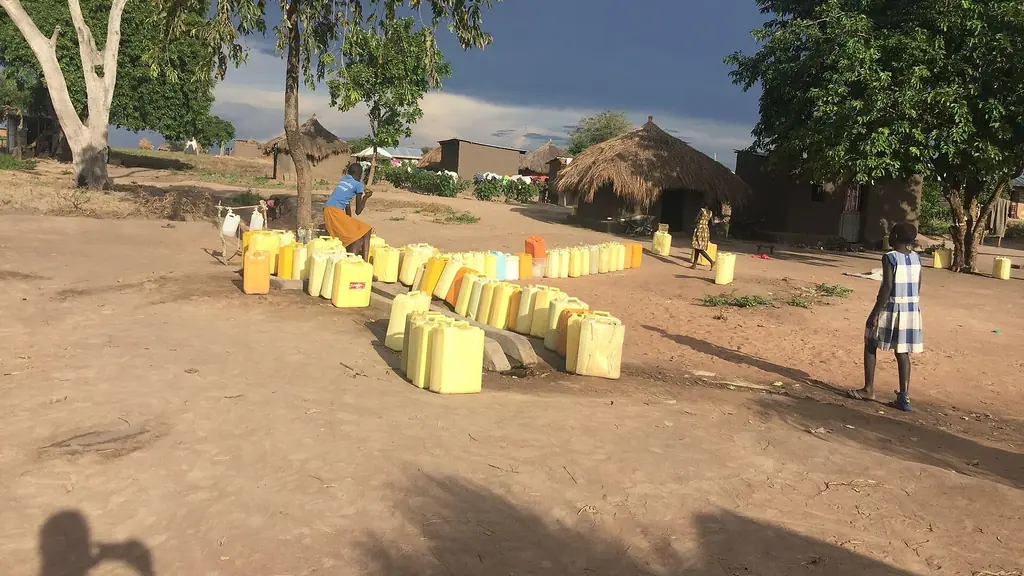
Bringing missing voices into the room. In most countries with data, the JMP finds that women and girls are mainly responsible for collecting water, and people with disabilities, informal settlements and remote rural areas are easily overlooked in national plans. Advocacy networks exist partly to make sure their experience shapes decisions. For a fuller account of how transparency and anti-corruption work fit into this, see our article on governance and transparency in the water sector.
Key idea: A declaration is a promise; budgets, monitoring and organised citizens asking questions are what turn it into working taps and toilets.
The 2010 handbook on advocacy communications
One of ANEW's most widely shared resources is Advocacy Communications: A Handbook for ANEW Members, published in June 2010 with financial assistance from the European Union. It was written as part of the network's capacity-building for member organisations, to help them take part in water and sanitation decision-making at national, regional and international level.
The handbook is practical. It covers planning a communications strategy for an advocacy campaign, choosing target audiences and shaping messages for each, finding stories and writing headlines, press releases and press conferences, building relationships with journalists, and preparing spokespeople for interviews and public speaking. Its examples and web links date from 2010, and it already discusses blogs, text messages and social networks alongside newspapers and radio. The core discipline of knowing who you need to persuade, and what will move them, has not dated.
FreshwaterAction does not republish the handbook. The final version can be read free of charge on the website of pS-Eau (Programme Solidarité Eau), a French water and sanitation network whose online library collects sector publications: Advocacy Communications: A Handbook for ANEW Members (PDF). Readers who want a rights-focused companion can turn to our practical guide to the human rights to water and sanitation.
Finding ANEW today
ANEW's current website is anew-africa.org. Note the hyphen: older addresses that appear in documents from the 2000s and 2010s may not lead to the network. The site carries news, reports, membership information and Nairobi contact details; the 2025 annual report was posted there in May 2026.
According to that report, ANEW serves as Vice Chair of Sanitation and Water for All, a global partnership hosted by UNICEF. It also holds governance roles in the Sustainable Sanitation Alliance (SuSanA), and its Executive Secretary sits on the board of the Stockholm International Water Institute. These roles are as the network itself describes them; for current leadership and membership terms, ANEW is the best source.
Until about 2016–2018 this web address belonged to the Freshwater Action Network, a global network of civil-society organisations in which ANEW was one of the regional member networks. FreshwaterAction is a separate, independent publication. It is not ANEW, does not speak for it and is not its successor. This article is an independent explainer.
Going further
- Check your government's commitments. Read the Ngor Declaration's ten commitments and compare them with your country's sanitation budget and policy documents.
- Look up the data. The JMP's website, washdata.org, has country, urban and rural estimates for drinking water, sanitation and hygiene, so you can see where your own country stands against SDG 6.
- Find the national network. Many African countries have a national WASH civil-society coalition, and ANEW's members include several. Local groups are often the best way to get involved in monitoring services where you live.
- Compare regions. Civil-society networks have played a similar role elsewhere. Our explainer on FANSA and water governance in South Asia describes a parallel story.
- Browse the topic. More articles on laws, institutions and accountability are collected under water rights and governance.
Sources
- ANEW: who we are and thematic focus (home page)African Civil Society Network on Water and Sanitation (ANEW)
- ANEW Annual Report 2025: Water Rising – Advocacy in Motion Across a ContinentAfrican Civil Society Network on Water and Sanitation (ANEW)
- Progress update on the 9th Africa Water Week in Cairo, EgyptAfrican Civil Society Network on Water and Sanitation (ANEW)
- Address at the launch of the African Civil Society Network on Water, Addis Ababa, 9 December 2003 (archived copy)Department of Water Affairs and Forestry, South Africa (via the Internet Archive)
- Advocacy Communications: A Handbook for ANEW Members (2010)ANEW, hosted by pS-Eau (Programme Solidarité Eau)
- AfricaSanAfrican Ministers' Council on Water (AMCOW)
- The Ngor Declaration on Sanitation and Hygiene (AfricaSan4, Dakar, 27 May 2015)Sustainable Sanitation Alliance (SuSanA) library
- Progress on household drinking water, sanitation and hygiene 2000–2024: special focus on inequalitiesWHO/UNICEF Joint Monitoring Programme for Water Supply, Sanitation and Hygiene (JMP)
Spotted an error? Write to contact@freshwateraction.net. Our editorial policy explains how we correct articles.